

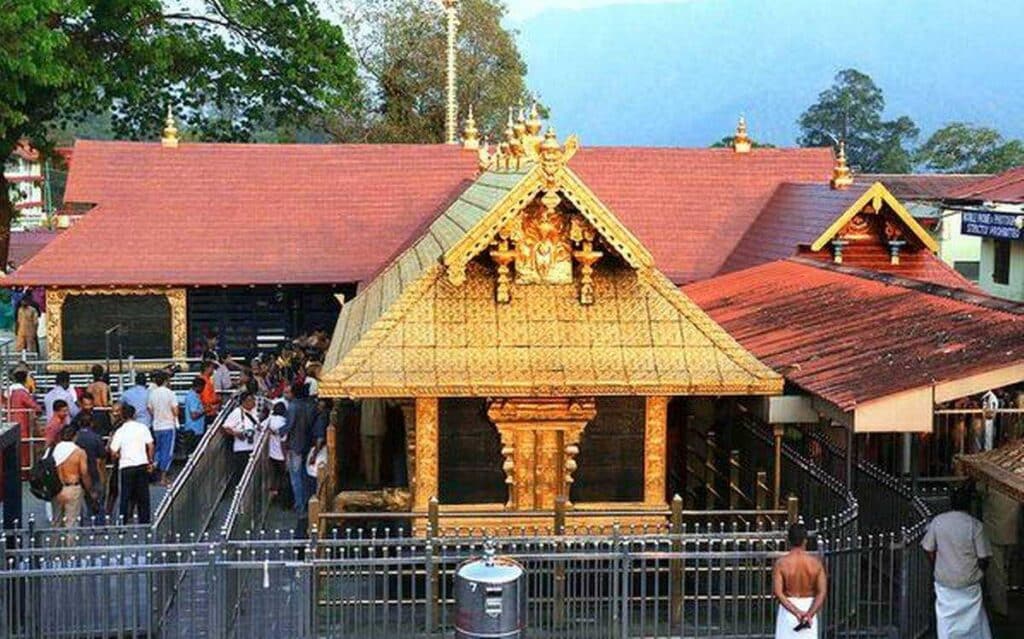
Sponsor’s 2019 Email Sparks Controversy
On December 9, 2019, sponsor Unnikrishnan Potty emailed the Travancore Devaswom Board (TDB):
“I have some gold balance left after completing the gold work of the Sabarimala sanctum sanctorum main door and the dwarapalakar’s. I would like to use it for a girl’s marriage who needs support, in coordination with TDB. Please give your valuable opinion in this regard.”
What was intended as a goodwill gesture has become a central piece of evidence in the Sabarimala gold case, sparking intense scrutiny and public debate. of evidence in the Sabarimala gold case, raising questions of accountability and temple asset management.
Missing 4.54 kg of Gold
The gold-plated copper panels covering the Dwarapalaka idols, originally donated in 1998 and refurbished in 2019, were recorded at 42.8 kg before refurbishment but weighed only 38.258 kg upon return — a shortfall of 4.54 kg. The Kerala High Court called the discrepancy “deeply disturbing” and criticized the Travancore Devaswom Board for procedural lapses. The court emphasized that this case involves not only sacred temple assets but also the trust of millions of devotees, warning that the missing gold could have been misappropriated or mishandled. Officials were directed to conduct a thorough, confidential investigation into the panels’ custody, transport, and refurbishment processes.
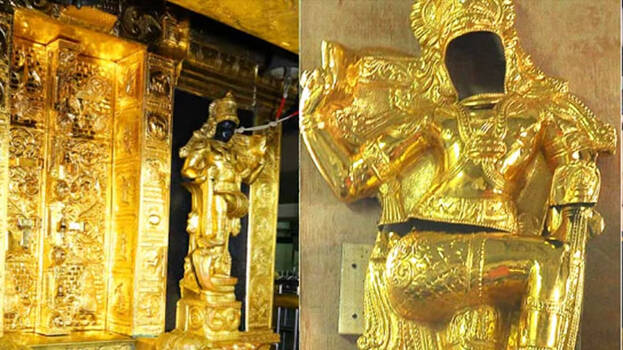
Kerala High Court Orders Confidential SIT Report
The Kerala High Court directed the SIT to submit a confidential report within one month, stressing the urgency and sensitivity of the matter. The bench noted that the case involves not just sacred temple assets but also the trust of millions of devotees, and highlighted a “grave possibility” that the missing gold may have been misappropriated or mishandled. The court instructed the SIT to examine every aspect of procurement, refurbishment, and custody of the gold-plated panels to ensure a thorough and transparent investigation.
Reactions and Denials
Unnikrishnan Potty denied any wrongdoing, stating his email referred to symbolic leftover material rather than actual gold.
The TDB pledged full cooperation, while Devaswom Minister K. Radhakrishnan assured, “The truth will emerge, and those responsible will face action.”Opposition lawmakers disrupted the Kerala Assembly, demanding a CBI probe and the resignation of Devaswom Minister V.N. Vasavan amid allegations of mismanagement.
Wider Controversies and Procedural Lapses
The case has revealed multiple irregularities. Panels were sent to a Chennai firm without required court approvals, violating TDB protocols. Key records, including the Thiruvabharanam Register and mahazars, were incomplete or missing. Two gold-plated pedestals (peedams) were discovered at Potty’s sister’s residence, adding suspicion. Some panels were reportedly substituted with copper-plated materials, reducing actual gold content, and the original panels, guaranteed for 40 years, required repairs within six, raising questions about workmanship and oversight.
Devotee groups like the Sabarimala Karma Samithi accused the TDB of violating tender norms and engaging private contractors without transparency, highlighting weak accountability in managing sacred temple assets.barimala Karma Samithi accused the TDB of violating tender norms and unauthorized contracting, while demanding full transparency in handling sacred assets.
Faith, Trust, and Accountability
Sabarimala symbolizes devotion and purity for millions. The possibility that temple gold could be diverted — even under the guise of charity — has shaken confidence in management. Experts stress the need for transparent audits, digital asset registers, and strict procedural compliance to prevent future controversies.
Next Steps in the Investigation
The SIT is now reviewing all gold records, transport logs, and contracts to trace every gram of missing gold.
Its findings will determine whether the discrepancy is due to mismanagement or criminal misappropriation, and identify officials, sponsors, or contractors responsible. A goodwill email has evolved into one of Kerala’s most sensitive temple investigations, testing the boundaries of faith, governance, and public accountability!


