

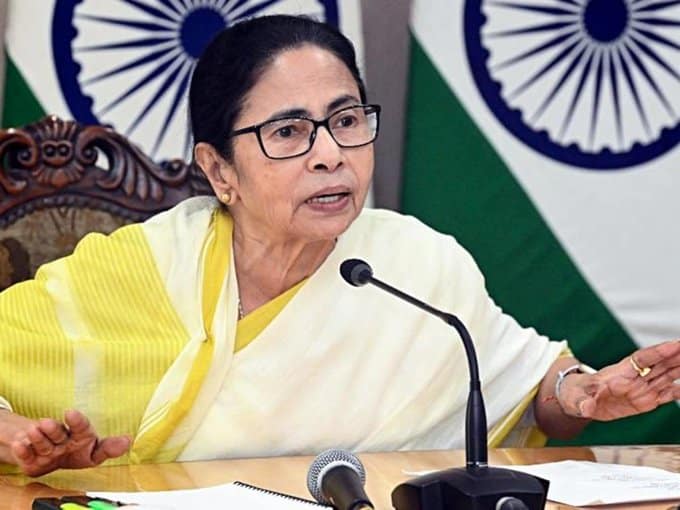
West Bengal Chief Minister Mamata Banerjee has come under fire after her response to the Durgapur gang-rape case appeared to question the survivor’s actions. Speaking to reporters, she said, “It is a shocking incident. But how did they come out at 12:30 am at night? The private medical college should have taken care of their students. It’s a forest area — they have to be careful.” She added that three arrests had been made and promised “no one will be spared.”
While Banerjee later clarified that her comments were aimed at institutions for failing to ensure student safety, the phrasing — “How did they come out at 12:30 am?” — immediately ignited national outrage and accusations of victim-blaming.
Public Backlash and Political Repercussions
The BJP, Congress, and several women’s groups condemned her words as “insensitive” and “regressive.” Social media platforms flooded with criticism under hashtags like #StandWithSurvivors and #WordsMatter, demanding that leaders speak responsibly during such cases.
Opposition parties accused Banerjee of weakening Bengal’s pro-women image, while some voices within her own Trinamool Congress admitted the remark was politically damaging.
Clarification and Context
Following the uproar, Banerjee insisted her comments were distorted by the media. She said she was highlighting the failure of private institutions to protect students, not blaming the survivor. “Do not twist my words for politics,” she said, reiterating that the accused would face strict action.
However, the damage was already done. Critics argued that intent cannot undo impact — when a Chief Minister questions why a woman was outside late at night, it diverts attention from the perpetrators to the victim.
Language, Leadership, and Sensitivity
As one of India’s most influential women leaders, Mamata Banerjee has often championed women’s rights through welfare schemes like Kanyashree and Rupashree. But many now say her latest remark conflicts with that image.
Sociologists point out that survivors of sexual violence in India already face stigma from society, law enforcement, and families. When a leader’s words echo the same bias, it deepens mistrust and discourages victims from reporting crimes.
Public communication during such crises demands a rare balance of compassion and responsibility. Every phrase from a leader has the power to shape public discourse — it can either reaffirm faith in justice or reinforce cultural prejudice. Experts stress that empathy, not defensiveness, is the language survivors need to hear most.
A Larger Conversation on Victim-Blaming
The controversy goes beyond Bengal’s politics. It exposes a cultural reality where survivors are often scrutinized for their actions instead of holding perpetrators accountable. Experts say it’s time India reframes its conversation on sexual violence — from questioning victims to demanding responsibility from institutions and offenders.
Banerjee’s statement, they argue, is not an isolated slip but part of a broader pattern where societal norms still judge women for being in public spaces at “inconvenient” hours. Changing this mindset requires both legal reform and empathetic communication from leaders.
Restoring Trust Through Action
In the wake of criticism, Banerjee has emphasized that her government acted swiftly — arrests have been made, and a fast-track investigation is underway. She also urged students to remain cautious in isolated areas and asked institutions to tighten safety measures.
Still, the controversy underscores a deeper truth: justice is not only about arrests, but also about assurance. When public leaders respond with empathy, they send a signal that survivors’ voices matter.
Why Words Matter More Than Ever
The Durgapur case shows how quickly language can shape public perception. In an age of instant outrage, every statement carries moral weight. Leaders are judged not only by their policies but by their humanity.
Mamata Banerjee’s comment has opened an uncomfortable but necessary conversation — about how India’s leaders must communicate in moments of trauma and how society must evolve beyond victim-blaming narratives.
In times of pain, words can heal or harm. True leadership lies not in asking why she was out, but in asking why she wasn’t safe!


