

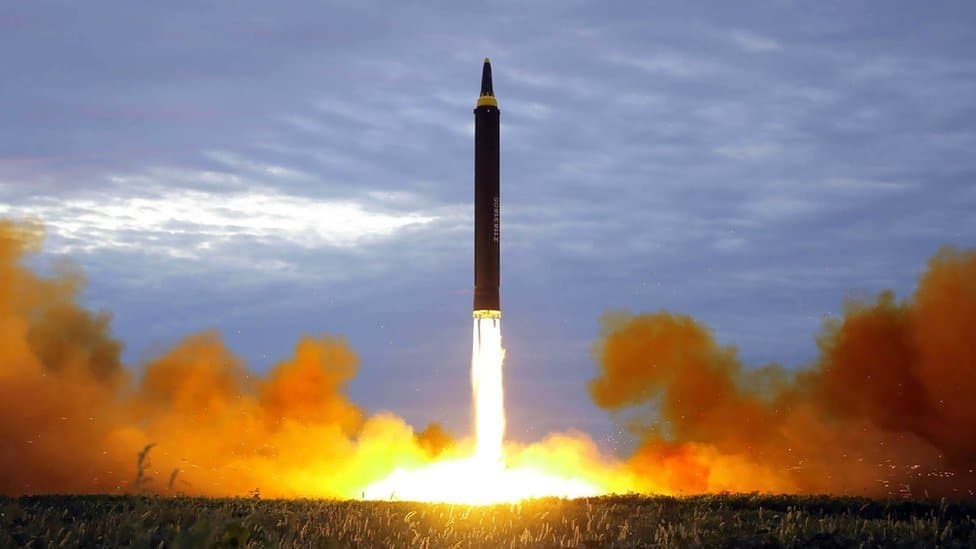
The Nuclear Testing Ban, a cornerstone of global peace for over three decades, is now history. In a shocking announcement on October 30, 2025, President Donald Trump declared on Truth Social that he had ordered the Department of War to resume nuclear testing, ending America’s 33-year moratorium. The move, which Trump described as “restoring America’s nuclear dominance,” has sparked international outrage and revived Cold War–style tensions between the world’s major powers.
Trump justified his decision by alleging that Russia and China have secretly resumed underground tests, putting the United States at a strategic disadvantage. “We will no longer sit idly by while others cheat,” he wrote. “The age of weakness is over.” The post instantly went viral, generating both patriotic fervor among his supporters and alarm among diplomats worldwide.
However, nuclear experts and intelligence officials have refuted Trump’s claims, confirming that no nuclear-armed nation except North Korea has conducted an explosive test since 1996, when the Comprehensive Nuclear Test Ban Treaty (CTBT) was established. The U.S. has since relied on advanced supercomputer simulations to ensure its warheads remain reliable and safe — without detonating a single bomb.
Global Shockwaves and Geopolitical Fallout
The announcement has rattled the international order. The United Nations Secretary-General António Guterres condemned the decision as “a dangerous step backward,” warning it could unravel decades of disarmament efforts.
In Europe, allies like France, Germany, and the United Kingdom expressed “grave concern,” fearing the move might push the world toward a new nuclear arms race. Iran accused Washington of hypocrisy, calling it “proof that the U.S. never truly abandoned its war machine.”
Meanwhile, Russia and China, though named as violators, responded with measured outrage, calling Trump’s accusations “unfounded and provocative.” Beijing warned that America’s actions could “destroy global trust” and lead to a new security dilemma in the Indo-Pacific, already strained by tensions over Taiwan and the South China Sea.
Analysts say the decision could also complicate Washington’s relationships with NATO allies, especially at a time when Europe is urging restraint amid the ongoing Ukraine conflict. “It’s a geopolitical earthquake,” said former U.S. diplomat Richard Haass. “America has just told the world that treaties don’t matter anymore.”
Inside Washington: Politics, Power, and Panic
Domestically, Trump’s nuclear testing order has deepened the political divide. Democrats labeled it “reckless and destabilizing,” accusing the President of using nuclear brinkmanship for political gain ahead of the 2026 midterms. Senate Majority Leader Chuck Schumer said, “Trump is gambling with humanity for headlines.”
Republicans, however, rallied behind the decision. Senator Tom Cotton praised it as “a show of strength in an age of deception,” while House Speaker Elise Stefanik called it “a historic correction to decades of weakness.”
Sources within the Pentagon suggest preparations are already underway at the Nevada National Security Site, where the U.S. conducted its last test in 1992. Reports indicate that Trump has authorized limited-scale testing within six months, bypassing traditional congressional review under “emergency national security provisions.”
Public reaction remains sharply divided. A CBS poll shows 56% of Americans oppose resuming nuclear tests, fearing global fallout, while 37% support it as a measure of deterrence. Protest groups are planning nationwide demonstrations, and several environmental organizations are preparing to challenge the decision in court.
A New Nuclear Era Begins
The revival of nuclear testing could reshape global security in unpredictable ways. Countries like India and Pakistan may feel emboldened to conduct new tests, while North Korea could exploit the situation to justify further provocations. Experts warn the decision could unravel non-proliferation frameworks painstakingly built since the 1990s.
From a geopolitical lens, Trump’s move may also be designed to pressure China and Russia into renegotiating arms-control treaties on U.S. terms, or to reassert American dominance as the world shifts toward multipolarity.
As the dust settles over Nevada’s desert, the world watches nervously. The echoes of the last nuclear blast in 1992 still haunt history — and now, Trump’s nuclear testing order may signal the dawn of a dangerous new atomic age!


