

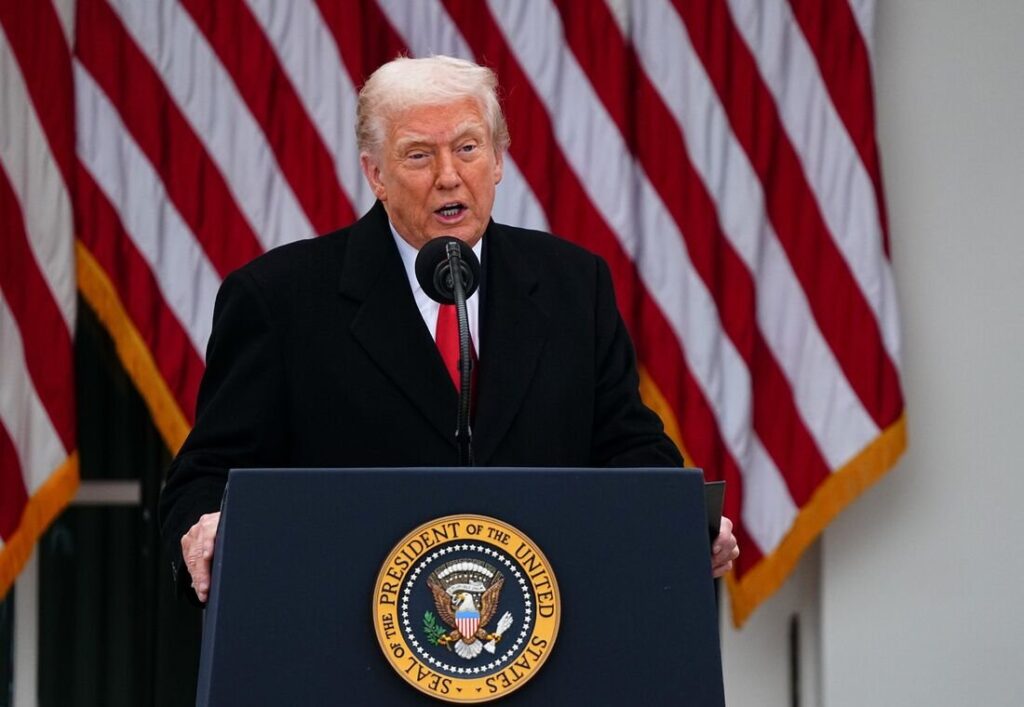
President Donald Trump turned Thanksgiving into a political flashpoint after issuing a fiery message outlining what he called a necessary “national correction” to America’s immigration system- a declaration that came just days after the ambush-style shooting of two National Guardsmen near the White House, an incident that has intensified national-security anxieties. In a sweeping post, he vowed to pause migration from all Third World countries, terminate Biden-era admissions programs, cut federal benefits for noncitizens, and launch new deportation and denaturalization efforts aimed at individuals deemed “security risks” or “incompatible with Western civilization.”
The message, one of his most detailed and aggressive immigration declarations since returning to office, instantly transformed holiday conversations and jolted political circles nationwide.
A Holiday Message With a Warning
Trump opened his post with a blistering critique of America’s current immigration landscape. He said:
“Our country has been divided, disrupted, carved up and laughed at because of foolish, politically correct immigration policies.”
He argued that the nation’s “beautiful-hearted” citizens have tolerated too much for too long, claiming that millions of Americans are quietly suffering the social consequences of uncontrolled migration.
According to Trump, the U.S. now hosts 53 million foreign-born residents, a figure he said is overwhelming federal systems, straining local governments, and encouraging what he called “dangerous social dysfunction.”
He added:
“A migrant earning $30,000 can end up receiving about $50,000 in yearly benefits. This burden is unsustainable, unfair, and destroying our communities.”
While government data supports the population figure, experts note that benefit usage and criminality rates vary significantly across immigrant groups. Nonetheless, Trump framed the situation as a national emergency requiring immediate corrective action.
Minnesota in the Spotlight
In one of the most controversial sections of his message, Trump pointed to Minnesota home to one of the largest Somali-American populations in the country as an example of what he described as failed immigration governance.
He referenced high-profile fraud cases, reports of gang activity, and local law enforcement concerns to argue that refugee admissions had “reshaped” the state in destabilizing ways. The president accused Minnesota’s leadership of failing to protect residents, saying:
“Our wonderful people stay locked in their homes hoping they’ll be left alone, while their leaders do nothing.”
His remarks drew immediate criticism from Minnesota officials and civil rights groups, who called the claims exaggerated and damaging. Trump’s supporters, however, argue that the president was highlighting legitimate public-safety failures that state leaders have ignored for years.
What Trump Says He Will Do Next
The most significant part of Trump’s post was not the critique — it was the roadmap.
He pledged a historic overhaul of immigration policy, listing several actions he intends to pursue:
- Permanent pause on migration from “Third World countries.”
- Termination of Biden-era admissions, including humanitarian parole programs and immigrant sponsorship expansions.
- Ending federal benefits for noncitizens, including housing subsidies and cash assistance.
- Deportations of foreign nationals who are public-charge risks or pose security concerns.
- Denaturalization proceedings for migrants who “undermine domestic tranquility.”
- Implementation of what he called “Reverse Migration,” a long-term effort to significantly reduce the number of migrants already in the country.
He added one of the most quoted lines from the post:
“Only reverse migration can cure this situation.”
These ideas go far beyond traditional immigration enforcement, signaling a fundamental restructuring of U.S. immigration policy if implemented.
What the Law Allows and What It Doesn’t
Legal experts quickly noted that some of Trump’s proposals, such as ending noncitizen access to all federal benefits or mass denaturalization, face steep constitutional challenges.
Federal benefits are governed by complex statutes. Some, like emergency medical treatment, cannot legally be restricted based on immigration status. Others are tied to tax contributions or employment history.
Denaturalization, meanwhile, requires clear evidence of fraud or specific crimes. Courts have repeatedly ruled that citizenship cannot be revoked simply due to ideological differences or accusations of “disloyalty.”
Immigration attorneys expect immediate legal pushback the moment these policies are formally announced. Nevertheless, the administration appears ready for the fight.
A Nation Split Over the Message
Trump’s post drew sharp, immediate reactions across the country:
- Supporters praised him for saying “what others are afraid to say,” calling the message a long-overdue acknowledgment of public frustration.
- Critics condemned the post as inflammatory, arguing it paints entire communities with a broad, harmful brush.
- Immigration activists warned that the language could increase fear and tension within immigrant communities.
- Republican lawmakers largely backed the president’s agenda, though some urged a focus on border enforcement rather than denaturalization.
As one senior GOP strategist put it privately, the Thanksgiving post “was a signal flare, Trump is not waiting until January to shift the immigration conversation.”
The Road Ahead
Federal agencies have begun laying the groundwork to turn Trump’s proposals into policy. Teams are reviewing asylum procedures, refugee pipelines, green card approvals, and public-charge standards to determine where immediate changes can be made. They are also reassessing denaturalization criteria and benefit eligibility rules, areas expected to face significant legal scrutiny once formal directives are issued.
As this process unfolds, courts, Congress, and state governments are poised to become major battlegrounds, shaping how far and how quickly the administration can move. Trump closed his message with a pointed warning:
“HAPPY THANKSGIVING TO ALL, except those that hate, steal, murder, and destroy what America stands for — you won’t be here for long.”
Whether seen as a necessary wake-up call or a divisive alarm, the post has already reshaped national debate. The next several months will determine how much of Trump’s sweeping vision becomes reality and how profoundly it reshapes America’s immigration landscape.


