

Dhurandar of Global Trade? India Faces a New Challenge
Donald Trump’s decision to impose steep tariffs on Indian rice is no longer just an economic issue. It has quickly transformed into a strategic geopolitical signal, one that aims to reshape the global food trade hierarchy at a time when supply chains are already strained. India, the world’s largest rice exporter, now faces a policy challenge that goes far beyond market access.
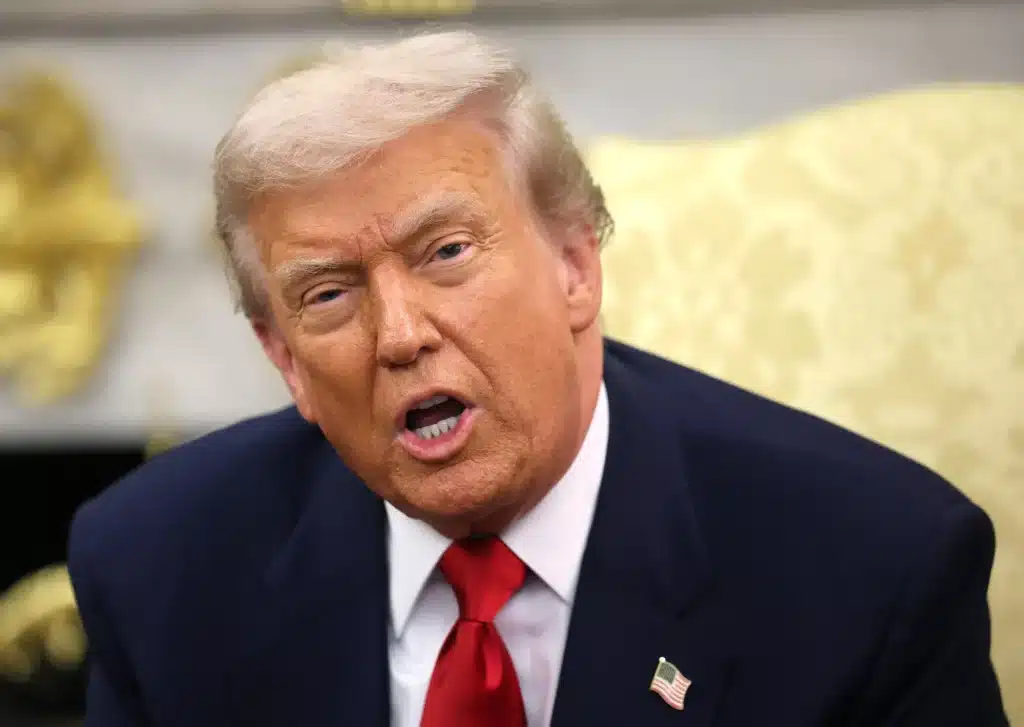
In his recent conference, Trump declared that the United States would no longer allow countries to, in his words, “take advantage of America’s farmers”, singling out India, China, Vietnam and Thailand. His tough stance reflects a shift from traditional trade policy toward a more confrontational, protectionist posture designed to appeal to his domestic agricultural base.
Why Trump Went After Indian Rice
Trump’s argument rests on the belief that Indian agricultural exports, especially rice, distort the American market. In the conference, he said:
“We will stop unfair imports that hurt American farmers and American workers. Countries like India and China will face strong tariffs if they continue flooding our markets.”
He also hinted that this move is only the beginning:
“We are reviewing tariffs on several countries. America will not be the dumping ground of cheap goods anymore.”
This wasn’t just a message to India. It was a warning shot to China, Mexico, Vietnam, Thailand, and other exporters who heavily rely on the American food market.
The 12 Billion Dollar Farm Package Explained
Alongside these warnings, Trump announced a 12 billion dollar one time payment plan funded by tariff revenue. This includes:
- 11 billion dollars in direct USDA crop payments
- Mandatory 2025 acreage reporting by December 19 for eligibility
- Additional relief for farmers affected by depressed export markets
- Promises to relax right to repair rules for American farm equipment
- An assurance to “restore lost markets quickly”
Supporters have hailed the package as crucial aid for rural America, especially as farmers continue to feel the sting of trade disruptions. Critics, including Governor Gavin Newsom and Senator Rand Paul, called the move a “self made crisis” created by the tariffs themselves.
India’s Export Reality vs America’s Import Dependency
Numbers tell a different story from the political rhetoric. Contrary to the aggressive stance taken by Washington, the U.S. accounts for only about 3 percent of India’s total rice exports. In other words, India is not heavily dependent on the U.S. rice market.
However, the geopolitical twist is in the reverse statistic. Indian rice makes up nearly 26 percent of U.S. rice imports, making India one of America’s largest and most reliable suppliers. This places the U.S. in an uncomfortable position. While Trump wants to weaponize tariffs to support domestic farmers, Washington’s import dependency means such actions risk raising consumer prices and destabilizing supply chains.
For India, the direct trade impact remains limited. For the U.S., replacing such a large volume of low cost, high quality Indian rice will be difficult. Major rice exporting nations like Thailand and Vietnam have their own geopolitical agendas and cannot be easily substituted into American supply chains without cost and diplomatic consequences.
A Geopolitical Pressure Game Beyond Rice
Trump’s comments did not stop at India. The president criticized China, Vietnam and Thailand, accusing them of “distorting global rice prices” and “taking advantage of the American farmer.”
For geopolitical observers, this grouping is important. India and China are strategic competitors in Asia. Vietnam and Thailand dominate Southeast Asian rice exports. By placing these countries in the same category, Trump is signaling a broader confrontation with Asian agricultural powerhouses, not just a bilateral dispute with New Delhi.
This adds a new layer to U.S. foreign policy. Washington has already been rewriting trade agreements, pressuring Pacific nations on semiconductor alignment, and challenging China on critical minerals. Now, food commodities like rice are joining the list of strategic levers used in global power contests.
India’s Calculated Response
New Delhi has avoided escalating the rhetoric. Given that the American market represents only a minor portion of India’s rice exports, the Indian government understands that the economic risk is minimal. What matters is the diplomatic signaling.
India has already diversified its rice export markets in the Middle East, Africa and Europe. Gulf nations, in particular, depend heavily on Indian rice for food security. This strengthens India’s global leverage.
Prime Minister Narendra Modi’s administration is expected to use this moment to reinforce India’s standing as a central agricultural supplier to the Global South. India has been positioning itself as a food security anchor for emerging economies, and U.S. tariffs may accelerate that shift.
Why U.S. Consumers May Pay the Price
While Trump frames the tariff as a blow against foreign dumping, the reality is that American consumers may feel the impact first. A tariff on Indian rice would likely increase prices in U.S. supermarkets. With inflation still sensitive in key states, higher food costs could trigger political backlash.
Furthermore, alternative suppliers like Thailand or Vietnam may not offer enough supply or may increase their prices once they see U.S. vulnerability. Washington would face a tough balancing act between political messaging and domestic economic consequences.
Farm Unrest and Trump’s Calculus
Trump’s aggressive stance is partly driven by pressure from American farmers. Many have argued that U.S. agricultural policies and global market volatility have created unpredictable income patterns.
The 12 billion dollar package aims to secure rural support ahead of the next planting season. But critics argue that subsidizing farmers while also creating the tariff conditions that harm them is contradictory.
Geopolitically, Trump wants to signal toughness to both domestic and international audiences, especially with China’s agricultural influence expanding across several continents.
Ripple Effects Across Asia and Beyond
India is not the only country watching Washington’s moves. Southeast Asian nations are concerned about tariff spillover into other commodities. China sees this as evidence of Washington tightening pressure across economic fronts. Middle Eastern and African importers worry about potential disruptions to Indian supply chains if the tariff dispute escalates.
For the European Union, this is another example of U.S. unilateralism that complicates global food markets. India, meanwhile, may use this episode to strengthen ties with the EU, ASEAN and African partners through agricultural diplomacy.
The Global Power Shift Ahead
The tariff storm is no longer just about rice it reflects a deeper clash where food, trade and geopolitical power now intersect. As the U.S. attempts to reassert dominance in global markets, India is steadily positioning itself as a critical food security anchor for the developing world. In the months ahead, both nations will keep diplomatic channels open, but their paths will diverge strategically. India has little economic exposure but significant geopolitical leverage to gain, while the U.S. must balance its tough rhetoric with its real dependence on Indian rice imports. Ultimately, the future hinges on how far Trump pushes his economic nationalism and how India reshapes its global trade alliances in response.


