

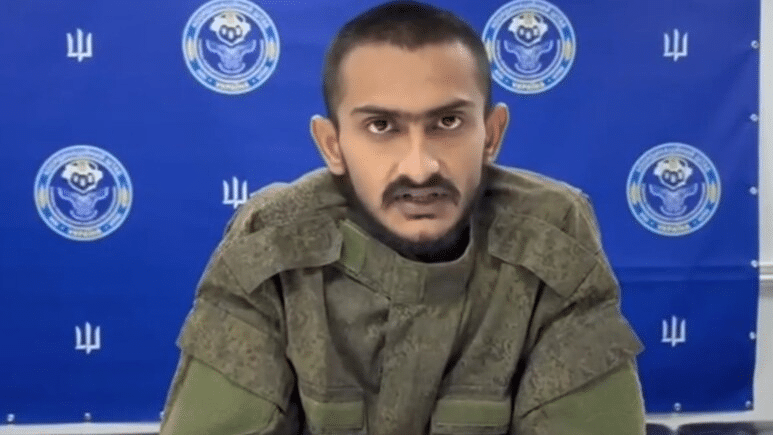
An alarming SOS video from the Ukraine war zone has once again drawn attention to the dangerous predicament faced by Indian nationals caught in the Russia–Ukraine conflict. The video features Sahil Mohammad Hussain, a young student from Gujarat’s Morbi district, who claims he was forced to join the Russian army under coercion after being trapped in a criminal case abroad. His desperate appeal to the Indian government has sent shockwaves across the country, raising urgent questions about student safety, coercive recruitment, and diplomatic accountability.
Sahil’s case is not just an isolated tragedy. It is emerging as a grim symbol of how ordinary Indian students and workers are allegedly being pushed into a foreign war through deception, pressure, and legal intimidation.
Who Is Sahil Mohammad Hussain ?
Sahil Mohammad Hussain, also identified in some records as Sahil Mohamed Hussein Majothi, is a 22 to 23 year old Indian national from Morbi district in Gujarat. He travelled to Russia in January 2024 on a valid student visa, reportedly to pursue higher education and learn the Russian language.
Like many international students, Sahil took up part time work as a courier to support himself financially while studying. According to his family and his own account, this decision would later place him in circumstances that drastically altered his life.
The Alleged Drug Case That Changed Everything
Sahil claims his ordeal began when he was falsely implicated in a narcotics related case in Russia. He has consistently maintained that he never possessed or trafficked drugs, and that he was framed during his courier work.
Facing a seven year prison sentence, Sahil says he was placed under extreme pressure by Russian authorities. According to his statement, officials presented him with a brutal choice: remain in jail for years or sign a contract to serve in the Russian military.
With no legal support, limited language proficiency, and mounting fear, Sahil says he agreed to the contract. He now describes that decision as the biggest mistake of his life.
“Jail or the Army”: A Pattern of Coercion
What makes Sahil’s case particularly disturbing is his allegation that the military contract was not voluntary, but the result of coercion linked to the criminal justice system. He claims the drug case effectively vanished once he signed the enlistment papers.
This pattern has raised alarm among Indian families and rights advocates, as similar allegations have surfaced in recent months involving Indian nationals abroad. Several cases suggest individuals were lured, misled, or pressured into joining Russia’s war effort after being promised civilian roles or relief from legal trouble.
Sahil insists he never wanted to fight and had no intention of becoming part of a foreign conflict.
Minimal Training and Rapid Deployment
According to Sahil, after signing the contract he was given around 15 days of basic military training. He says this training was insufficient and largely symbolic, designed only to prepare recruits for immediate deployment.
Soon after, he was sent toward the active combat zone in Ukraine, a region witnessing intense fighting and heavy casualties. Sahil says he was overwhelmed and terrified, realising he had been placed directly in harm’s way without understanding the consequences of the contract he had signed.
Capture by Ukrainian Forces
Sahil’s situation took another dramatic turn when he was captured by Ukrainian troops on the battlefield. Ukrainian authorities later released a video showing him in custody, which is when his SOS message reached the public.
In the video, Sahil clearly identifies himself as an Indian citizen and pleads for help from the Government of India, specifically addressing Prime Minister Narendra Modi. He urges authorities to intervene diplomatically and secure his safe return.
He also issues a stark warning to other Indian youths, advising them to avoid travelling to Russia for work or study if there is even the slightest risk of being drawn into military activity.
“I Am Stuck and Hopeless”
In one of the most emotional parts of his message, Sahil says he feels hopeless and trapped, uncertain about his future. He reportedly describes himself as being treated like a war criminal, despite insisting that he never chose to fight and surrendered at the first opportunity.
His words have resonated deeply with Indian audiences, particularly families of students studying abroad who fear similar situations.
Family Appeals and Legal Action in India
Sahil’s family in Gujarat has been actively seeking help since his capture became public. His mother has reportedly approached the courts in Delhi, seeking judicial intervention and urgent diplomatic action to bring her son home safely.
The family maintains that Sahil was deceived and coerced, and that his continued detention in a war zone poses a serious threat to his life.
India’s Official Stand on Russian Military Recruitment
The Government of India has repeatedly and publicly warned its citizens not to join the Russian army under any circumstances. Indian officials have acknowledged reports of nationals being recruited or coerced and have termed such involvement as extremely dangerous.
India has stated that it has raised these concerns at the highest diplomatic levels, engaging both Russian and Ukrainian authorities to ensure the safety of Indian citizens caught in the conflict.
Prime Minister Narendra Modi has personally flagged the issue during discussions with Russian leadership, underscoring India’s expectation that its nationals should not be exploited or placed in harm’s way.
A Growing Diplomatic and Humanitarian Concern
Sahil Mohammad Hussain’s case adds urgency to a broader humanitarian issue. Over the past year, multiple reports have surfaced of Indian nationals being trapped, injured, or killed after being drawn into the Russia–Ukraine war under unclear or deceptive circumstances.
For Indian authorities, the challenge is complex. Ukraine considers foreign fighters aligned with Russian forces as part of the conflict, while India must simultaneously engage Moscow to address allegations of coercion and unlawful recruitment.
This dual diplomatic tightrope makes each case difficult, time consuming, and emotionally charged.
A Warning for Indian Students Abroad
Beyond diplomacy, Sahil’s SOS has sparked renewed calls for stronger student advisories, better monitoring of agents and recruiters, and enhanced support systems for Indians studying in high risk regions.
His story highlights how quickly overseas opportunities can turn dangerous when geopolitical tensions, legal vulnerabilities, and misinformation collide.
The Bigger Picture
Sahil Mohammad Hussain did not travel abroad to fight a war. He went as a student chasing education and opportunity. Today, his face appears in war footage, pleading for rescue from a conflict he says he never chose.
His SOS is not just a cry for personal survival. It is a warning about the hidden dangers faced by Indian youths abroad and a reminder that in global conflict zones, ordinary lives can be weaponised overnight.
As India works through diplomatic channels, Sahil’s fate remains uncertain. But his message is clear, urgent, and impossible to ignore.


