

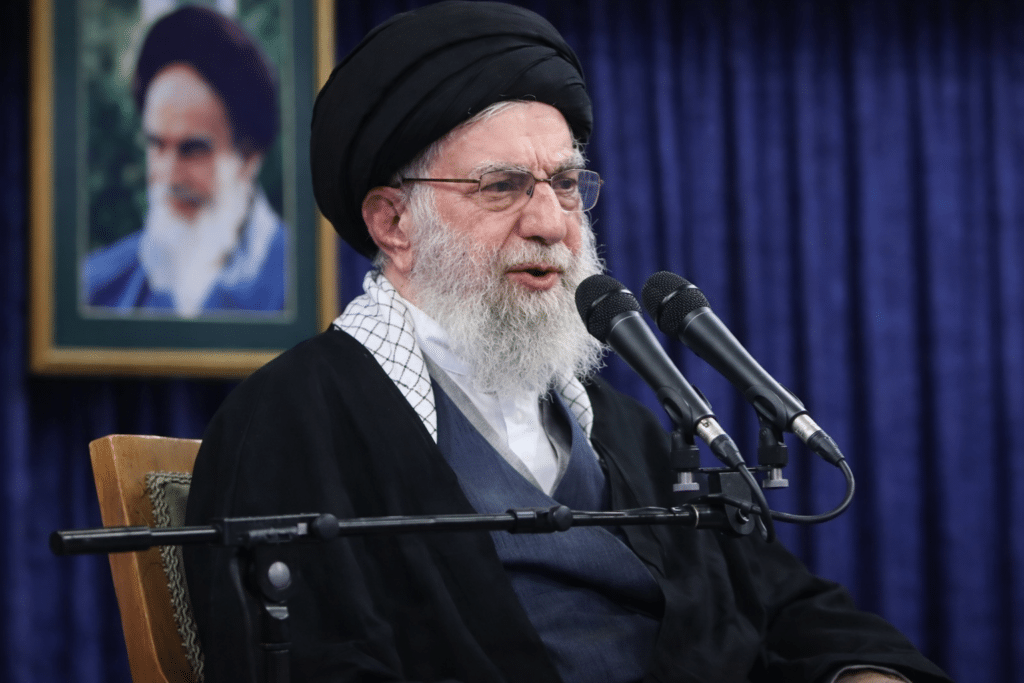
Iran’s Supreme Leader Ayatollah Ali Khamenei has publicly acknowledged for the first time that “several thousand” people were killed during recent nationwide protests, confirming the scale of one of the deadliest crackdowns in the Islamic Republic’s history.
The remarks, delivered in a speech in Tehran on January 17, represent a significant shift in official language after weeks of limited or indirect casualty acknowledgements by Iranian authorities. While Khamenei rejected any suggestion that state forces were responsible, his statement amounts to the clearest confirmation yet from Iran’s highest authority that the death toll runs into the thousands.
Human rights organisations and international media have long reported that Iranian security forces were responsible for large numbers of deaths during the unrest. Khamenei’s comments now place the scale of the violence beyond dispute, even as Tehran continues to contest how and by whom those deaths occurred.
Supreme Leader’s remarks
Addressing an audience in Tehran, Khamenei framed the protests as a foreign-backed campaign aimed at destabilising Iran. He blamed the United States and Israel for what he described as organised violence and accused protesters of causing widespread harm.
“Through hurting people, they killed several thousand of them,” Khamenei said, referring to what he called “seditionists” operating under foreign influence.
He directly criticised former US president Donald Trump, calling him a “criminal” for backing the protests and holding him responsible for deaths and destruction inside Iran. Khamenei did not provide specific figures or a breakdown of casualties and made no reference to the actions of Iran’s security forces.
Instead, he insisted the unrest was driven by hostile foreign powers using internal actors to weaken the Islamic Republic.
Change in official tone
Iranian officials have previously acknowledged fatalities linked to the protests but generally cited far lower numbers or focused on casualties among police and security personnel. No comprehensive official death toll has been released.
Khamenei’s use of the phrase “several thousand” marks a notable change in tone. Analysts say it establishes a new official baseline while avoiding any admission of state responsibility.
As Supreme Leader, Khamenei holds ultimate authority over Iran’s military, judiciary and security services. His words therefore carry decisive political and institutional weight.
Origins of the unrest
The protests began in late December amid deepening economic pressure, including soaring inflation, unemployment and the collapse of Iran’s currency. Demonstrations spread rapidly across cities and towns, drawing participation from students, workers and middle-class urban residents.
What initially appeared as economic protests soon developed into broader expressions of political dissent. Demonstrators openly criticised Iran’s leadership and chanted slogans targeting the Supreme Leader, crossing long-standing political red lines.
The scale and intensity of the unrest prompted a sweeping security response.
Security response
Authorities deployed police, Revolutionary Guard units and the Basij militia to suppress demonstrations. Internet access was severely restricted across large parts of the country, hampering communication and preventing real-time reporting.
Rights groups and witnesses say security forces used live ammunition, pellet guns and mass arrests to disperse crowds. Iran has denied using lethal force systematically and says security personnel acted to restore order.
State media broadcast images of damaged buildings and vehicles, reinforcing official claims that the protests were violent and orchestrated.
Death toll estimates
Independent verification remains extremely difficult due to media restrictions and communication blackouts. The most widely cited figures come from the Human Rights Activists News Agency, known as HRANA.
The group has reported that more than 3,000 people were killed during the protests and subsequent crackdown, and that over 22,000 were arrested. HRANA says it verifies reports using names, locations and dates.
Iranian authorities have dismissed such figures as unreliable and politically motivated and have not issued an official count.
International reaction
Khamenei’s acknowledgment has renewed international attention on Iran’s handling of the unrest. Western governments and human rights organisations have called for independent investigations and accountability for the deaths.
The United States and European countries have warned Iran against executing protesters and have cited the crackdown in discussions on sanctions and diplomatic pressure.
Iran has rejected international criticism, saying the protests were an internal security issue and accusing foreign governments of interference.
Judicial pressure
Concerns have intensified over the fate of detainees. Senior hard-line clerics and political figures have publicly called for severe punishment for those accused of leading the unrest.
A prominent cleric urged the judiciary to apply capital punishment to protesters charged with national security offences, contradicting claims by Donald Trump that Iran had halted executions following US warnings.
Human rights groups say detainees face charges such as “enmity against God” and “corruption on earth”, which carry the death penalty under Iranian law. Iranian judicial authorities have not disclosed how many cases involve potential capital sentences.
Competing narratives
The Iranian leadership continues to present the unrest as a foreign-engineered plot rather than a domestic uprising driven by economic and political grievances. Khamenei’s speech reinforced that position, portraying protesters as instruments of hostile powers.
Western governments and rights organisations reject that claim, saying there is no evidence of foreign orchestration and that the protests reflect long-standing domestic pressures and public frustration.
The central dispute remains responsibility for the deaths. Tehran denies that state forces were responsible. Independent observers point to the scale of force used by security services.
Limits on information
The full extent of the violence may never be known. Internet shutdowns, restrictions on reporting and the absence of transparent official data have obstructed comprehensive verification.
Families of victims have reported pressure not to speak publicly. Activists say some deaths were not officially recorded or were misclassified.
Despite those constraints, Khamenei’s statement has altered the public record. The leadership can no longer deny that the unrest resulted in thousands of deaths.
Broader implications
The Supreme Leader’s remarks combine acknowledgment of mass casualties with a hardening political stance. Judicial proceedings against detainees are continuing, and calls for harsh punishment persist among hard-line factions.
There is no indication that Iran’s leadership intends to revisit its narrative or allow independent scrutiny. Instead, officials appear determined to close ranks around claims of foreign interference.
Khamenei’s acknowledgment may not lead to accountability, but it fixes a central fact. The protests were not a limited disturbance. They were a national crisis that cost thousands of lives.
That reality is now part of Iran’s official history, even as the struggle over responsibility and justice continues.


