

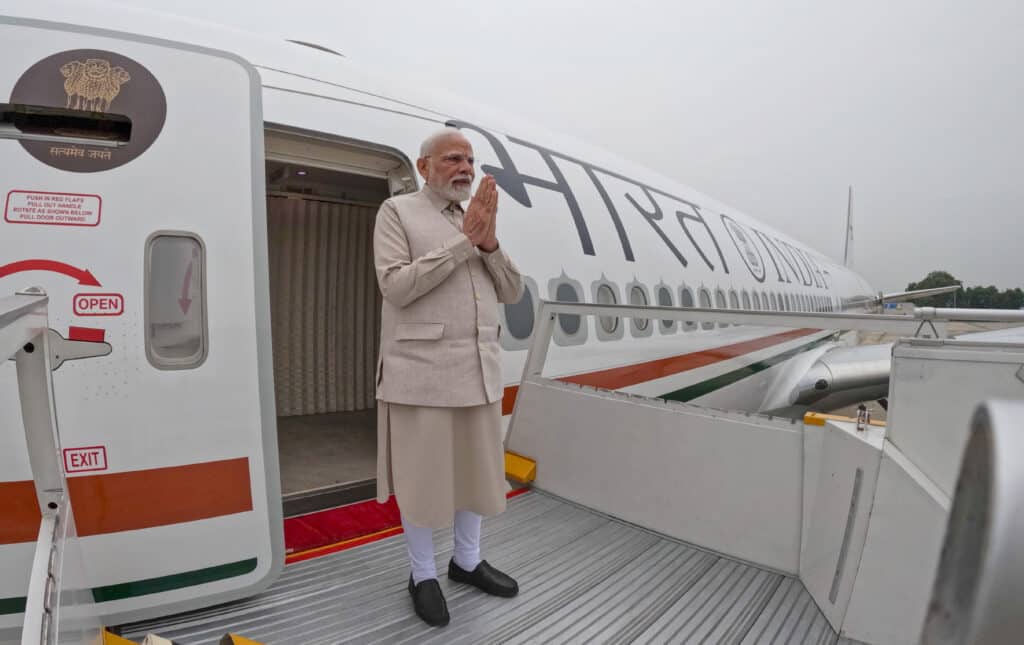
In 2025, Prime Minister Narendra Modi’s foreign policy has reached a strategic phase where India is deftly balancing its international aspirations and regional responsibilities. The global power equations are changing rapidly with tensions rising in Asia, changing economic alliances and climate concerns. India under Modi is repositioning itself not just as a regional leader but as a definitive global player.
One of the clearest manifestations of this rethinking will be Modi’s upcoming two-nation visit to the United Kingdom and the Maldives from July 23–26, 2025.
UK Visit: Economic Diplomacy through FTA
Prime Minister Modi’s trip to London (July 23–24) is a significant step, we believe, in India’s post-Brexit engagement with Europe. The focus of this visit will be the formal signing of the India–UK Free Trade Agreement (FTA), several years in the making.
The FTA is designed to:
- Eliminate tariffs on more than 95% of Indian exports
- Open the British market for Indian IT services, pharma, and textiles
- Enhance mobility for students and skilled workers
- Expand bilateral trade to $120 billion by 2030
This deal will not only solidify India’s economic footprint in Europe, but it also signals that Modi’s foreign policy now places trade in a more prominent position in its diplomacy, thereby repositioning India as a trustworthy partner in a world facing increasing protectionism.
Maldives Visit: Regional Security and Influence Reset

From July 25-26, Narendra Modi will be in the Maldives as the Chief Guest for their 60th National Day celebrations. His visit is important considering the diplomatic chill caused by the “India Out” campaign that the current government has initiated.
The Maldives leg of the trip highlights India’s focus on:
- Resetting strategic relations in the Indian Ocean
- Renewing maritime defence cooperative relations and infrastructure projects
- Countering China’s growing influence in South Asia
Through soft power diplomacy and economic engagement, Modi is attempting to re-establish India’s “Neighbourhood First” policy and maritime leadership.
Modi’s Broader Foreign Policy Vision for 2025:
Modi’s 2025 foreign policy is predicated on two visits and other operational principles:
Strategic Autonomy: India maintains a neutral position amidst tensions between the US and China, while deepening ties with QUAD, BRICS, and G20, without favouring a single bloc.
Economic Diplomacy First: With global engagements now centred on trade agreements, foreign investments, and energy security.
Cultural and Diaspora Extension: Modi’s soft power chiefly rests on yoga diplomacy, digital India conditions, and the Indian diaspora of 35 million people.
Assertive Regional Posture: From the Himalayas to the Indian Ocean, India is becoming bolder in containing its neighbourhood and resisting Chinese encroachment through infrastructure support and military linkages.
Conclusion: Modi 2.0: Foreign Policy
Mid-2025, Modi’s foreign policy reflects maturity, assertiveness, and pragmatism. India is set to be the third largest economy by 2027, with these diplomatic moves forming the foundation for India’s leadership in a multipolar world. Whether it is economic intentions such as the UK FTA or regional recalibration such as the Maldives, Modi is clear: India will lead, engage, and protect its interests internationally or regionally.


