

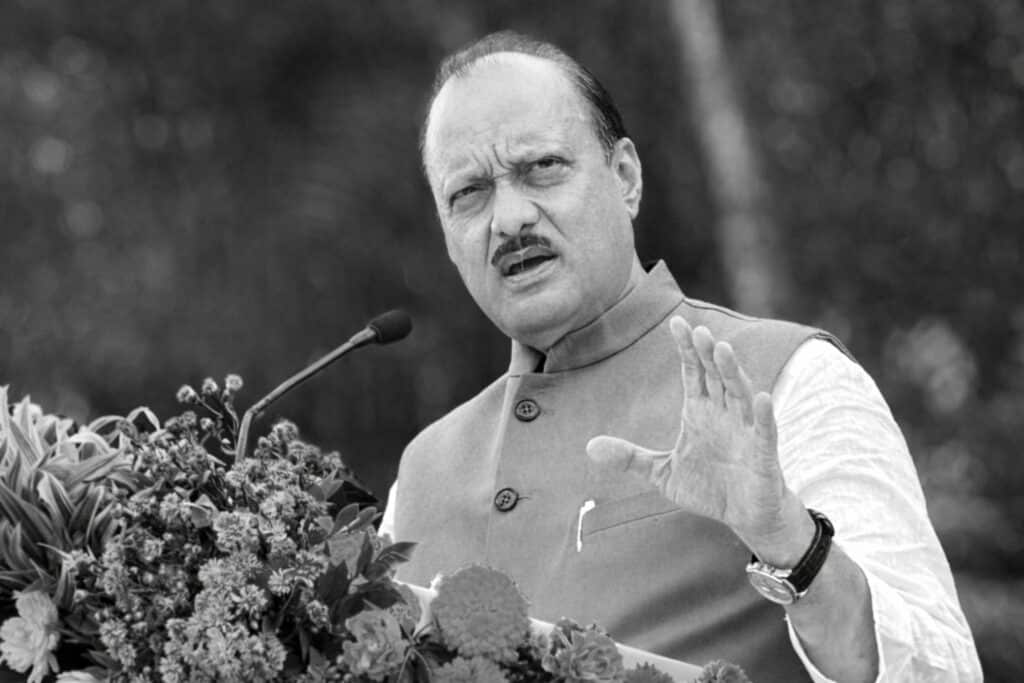
A Shock That Stunned Maharashtra
The sudden death of Maharashtra Deputy Chief Minister Ajit Pawar in a Learjet 45 plane crash near Baramati on January 28, 2026 has shaken India’s political establishment and triggered an outpouring of grief, speculation, and strategic recalculation. Pawar was travelling from Mumbai to Baramati on a chartered flight when the aircraft crashed during its landing approach, killing all five people onboard.
The crash occurred at approximately 08:44 to 08:48 AM IST at Baramati airfield, a facility classified as an uncontrolled airstrip with limited air traffic management infrastructure. Aviation authorities confirmed that the aircraft encountered poor visibility of around 3,000 metres, attempted a go-around after failing to sight the runway, and crashed during the second landing attempt. Investigators noted that no Mayday distress call was issued before impact.
CCTV footage from the area captured the moment the aircraft struck the ground and burst into flames immediately, indicating a high-impact crash followed by rapid ignition. The jet involved, registered as VT-SSK and operated by VSR Ventures Pvt. Ltd., carried Ajit Pawar, his Personal Security Officer Vidip Jadhav, attendant Pinky Mali, Captain Sumit Kapur, and Co-pilot Captain Shambhavi Pathak. None survived.
The DGCA and the Aircraft Accident Investigation Bureau have launched a formal inquiry into the cause, focusing on technical factors, weather conditions, pilot response, and runway visibility.
The Political Figure Behind the Tragedy
Ajit Pawar was one of the most formidable and controversial political figures in Maharashtra’s modern history. Born into the powerful Pawar political family, he rose under the shadow of his uncle Sharad Pawar, but gradually forged an identity built on administrative control, electoral strategy, and political risk-taking.
From his stronghold in Baramati, he built a powerful base across rural Maharashtra through the cooperative sector, sugar industry networks, and local governance institutions. Over time, he developed a reputation as a leader who moved quickly on decisions, controlled party machinery tightly, and delivered tangible political outcomes.
His ascent within the Nationalist Congress Party saw him take charge of major portfolios, particularly finance and irrigation, giving him significant influence over state budgets, infrastructure, and rural development priorities.
A Growing Rift with Sharad Pawar
Ajit Pawar’s career was shaped by an increasingly tense relationship with Sharad Pawar. Initially viewed as the heir apparent to the NCP’s leadership, he began to resist remaining in a secondary role within a party dominated by his uncle’s authority.
While Sharad Pawar focused on national-level coalition politics and ideological positioning, Ajit Pawar pursued a more direct and pragmatic model of leadership centered on power retention, alliance flexibility, and administrative dominance. Over time, this difference in approach evolved into a struggle for political independence.
What began as quiet friction eventually transformed into open defiance, setting the stage for one of the most dramatic internal revolts in Indian regional politics.
The 2019 Political Coup Attempt
Ajit Pawar stunned Maharashtra’s political circles in November 2019 when he broke ranks with the NCP and formed a short-lived alliance with the Bharatiya Janata Party, taking oath as Deputy Chief Minister alongside Devendra Fadnavis.
The government collapsed within 80 hours after he failed to bring sufficient legislators to sustain the coalition. Although brief, the episode revealed his willingness to gamble on power, defy party leadership, and reshape political equations at short notice.
This moment marked a turning point, redefining Ajit Pawar as a leader prepared to sacrifice party loyalty for political leverage.
The NCP Split That Changed Maharashtra
Ajit Pawar’s defining political act came in July 2023, when he led a rebellion that split the Nationalist Congress Party and aligned with the BJP and the Shiv Sena faction led by Eknath Shinde. The move fractured Sharad Pawar’s decades-long hold over the party and dramatically altered Maharashtra’s power structure.
The Election Commission’s decision to recognize Ajit Pawar’s faction as the legitimate NCP, awarding it the party name and symbol, represented a decisive institutional victory. It consolidated his authority while weakening Sharad Pawar’s faction and strengthening the ruling NDA’s dominance in the state.
For supporters, it was a strategic masterstroke. For critics, it was proof of political opportunism and dynastic power politics.
Comeback as NDA Deputy Chief Minister
By returning to government as Deputy Chief Minister under the NDA, Ajit Pawar completed one of the most striking political comebacks in recent Indian politics. He once again took charge of critical portfolios, including finance, giving him control over budgetary planning, state expenditure, and development priorities.
Within the NDA alliance, he emerged as a key strategist, electoral mobilizer, and coalition stabilizer. His presence strengthened the BJP’s rural outreach while ensuring his own relevance in a rapidly shifting political environment.
Many analysts argued that by 2024, Ajit Pawar had become one of the most powerful political figures in Maharashtra, even eclipsing the influence once commanded by Sharad Pawar at the state level.
The Weight of Controversy
Ajit Pawar’s career was persistently shadowed by allegations and public controversies. Among the most significant was the irrigation project controversy, in which opposition leaders accused him of financial irregularities linked to dam construction and water management projects. While legal outcomes remained contested, the issue continued to shape his political image.
His influence over the cooperative banking sector and sugar cooperatives also attracted scrutiny, with critics alleging these institutions were leveraged to consolidate political and financial power. These accusations reinforced perceptions of a close nexus between business interests and political authority.
Public remarks made during Maharashtra’s drought crisis in 2013 drew backlash for appearing insensitive to farmers, forcing him to issue clarifications. More recently, a viral video allegedly showing him threatening a senior IPS officer reignited debate over political pressure on law enforcement.
Yet despite repeated controversies, Ajit Pawar retained strong electoral support, particularly in Western Maharashtra, where many voters viewed him as an effective administrator rather than a scandal-ridden politician.
Administrator or Power Broker
Ajit Pawar’s legacy remains deeply polarizing. Supporters saw him as a results-driven administrator who bypassed red tape, expedited development projects, and ensured decisive governance. Critics viewed him as a hard-edged power broker, unafraid to switch alliances, split parties, or consolidate authority to maintain political dominance.
Unlike leaders driven by ideological consistency, Ajit Pawar prioritized political outcomes. This pragmatism allowed him to survive repeated crises, reinvent his alliances, and remain a central figure in Maharashtra politics for decades.
Final Flight and Aviation Findings
New aviation details have shed light on the final moments before the crash. The Learjet 45, registered as VT-SSK, was cleared to land at Baramati airfield after pilots initially reported difficulty spotting the runway. Following a missed first approach, the aircraft attempted a second landing, after which it crash-landed near the runway threshold.
Officials confirmed that no distress signal was transmitted before impact, and CCTV footage captured the moment of collision, showing the aircraft igniting instantly upon hitting the ground. Investigators are examining whether weather conditions, pilot response, runway lighting, or technical malfunction played a decisive role.
The crash has reignited national debate about safety protocols at smaller airfields and the risks associated with limited runway infrastructure.
National Mourning and Political Reaction
The Maharashtra government declared three days of state mourning, while the Brihanmumbai Municipal Corporation closed offices for a day in tribute. Mumbai University postponed examinations, and leaders across political parties expressed condolences.
Prime Minister Narendra Modi spoke with Sharad Pawar following the tragedy and is expected to attend the state funeral in Baramati, scheduled with full honours at Vidya Pratishthan grounds at 11 AM.
When Sharad Pawar arrived in Baramati, his first reaction was reportedly a stunned “How did it happen?”, reflecting the emotional weight of losing both a political rival and a family member. Supriya Sule described herself as devastated, highlighting the personal and political shock that has rippled through the Pawar family.
Political Fallout After His Death
Ajit Pawar’s death creates a major vacuum within Maharashtra’s political structure. His faction within the NCP now faces uncertainty over leadership continuity, and there is speculation about potential defections, fragmentation, or reconciliation with Sharad Pawar’s camp.
For the NDA, the loss removes a crucial strategist and vote mobilizer at a time when electoral competition remains intense. For the opposition, it opens a window to reclaim influence in Western Maharashtra, long considered Ajit Pawar’s stronghold.
Analysts predict that his absence could trigger one of the most fluid and unpredictable political realignments Maharashtra has witnessed in years.
A Legacy That Redefined Power
Ajit Pawar’s political journey cannot be reduced to a single narrative. He was at once a dynasty insider and a dynasty rebel, a governance-focused administrator and a ruthless political tactician.
He reshaped Maharashtra’s political alliances, fractured entrenched power centers, and demonstrated that modern politics rewards adaptability as much as ideology. Whether admired or criticized, his impact on the state’s political trajectory is undeniable.
For supporters, he will be remembered as a leader who delivered results and challenged political stagnation. For critics, he remains a symbol of hard-nosed power politics and alliance opportunism. For historians, he stands as a defining figure in the evolution of coalition politics in Maharashtra.
The End of an Era
Ajit Pawar’s death marks not only the end of a personal political career but the closing of a turbulent chapter in Maharashtra’s governance. His rise, rebellion, and return to power reflect a broader transformation in Indian politics, where ambition, strategy, and survival increasingly shape political destinies.
The institutions he influenced, the alliances he reshaped, and the rivalries he ignited will continue to influence Maharashtra’s political landscape long after him. In life, Ajit Pawar thrived in political turbulence. In death, he leaves behind a state still grappling with the consequences of his power plays.


