

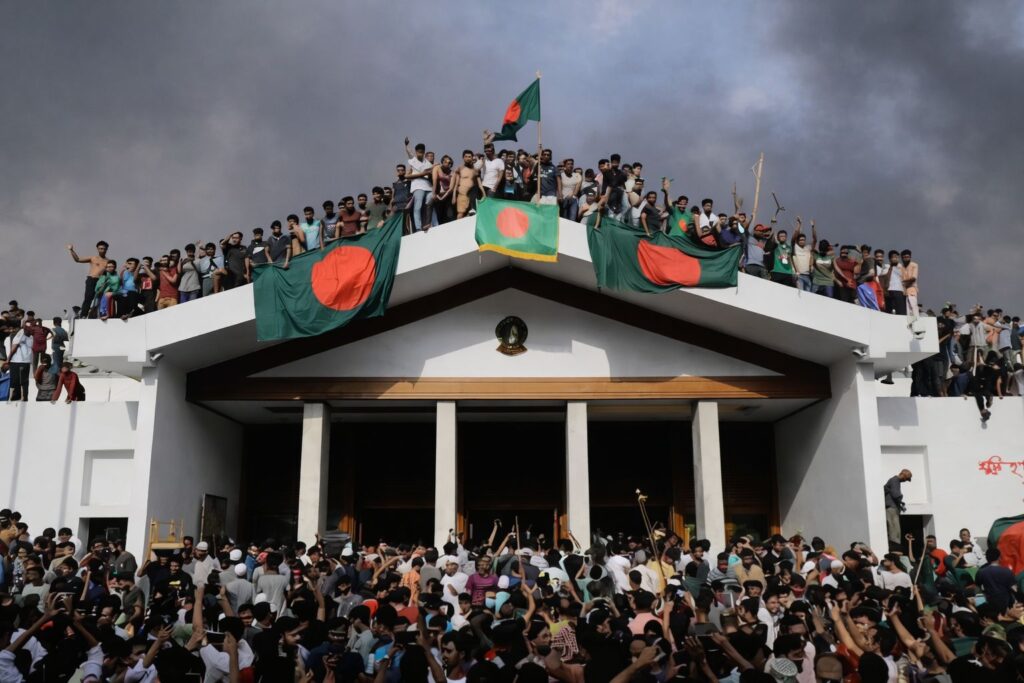
Bangladesh held its first parliamentary election on Thursday since widespread student-led protests in 2024 ended Sheikh Hasina’s 15-year rule, marking a fraught moment in the country’s democratic transition. With more than 120 million registered voters casting ballots for 299 parliamentary seats and a parallel constitutional referendum underway, the vote has attracted intense domestic and international scrutiny.
The political environment remains volatile, with heavy security deployments, reports of violence at polling stations and competing claims over the credibility of the electoral process. At stake is not only who governs Dhaka but whether Bangladesh’s fragile democratic reset survives its most consequential test in years.
Heavy Security and Violence at the Polls
Across Bangladesh, authorities deployed an unprecedented security apparatus to deter unrest and violence. Nearly 960,000 security personnel including police, paramilitary forces and military units were positioned nationwide alongside surveillance drones, body-worn cameras and CCTV systems covering polling centres. Officials described the preparations as necessary to maintain order after months of pre-election violence and high-risk warnings.
In Dhaka, heavy security checkpoints and multiple screening points were visible throughout the city. Armed officers monitored polling centres, conducted identity checks and controlled vehicle movement. Election officials reported that while most voting proceeded without major disruption, isolated incidents of violence raised tensions.
In Gopalganj once a bastion of Hasina’s ruling party a crude bomb exploded near a polling station, injuring at least three people, including two members of the Ansar paramilitary force and a child, according to local reports. A second explosion at another polling booth in the same area injured additional voters and a presiding officer. Security forces said they responded promptly and contained the situation without broader disruption.
Clashes between rival political supporters were reported in several constituencies, including Mirpur-10 in Dhaka and Munshiganj Sadar. In some cases, confrontations followed the explosions, prompting police intervention to restore order. Officials added that despite sporadic unrest, voting continued at most stations.
Such incidents are consistent with broader patterns of violence in the run-up to the election. Local rights groups documented more than 160 election-related clashes and nearly 1,000 injuries in the months before polling day, highlighting the deep political tensions surrounding this vote.
Against this backdrop, election authorities classified thousands of centres as “high-risk,” citing the presence of rival supporters and the potential for armed confrontations. Police intelligence warned that even constituencies previously considered stable could face disruption due to social media misinformation and political agitation.
Voters and Political Stakes
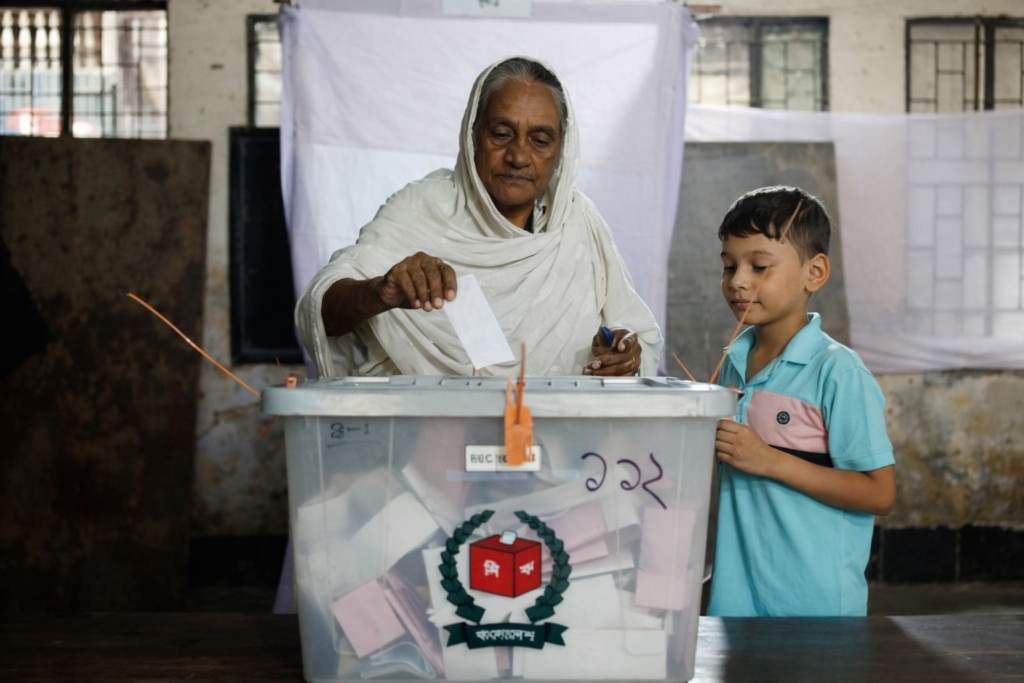
Despite security concerns, many Bangladeshis turned out to vote, including millions of first-time voters who were too young to participate in previous elections. At several Dhaka polling stations, long queues formed early.
“I am very happy and excited to come here to vote. I have never voted before. I hope my vote contributes to a healthy and prosperous city. I hope that whoever comes to power through this election will make Bangladesh safe and prosperous,” a first-time voter said outside a polling centre.
Another voter said, “We hope to see a beautiful Bangladesh through this election.”
These sentiments reflect both optimism and demand for change after years of political strife and unrest. Many young voters played a central role in the 2024 protests that culminated in Hasina’s departure and the installation of an interim government led by Nobel laureate Muhammad Yunus.
The political landscape has been reshaped since Hasina’s exit. The Awami League, long dominant in Bangladeshi politics, is absent from this election in its previous form, and Hasina remains in exile. The leading contenders include the Bangladesh Nationalist Party (BNP), led by Tarique Rahman, and an alliance involving Jamaat-e-Islami and allied parties.
After casting his vote, Jamaat-e-Islami chief Shafiqur Rahman described the election as a “turning point” for the country, saying the vote represented a meaningful opportunity for change and that he hoped for broader participation and representation.
However, the campaign has also seen controversy. Reports emerged of pamphlets circulated by Jamaat-aligned groups offering cash inducements and invoking religious messaging, a tactic critics labelled as coercive and inappropriate though party representatives denied wrongdoing.
Constitutional Reform Vote
In addition to the parliamentary vote, Bangladeshis are deciding on a constitutional referendum aimed at redefining executive authority and strengthening checks and balances. The proposed reforms include reducing the concentration of power in the prime minister’s office, enhancing the independence of oversight institutions and formalising mechanisms to protect democratic processes.
Supporters of the reforms say they are essential to preventing future power monopolies and restoring public trust. Critics caution that sweeping institutional changes during a period of political flux could introduce new governance challenges.
Election officials have defended the referendum process, and international observers will report on both parliamentary and constitutional outcomes. The results, expected in the coming days, will shape the nation’s political architecture and governance model.
Global Observations and Reactions
The election has drawn global attention, with foreign governments and regional actors closely monitoring developments. A rare briefing by U.S. lawmakers on Capitol Hill ahead of the vote warned that the electoral environment could fall short of international standards if concerns over fairness and freedom were not fully addressed.
The United States has also signalled deeper geopolitical stakes by offering defence alternatives to counter growing Chinese influence in Bangladesh’s military and strategic partnerships. U.S. officials emphasised their commitment to working with whichever government emerges democratically and highlighted continued engagement on economic and security issues.
Regional neighbours, including India, have remained attentive to unfolding developments. Analysts note that Bangladesh’s political trajectory carries implications for regional stability, trade, security cooperation and the handling of shared challenges such as the Rohingya refugee crisis and economic integration.
International observer missions including teams from the Commonwealth, the European Union and other diplomatic delegations are deployed across the country to assess the conduct of the polls. Their findings will be influential in shaping global perceptions of the vote’s legitimacy.
At a Crossroads
Bangladesh’s election comes at a critical juncture. The heavy security presence and reports of violence highlight the fragility of the democratic process. At the same time, significant voter participation particularly among youth suggests a strong desire for political renewal.
As ballots are counted and the referendum outcome becomes clear, the nation faces a pivotal moment. The ability of political actors, institutions and citizens to navigate post-election challenges will determine whether Bangladesh can solidify its democratic transition or fall into deeper fragmentation.
This election will not only shape who governs Bangladesh but how power is exercised in a nation still recovering from political upheaval and confronting heightened domestic and international expectations.


