

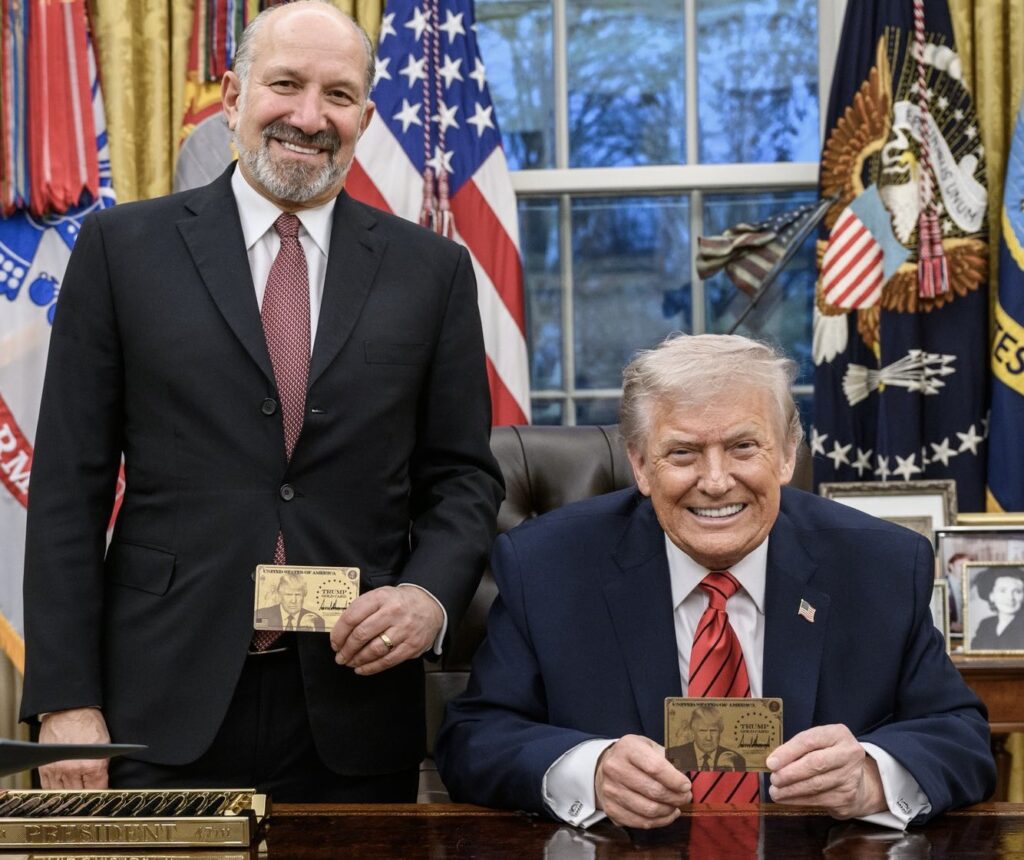
Gold Card visa has become the defining headline in U.S. immigration news after President Donald Trump officially launched a controversial new program that offers wealthy foreign nationals a fast-track route to U.S. permanent residency for a $1 million contribution plus a $15,000 processing fee. The Trump Gold Card is pitched as a way to attract global talent and generate revenue for the U.S. Treasury, but it also raises heated debate about fairness, legal authority, and the future of American immigration policy.
This comprehensive article breaks down the program’s mechanics, Trump’s statements, reactions from different quarters, and the possible long-term impact of this bold policy shift.
What Is the Gold Card Visa?
At its most basic, the Gold Card visa is a premium immigration pathway that allows foreign applicants to secure lawful permanent resident status akin to a Green Card by making a $1 million contribution to the U.S. government after passing a vetting process. Applicants must also pay a non-refundable $15,000 processing fee before their application is considered.
The program also includes options for corporations: a corporate Gold Card requires a $2 million contribution per sponsored employee. A future Platinum Card tier, reportedly priced at $5 million, is expected to offer additional benefits, including longer stays and potential tax advantages, although details remain scarce.
Unlike existing investor visa programs such as EB-5,which historically linked investment to job creation the Gold Card bypasses job creation requirements and focuses on outright financial contribution and expedited processing under existing visa categories like EB-1 and EB-2.
Trump’s Framing of the Policy
President Trump has positioned the Gold Card visa as a strategic economic initiative designed to benefit American businesses and the U.S. economy.
In his launch announcement and on social media, Trump emphasized that this new program would help the U.S. retain “invaluable talent” from around the world, especially highly skilled graduates and executives who often leave because of visa uncertainty. “Our great American companies can finally keep their invaluable talent,” he said, calling the program “very exciting” and a potential boon for U.S. competitiveness
Trump also framed the revenue aspect as a major advantage, asserting that the program could generate “probably billions of dollars” for the U.S. Treasury. According to him, the funds could be used for broad national priorities, including economic growth and debt reduction.
How It Works: Step by Step
Here’s a clearer look at the Gold Card visa application process:
- Pay the $15,000 processing fee to the Department of Homeland Security.
- Undergo background checks and vetting.
- Make the $1 million contribution to the U.S. government after approval.
- Receive lawful permanent resident status in weeks rather than years.
- Optionally pursue U.S. citizenship after meeting residency requirements
For companies, the equivalent steps apply, but the contribution rises to $2 million per employee, and the sponsorship can be transferred between workers with additional fees. The program aims to process applications quickly, a stark contrast to traditional immigration routes that often take years or even decades.
Supporters and Business Perspectives
Many corporate leaders and pro-business advocates have welcomed the Gold Card visa, arguing that it could bolster U.S. competitiveness in the global talent market.
Executives from major companies have noted that visa bottlenecks have historically forced firms to lose promising graduates and foreign-born talent to other countries. The Gold Card is seen by some as a way to retain highly skilled workers, drive innovation, and support economic growth.
Supporters also highlight the program’s potential economic benefits. Channeling large, upfront funds into the Treasury could provide a new revenue stream at a time when the federal budget faces structural challenges. Proponents argue this could help finance public services, reduce debt, or support infrastructure projects.
Some industry voices further suggest that this model aligns with similar “golden visa” schemes in parts of Europe and the Middle East, where investment-based residency programs have attracted wealthy foreigners and capital inflows.
Controversy and Criticism

Despite official praise, the Gold Card visa has drawn intense criticism from legal experts, immigration advocates, and even some of Trump’s own supporters.
Pay-to-Play Concerns
A central criticism is that the program effectively creates a pay-to-play immigration system, where wealth becomes the main criterion for residency. Commentators on mainstream and social platforms have argued that this model deepens inequality, especially given simultaneous restrictions on low-income migrants and tighter border enforcement. Some have bluntly described it as “America for sale.”
Legal and Structural Questions
Legal analysts have raised concerns about whether the executive branch has the authority to enact such a program without explicit congressional approval. U.S. immigration laws are traditionally crafted by Congress, and critics suggest the Gold Card’s legal footing is shaky and vulnerable to legal challenges.
Public Reactions and Social Debate
The launch of the Gold Card visa has sparked wide-ranging debate on social media and television talk shows.
On shows like The View, hosts criticized the policy as favoring the affluent while ignoring the needs of less affluent migrants. One co-host said the U.S. does not need more wealthy newcomers amid rising economic inequality, while others argued that this move signals misplaced priorities in immigration policy.
Online discussion has been mixed. Some users see the program as an opportunity for affluent individuals seeking U.S. residency, while others warn it could inflate housing markets or create new barriers for middle-class immigrants. Discussions on community forums highlight concerns about housing pressures and socioeconomic divides under the new system.
Who Might Benefit?
The program is clearly tailored toward high-net-worth individuals, including entrepreneurs, executives, and wealthy families who value fast-tracked residency and eventual U.S. citizenship. For some foreign students graduating from U.S. universities, especially in STEM fields, the Gold Card could offer a way to stay and work in the United States without facing long visa waits.
Corporations seeking to retain top foreign talent without relying on traditional work visas may also see value in the corporate Gold Card option. However, the program’s steep cost and legal uncertainties mean it is unlikely to be accessible or attractive to everyone.
Comparing to Traditional Immigration
Unlike traditional pathways such as family sponsorship, work visas, or employment-based Green Cards the Gold Card prioritizes financial contribution over job creation or family ties. Programs like EB-5 previously required investments tied to job creation, while other categories emphasize qualifications, relationships, or national interest.
While the Gold Card claims to operate under existing categories like EB-1 and EB-2, its focus on donation as evidence of eligibility is a dramatic departure from historical immigration principles.
What Comes Next
As applications continue, several factors will shape the Gold Card visa’s future:
- Legal challenges and potential court rulings.
- Congressional scrutiny and potential legislative action.
- Economic uptake by wealthy applicants and corporations.
- International reactions and comparisons with other residency-by-investment systems.
Whether the Gold Card visa becomes a lasting pillar of U.S. immigration policy or a controversial footnote, it has already ignited one of the most intense debates on American borders, wealth, and national identity in decades.


