

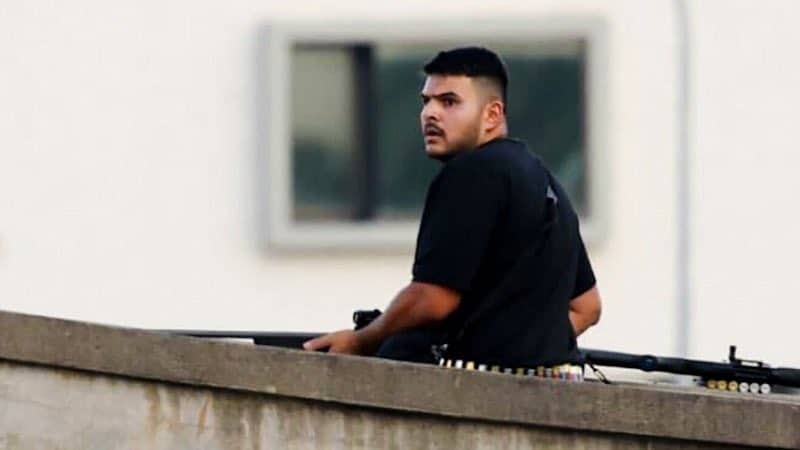
The Bondi Beach shooting India connection has emerged as a crucial dimension of one of Australia’s deadliest terror attacks in decades, transforming what first appeared to be a domestic security crisis into a case with clear international implications. The mass shooting at Sydney’s iconic Bondi Beach during a Hanukkah celebration not only shattered a peaceful public gathering but also sent shockwaves across borders after investigators confirmed that one of the attackers had deep roots in Hyderabad, India.
As Australian authorities intensify their terrorism investigation, Indian law enforcement agencies have also been drawn in, working through diplomatic and police channels to establish background details, family history and travel records. What has surfaced so far paints a complex picture of long-term migration, limited family contact, suspected radicalisation abroad and global security blind spots, raising uncomfortable questions about how such violence can take shape far from its point of origin.
What Happened at Bondi Beach
The Bondi Beach shooting unfolded during a public Hanukkah event attended by families, children and tourists. Gunmen opened fire indiscriminately, killing at least 15 people and injuring several others before police intervened. Authorities quickly classified the incident as a terrorist attack, citing ideological motivation and the deliberate targeting of a Jewish community gathering.
Emergency responders sealed off the beachfront as panic spread through the area. What is normally one of Australia’s most vibrant tourist destinations turned into a crime scene, leaving the nation grappling with grief and disbelief.
Who Were the Attackers
Australian police identified the attackers as a father and son, Sajid Akram, aged 50, and Naveed Akram, aged 24. Sajid was shot dead by police at the scene, while Naveed survived and was taken into custody under heavy security. Investigators later confirmed that Naveed has been charged with multiple counts of murder, attempted murder and committing a terrorist act.
Authorities believe the pair acted together, with evidence suggesting a shared ideological motivation. The case is now considered one of the most significant terrorism prosecutions in recent Australian history.
The India and Hyderabad Link
The Bondi Beach shooting India connection came into sharper focus after police confirmed that Sajid Akram was originally from Hyderabad in Telangana. He migrated to Australia in the late 1990s after completing his education in India and had lived there for more than two decades.
Indian police officials said Sajid maintained limited contact with his family in Hyderabad, visiting India only a few times over many years. Relatives told authorities they were shocked by the attack and unaware of any extremist views. Crucially, Indian investigators stressed there is no evidence of radicalisation in India or operational links to extremist groups during his time in Hyderabad.
Life in Australia
After relocating, Sajid Akram built his life in Australia. He married, raised children and settled into society. His son Naveed was born and brought up in Australia and holds Australian citizenship. Neighbours and acquaintances described the family as private, with no obvious warning signs of impending violence.
This contrast between an apparently ordinary life and an eventual act of terror has intensified debate about how radicalisation can remain hidden for years.
Cross-Border Travel Raises Security Concerns
Investigators have confirmed that the father-son duo travelled to the Philippines using Indian and Australian passports shortly before the Bondi Beach attack. While authorities have not established links to any organised extremist network, the overseas trip has raised serious questions about cross-border monitoring and intelligence coordination. Security experts say the case highlights how radicalised individuals can exploit international travel routes, underscoring the challenges faced by global counter-terror agencies in tracking potential threats across jurisdictions.
Radicalisation and Terror Ideology
Investigators have indicated that the Bondi Beach attack was inspired by extremist ideology linked to the Islamic State. Material recovered during searches suggested exposure to radical propaganda, although officials have clarified there is no confirmed evidence of direct command from any overseas terror group.
Security experts say the case fits a broader pattern of self-radicalised attackers acting without direct organisational control but driven by global extremist narratives.
Foreign Travel Under Scrutiny
A key focus of the investigation is recent foreign travel by the attackers. Authorities confirmed that Sajid and Naveed travelled to the Philippines shortly before the Bondi Beach shooting. Investigators are examining whether the trip involved contact with extremist elements or training.
So far, officials have not established definitive links to organised militant networks, but international intelligence cooperation remains ongoing.
Charges and Legal Proceedings
Naveed Akram now faces a prolonged legal battle. Prosecutors have filed extensive charges related to terrorism and mass murder, and the trial is expected to involve complex forensic and digital evidence.
Australian authorities have emphasised that the case will be pursued with the full weight of the law, given the scale and impact of the attack.
Impact on Communities
The Bondi Beach shooting has deeply affected Australia’s Jewish community and the wider public. Vigils and memorials have been held nationwide, with calls for unity and resilience against hate-driven violence.
The attack has also reignited debate over public safety, protection of religious events and the balance between security and civil liberties.
Response in India
In India, confirmation of the Hyderabad link prompted swift responses from law enforcement. Telangana police cooperated with Australian authorities while reiterating that there were no known extremist links within India.
Officials urged restraint and factual reporting to prevent misinformation and communal tension.
Unanswered Questions
Despite major developments, several questions remain unresolved. Investigators are still examining when and how radicalisation occurred, whether warning signs were missed and what role online propaganda may have played.
Authorities are also probing whether anyone else had prior knowledge of the attack.
Why the India Connection Matters
The Bondi Beach shooting India connection underscores how modern terror cases frequently cross borders. Migration history, travel patterns and online influences now play a central role in understanding extremist violence.
For both India and Australia, the case highlights the need for strong intelligence sharing and early intervention strategies.
What This Case Reveals
The Bondi Beach shooting is a stark reminder that terrorism respects no boundaries. A tragedy on an Australian shoreline has echoed as far as Hyderabad, exposing the complex intersections of migration, ideology and global security.
As investigations continue, one truth stands out clearly: preventing radicalisation before it turns violent is the only way to ensure that public spaces remain places of life, not loss.


