

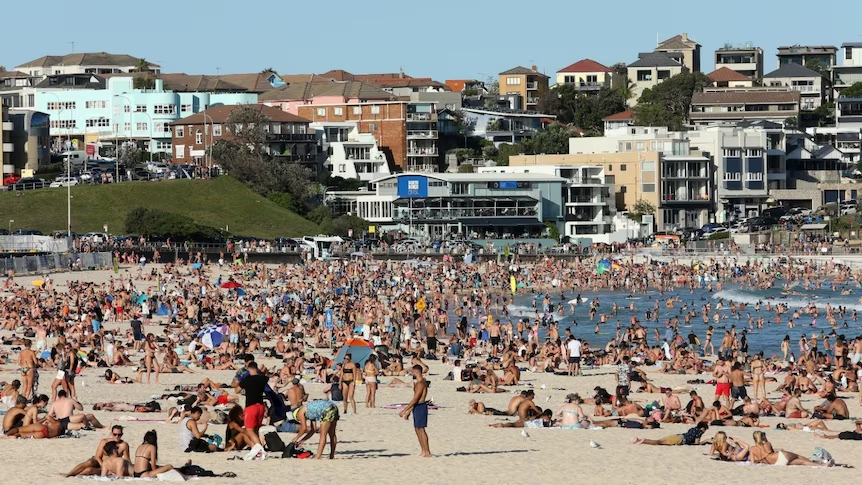
Sydney witnessed one of its darkest evenings in recent history on Sunday when a Hanukkah celebration at the iconic Bondi Beach was transformed into a scene of terror and grief. A mass shooting during a community gathering left 16 people dead and dozens injured, sending shockwaves across Australia and drawing condemnation from leaders worldwide.
The attack, now being investigated as a terror incident driven by antisemitic hatred, has reopened urgent debates on gun control, extremism, and the safety of public spaces in a country long seen as a global model for firearm regulation.
The Deadly Attack
The violence unfolded shortly after sunset as hundreds of people gathered near Bondi Beach to mark the first evening of Hanukkah. Families with children, elderly members of the Jewish community, and religious leaders had assembled for prayers, music, and candle lighting when gunfire suddenly erupted.
According to police accounts, two gunmen opened fire from an elevated position overlooking the gathering, unleashing sustained bursts of bullets that sent people fleeing in panic. Eyewitnesses described a festive atmosphere instantly collapsing into chaos, with screams cutting through the sound of gunshots as people sought cover behind stalls, sand dunes, and nearby structures.
Emergency calls flooded police control rooms within minutes. Paramedics and police officers rushed to the scene as beachgoers attempted to help the wounded using improvised first aid.
Victims and Loss
Authorities later confirmed that 16 people were killed in the attack, a toll that includes some of the most vulnerable and respected members of the community.
Among the dead was a 10 year old girl, whose presence symbolised the family nature of the celebration. Two rabbis who had helped organise the event were also killed. Their deaths have been described by community leaders as a devastating blow to Sydney’s Jewish population.
Particularly moving was the death of a Holocaust survivor, who reportedly shielded his wife as bullets tore through the crowd. His final act of protection has come to embody both the cruelty of the attack and the quiet courage displayed amid terror.
Hospitals across Sydney treated dozens of injured people, several of whom remain in critical condition. Medical staff described an overwhelming night as emergency wards worked through the trauma cases well into the early hours of Monday.
Acts of Courage
Amid the carnage, acts of extraordinary bravery emerged.
One of the most widely acknowledged is that of Ahmed al Ahmed, a fruit shop owner from Sydney who was attending the event. When one of the attackers reportedly ran out of ammunition, Ahmed confronted him, tackling the gunman and preventing further shots from being fired.
Ahmed was wounded during the struggle but survived. Police and eyewitnesses have credited his intervention with saving multiple lives. In a tragedy defined by loss, his actions provided a rare moment of hope and humanity.
Community leaders from across religious lines have hailed Ahmed’s courage as a reminder that solidarity can transcend hatred.
The Gunmen
Police identified the attackers as Sajid Akram, 50, and his son Naveed Akram, 24. Both were legally licensed gun owners, a fact that has deeply unsettled authorities and the public alike.
Sajid Akram was shot dead by police at the scene after refusing to surrender. His son Naveed was taken into custody with serious injuries and remains under heavy police guard in hospital. He is expected to face multiple charges once deemed medically fit.
Investigators recovered several firearms, including high powered rifles, along with suspected explosive devices that fortunately failed to detonate. The presence of such weapons has intensified scrutiny of firearm licensing processes and oversight mechanisms.
Security agencies are also examining whether the attackers acted alone or were influenced by extremist ideologies. Early findings suggest antisemitic motivations, though officials have urged caution until the investigation is complete.
Official Response
Prime Minister Anthony Albanese addressed the nation within hours of the attack, calling it “a dark and shameful day for Australia.” He described the shooting as an act of targeted hatred and offered condolences to the families of the victims.
“The right to worship and gather in peace is fundamental,” Albanese said. “This violence strikes at the heart of who we are as a nation.”
The Prime Minister announced that the national cabinet would urgently review firearm laws, including ownership limits, licensing standards, and intelligence sharing between states. He pledged that the government would act decisively to prevent such a tragedy from being repeated.
New South Wales Premier Chris Minns echoed these sentiments, saying the attack had “shaken the state to its core.” Additional police patrols were deployed around synagogues, schools, and community centres as a precaution.
Global Reactions
The massacre drew swift international condemnation.
Leaders from Israel, Europe, and North America expressed solidarity with Australia’s Jewish community. Messages of condolence poured in from heads of state, religious leaders, and international organisations.
Israel’s Prime Minister described the shooting as part of a worrying global rise in antisemitic violence, while also calling on governments to act firmly against hate driven extremism. Senior officials in the United Kingdom and the United States similarly condemned the attack, emphasising the need to protect religious minorities.
King Charles III conveyed his sorrow to the Australian people, calling the incident “an act of senseless cruelty” and praising the courage of those who helped others at great personal risk.
A City in Mourning
Sydney has entered a period of collective mourning.
Vigils have been held across the city, with thousands gathering in silence, lighting candles, and laying flowers near Bondi Beach. Flags on public buildings were lowered to half mast, and religious institutions of multiple faiths opened their doors for prayer services.
Leaders of the Jewish community have spoken of fear and grief but also resilience. They have urged authorities to ensure long term safety while calling on society to confront antisemitism openly and without hesitation.
Gun Laws Under Scrutiny
Australia’s strict gun laws, introduced after the 1996 Port Arthur massacre, have long been credited with preventing mass shootings. Sunday’s events have therefore raised troubling questions.
How were two individuals able to legally own such weapons. Were warning signs missed. Are existing laws sufficient in an era of evolving threats and online radicalisation.
Policy experts say the answers will require both legislative review and broader social engagement. Strengthening intelligence cooperation, monitoring extremist content, and investing in community outreach are now central to the national conversation.
A Test for Australian Society
Beyond policy debates, the Bondi Beach tragedy has become a test of Australia’s social fabric.
The attack targeted a peaceful religious gathering and sought to instil fear among a minority community. The response, many argue, must therefore extend beyond security measures to reaffirm values of inclusion, tolerance, and mutual respect.
The courage shown by ordinary citizens, the solidarity across faiths, and the widespread rejection of hate have all pointed to a collective determination to resist division.
Looking Ahead
As investigations continue and funerals are held, the country is left grappling with grief and anger. For the families of the victims, the loss is immeasurable. For the nation, the challenge lies in ensuring accountability, justice, and meaningful reform.
Bondi Beach, a symbol of Australian openness and multicultural life, will not soon forget the bloodshed of Sunday evening. But many hope it will also be remembered for the compassion and bravery that emerged in the face of terror.
Australia now stands at a crossroads, confronted with the urgent task of turning mourning into action and ensuring that such a night never repeats itself on its shores.


