

The global financial system has long been dominated by the US dollar. From international trade to foreign exchange reserves, the dollar remains the primary currency used for cross-border transactions. Even when the United States is not directly involved in a trade deal, many transactions around the world are still settled in dollars.
Yet in recent years, several emerging economies have begun exploring ways to reduce their dependence on dollar-based financial systems. These discussions have intensified within the grouping of BRICS nations, where policymakers are examining new financial arrangements that could make cross-border payments faster and more independent.
India has emerged as a central player in this evolving conversation. Reports suggest that the country’s central bank is examining whether digital currencies could be used to connect payment systems among BRICS economies. The idea is not to create a new shared currency but to link national digital currencies so that transactions can be settled more efficiently between member countries.
This raises an important question for the global financial system. Could India propose a digital currency framework within BRICS that gradually reduces the dominance of the US dollar in international settlements?
Dollar Dominance
The dominance of the US dollar is the result of decades of economic influence, financial stability, and deep capital markets. A large portion of global trade is conducted in dollars, and central banks across the world hold significant amounts of dollar reserves.
International payment infrastructure has also strengthened the dollar’s role. Systems such as the global banking network SWIFT are largely structured around dollar-denominated settlements. As a result, many countries depend on dollar clearing systems to conduct international business.
This structure gives the United States significant leverage in global finance. Countries that lose access to dollar-based financial channels can face severe economic consequences. In recent years, this reality has encouraged many nations to explore alternative payment arrangements that reduce reliance on the dollar.
India’s Proposal
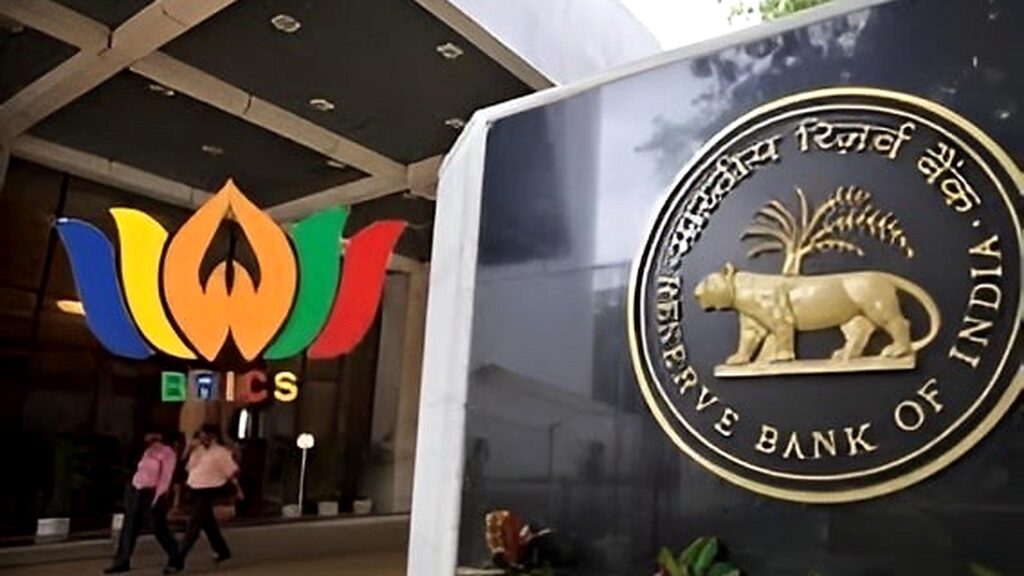
According to reports, the Reserve Bank of India has proposed linking the central bank digital currencies of BRICS members to facilitate cross-border transactions. Instead of introducing a single BRICS currency, the idea focuses on interoperability between national digital currencies.
Under such a system, businesses and travellers could make payments using their own country’s digital currency while the transaction is settled directly between central banks. This could significantly reduce the time and cost involved in international payments.
The proposal may be discussed during the next BRICS summit, which is expected to be hosted by India. If adopted, the system could become one of the first large-scale attempts to connect sovereign digital currencies among major emerging economies.
What Are CBDCs?
Central bank digital currencies, commonly known as CBDCs, are digital forms of sovereign currency issued by national central banks. Unlike cryptocurrencies such as Bitcoin, CBDCs are regulated and backed by governments, making them part of the official financial system.
India launched its own digital currency pilot known as the digital rupee in 2022. The project has gradually expanded through pilot programmes involving banks, financial institutions and retail users. Policymakers believe that the digital rupee could eventually play a role in international payments.
Other BRICS members are also experimenting with similar initiatives. China has been developing the digital yuan for several years, while Russia is testing a digital ruble. Meanwhile, Brazil and South Africa are conducting their own digital currency trials. Linking these systems could create a new network for cross-border settlements.
No Common BRICS Currency
Despite frequent headlines suggesting that BRICS may introduce a common currency, India has repeatedly expressed caution about the idea. A shared currency would require deep economic integration among member countries, including coordinated monetary policy and regulatory frameworks.
Given the significant differences between BRICS economies, such integration would be extremely difficult. Indian policymakers have therefore emphasized that improving payment connectivity is a more practical and achievable goal.
Commerce Minister Piyush Goyal once commented on the idea of a shared BRICS currency, saying: “Imagine sharing a currency with China. It is impossible to think of.” His remark reflects India’s preference for cooperation in financial infrastructure rather than a full monetary union.
Can It Challenge the Dollar?
A digital payment network within BRICS would not immediately replace the US dollar. The dollar continues to dominate global finance due to the size of the American economy and the depth of its financial markets.
However, linking national digital currencies could gradually reduce the need to use dollars in certain trade transactions. By allowing direct settlements between BRICS countries, the system could create alternative payment channels that bypass traditional dollar clearing networks.
Such changes would likely occur slowly. Most economists believe that any meaningful shift away from dollar dominance would take years or even decades.
Key Challenges
Despite the potential benefits, the proposal faces several obstacles. One major challenge is technological compatibility. Each BRICS country is developing its CBDC using different systems, which would need to be standardized before cross-border transactions could function smoothly.
Regulatory coordination is another major hurdle. Governments would have to agree on rules governing security, data sharing, and financial supervision. Without common standards, a digital payment network could face operational risks.
Political considerations could also influence the pace of progress. Differences in strategic priorities among BRICS members may affect how quickly the proposal moves forward.
Leaders’ Views
Leaders within BRICS have frequently emphasized the need for stronger financial cooperation among emerging economies. Prime Minister Narendra Modi has often highlighted the importance of strengthening economic ties between developing nations and creating a more balanced global economic order.
“BRICS has an important role in shaping a more balanced and inclusive global order.”
Meanwhile, officials at the Reserve Bank of India have stressed the importance of carefully managing the risks associated with digital currencies. Deputy Governor T. Rabi Sankar once warned that private digital assets could threaten financial stability if left unregulated.
“Stablecoins and private digital currencies raise serious concerns for monetary stability and financial resilience.”
What Comes Next
The upcoming BRICS summit could determine whether India’s digital currency proposal gains broader support among member countries. If the initiative moves forward, it may lay the foundation for a new cross-border payment system connecting emerging economies.
Such a network would not replace the US dollar overnight. Instead, it could gradually diversify the ways international payments are conducted. For many analysts, this represents a cautious but significant step toward a more multipolar financial system.
As digital currencies continue to evolve, the decisions taken within BRICS could shape the future of global finance for years to come.


