

The United States and Israel are stepping up coordinated efforts to curb Iran’s oil exports to China, targeting the Islamic Republic’s primary source of hard currency as indirect nuclear negotiations resume in Europe. The strategy marks a sharpened application of economic pressure designed to strengthen Western leverage at the negotiating table.
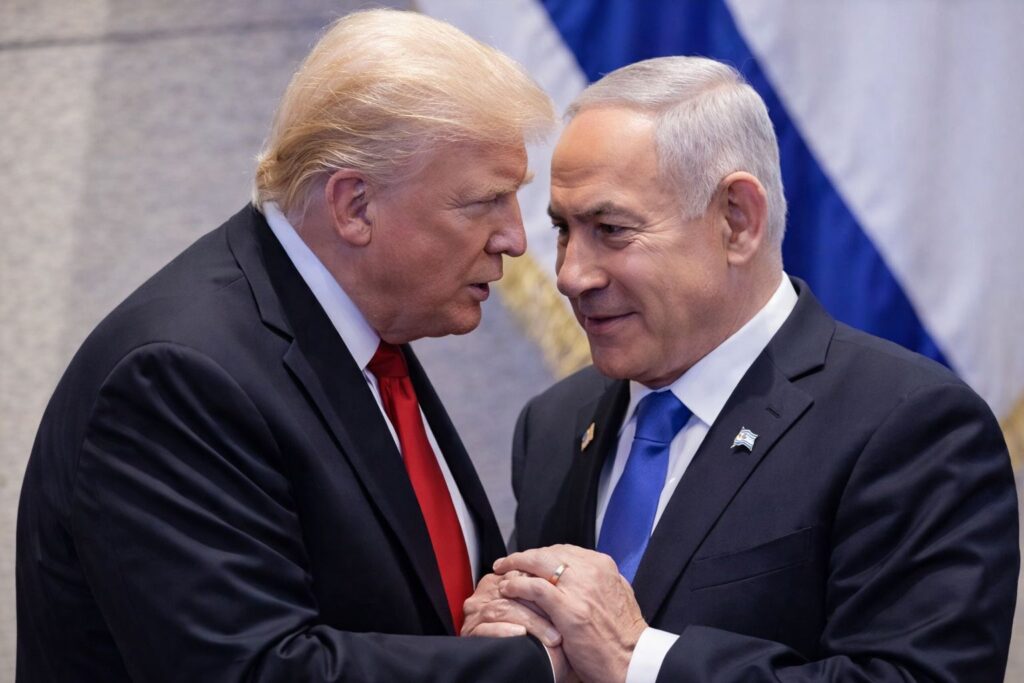
Following talks at the White House, US President Donald Trump and Israeli Prime Minister Benjamin Netanyahu agreed Washington should intensify measures aimed at restricting Iranian crude flows to China. According to reporting by Reuters, a senior US official described the approach bluntly: “We agreed that we will go full force with maximum pressure against Iran, for example, regarding Iranian oil sales to China.”
The remark underscores a return to assertive sanctions enforcement at a moment when diplomacy with Tehran is delicately balanced.
Oil as Leverage
China currently accounts for more than 80 percent of Iran’s oil exports, according to trade estimates cited in international reporting. These shipments, frequently routed through intermediaries and discounted arrangements, have provided Tehran with a financial cushion against years of Western sanctions.
By focusing on this trade, Washington is targeting the core of Iran’s external income. Oil revenues fund state budgets, stabilise foreign exchange reserves and help sustain Iran’s regional posture. Curtailing those flows would tighten economic conditions in a country already grappling with inflation, currency weakness and limited access to global financial systems.
The White House has signalled that enforcement could be broadened. A recent executive order provides scope for expanded economic penalties, potentially including additional tariffs or measures against entities facilitating commerce with Iran. While no direct action against Beijing has been announced, the intent to disrupt Iran’s energy lifeline has been clearly articulated.
Israel’s Position
Netanyahu has framed the pressure campaign as inseparable from the nuclear issue. Speaking publicly in recent days, he insisted that economic leverage must translate into structural constraints on Iran’s atomic programme. “Any deal with Iran must dismantle nuclear infrastructure, not just stop enrichment,” he said, setting out Israel’s red lines ahead of the latest round of diplomacy.
For Israel, the concern is not merely about uranium enrichment levels but about the permanence of restrictions. Israeli officials argue that temporary caps would leave Tehran’s technical capacity intact. The oil squeeze is therefore viewed in Jerusalem as an essential tool to compel deeper concessions.
Talks in Geneva
The economic push unfolds alongside indirect negotiations between Washington and Tehran, mediated by Oman and held in Geneva. The talks aim to establish limits on enrichment and inspection mechanisms in exchange for sanctions relief.
Iran’s chief negotiator, Foreign Minister Abbas Araqchi, has rejected what he describes as coercive tactics. “Iran rejects submission under pressure,” Araqchi said before meetings with international officials. He reiterated that Tehran seeks sanctions relief in exchange for curbs on nuclear activity while maintaining that its programme is peaceful.
Ahead of discussions with the International Atomic Energy Agency, Araqchi added that Iran would engage technically, stating, “We will meet with the IAEA and negotiate fairly.” The comments reflect Tehran’s attempt to project openness to dialogue while resisting economic escalation.
The simultaneous application of pressure and negotiation illustrates the narrow path both sides are attempting to navigate.
China’s Response
Beijing has defended its commercial ties with Tehran. China’s foreign ministry has stated that “normal cooperation between countries conducted within the framework of international law is reasonable, legitimate, and should be respected and protected.”
For China, Iranian crude represents discounted supply and diversification amid global energy volatility. For Iran, the relationship provides a vital export channel in a constrained market.
Should Washington intensify enforcement, China’s response will be decisive. Continued large-scale purchases would blunt the impact of sanctions and heighten geopolitical friction. A reduction in imports, by contrast, would expose Iran to acute fiscal strain.
The triangular dynamic between Washington, Tehran and Beijing now sits at the heart of the broader nuclear file.
Military and Market Signals
Economic pressure is reinforced by visible security signalling. The United States has maintained an enhanced military presence in the Middle East, including naval deployments, as a backdrop to negotiations. The posture signals readiness for contingencies even as diplomacy proceeds.
Energy markets have responded cautiously. Oil prices have fluctuated in response to headlines about talks and enforcement measures. Traders are weighing the risk of tighter supply against the possibility that negotiations could eventually ease restrictions.
Any serious disruption to Iranian exports would have implications for global supply balances. Conversely, diplomatic progress could dampen risk premiums. For now, uncertainty defines market sentiment.
Internal Strain
External pressure coincides with domestic tension in Iran. Recent protest waves have highlighted economic grievances and political dissatisfaction. Rights groups report heavy crackdowns by security forces.
Exiled opposition figure Reza Pahlavi has called on Western governments to support what he describes as the Iranian people’s aspirations for change. Tehran dismisses such appeals as foreign interference.
Although domestic unrest does not directly dictate nuclear policy, reduced oil income could exacerbate fiscal pressures and complicate internal calculations. Economic contraction may limit Tehran’s room for manoeuvre at a sensitive diplomatic juncture.
Calculated Escalation
The coordinated US-Israel initiative to pressure Iran’s oil sales to China represents a calculated escalation rather than a rupture with diplomacy. The approach seeks to raise the economic cost of resistance while preserving a channel for negotiation.
Success will depend on enforcement, allied coordination and China’s willingness to absorb political friction. It will also depend on Iran’s capacity to withstand renewed economic stress.
For Washington, the strategy reflects a broader belief that sustained economic leverage can shape security outcomes. For Israel, constraining Iran’s revenue is viewed as essential to curbing both nuclear and regional ambitions. For Tehran, the challenge is balancing resistance with the economic realities of isolation.
A Critical Moment
As talks continue in Geneva, oil exports have become the central instrument in a dispute that spans nuclear capability, sanctions architecture and great-power rivalry. By targeting Iran’s China-bound crude, the United States and Israel are striking at the foundation of Tehran’s economic resilience.
Whether this intensified pressure compels compromise or deepens confrontation will determine the next phase of the nuclear crisis. For now, diplomacy and coercion are advancing side by side, and the outcome remains uncertain.


