

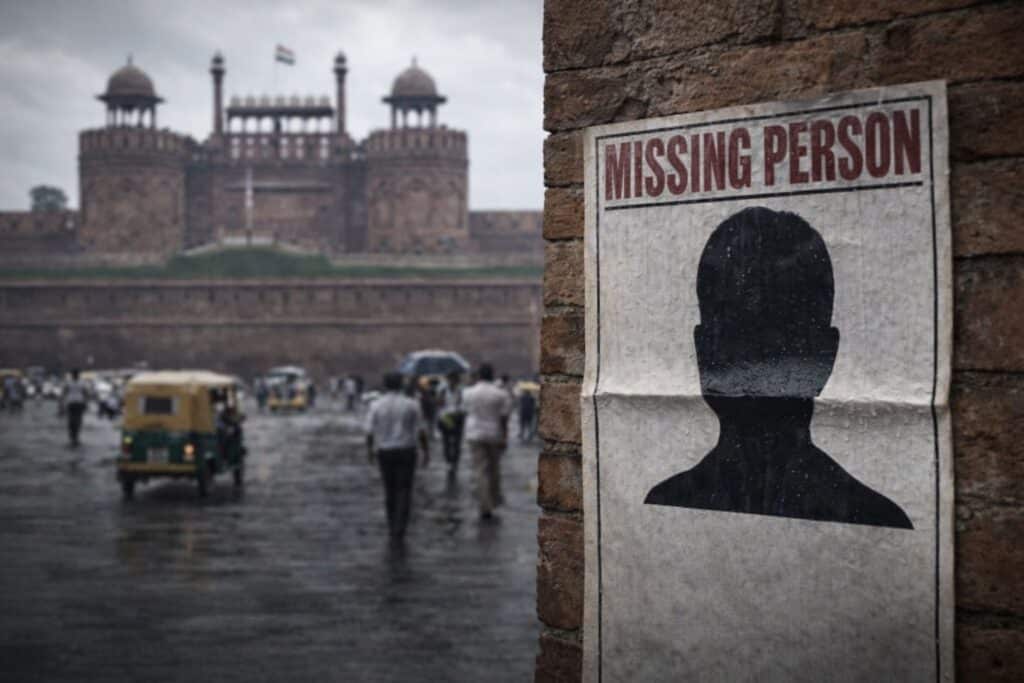
More than 800 people have gone missing in India’s capital in the first 15 days of 2026, according to official police data, triggering fresh concerns over public safety, policing capacity and the vulnerability of women and children in one of the country’s largest cities.
Figures compiled by the Delhi Police show that 807 missing person reports were registered between January 1 and January 15. Of these, 509 were women and girls, while 191 were minors, underscoring a sharp gender and age imbalance that has alarmed both officials and civil society observers.
On average, around 54 people disappeared every single day during the first half of the year. While police say hundreds of cases are eventually resolved, the scale and speed of the disappearances have renewed scrutiny of how missing persons cases are handled in the national capital.
Disturbing Numbers
The police data shows that women and girls account for nearly two-thirds of all reported missing persons in this period. Men made up the remaining share, but in significantly lower numbers.
By mid-January, authorities had traced 235 individuals, leaving more than 570 people still unaccounted for. For families of the missing, each unresolved case represents days or weeks of uncertainty, fear and unanswered questions.
Officials stress that the data reflects only those cases that are formally reported to police stations. Experts say the actual number of disappearances could be higher, as some families delay reporting or do not approach the police at all.
Women Most Affected
The dominance of women in the figures has emerged as the most striking feature of the data. Among adults reported missing, women again outnumber men by a wide margin.
Police records show that hundreds of adult women were reported missing in just two weeks. While a portion of them have since been traced, a large majority remain unlocated, adding to concerns about safety in public and private spaces.
Criminologists and social researchers say the reasons behind women going missing are often complex. They range from domestic conflict and economic stress to coercion, exploitation and, in some cases, organised trafficking. Without case-by-case disclosures, it remains difficult to draw firm conclusions, but the pattern itself is hard to ignore.
Children at Risk
The figures relating to minors are equally troubling. Of the 191 children reported missing, teenage girls form the largest group. Adolescents between the ages of 12 and 18 account for the overwhelming majority of child disappearances recorded in this period.
Only a small number of these teenagers had been traced by mid-January. Police data suggests that more than two-thirds of missing adolescents remain unlocated, raising fears about their safety and well-being.
Younger children also feature in the data, though in smaller numbers. Even so, child rights activists warn that any case involving a missing child should be treated as an emergency, regardless of age or background.
Advocates argue that teenage girls are particularly vulnerable due to social pressures, unsafe environments, and lack of support systems. They have repeatedly called for faster response times and stronger coordination between police units when minors go missing.
Adults Still Missing
Adults continue to form the largest overall category of missing persons in Delhi. In the first 15 days of 2026, more than 600 adults were reported missing, with women again forming the majority.
While police managed to trace nearly half of the adults who were eventually located, hundreds remain missing. Sociologists note that large cities like Delhi attract migrant workers, students and job seekers, which can complicate tracking efforts when individuals lose contact with families.
However, experts also caution against dismissing adult disappearances as voluntary. Many cases involve vulnerable individuals facing abuse, financial hardship or mental health challenges, making swift intervention critical.
Not an Isolated Spike
Authorities emphasise that the January figures, while alarming, are part of a longer trend. Delhi has consistently recorded high numbers of missing persons over the past decade.
In 2025 alone, police data shows that over 24,000 people were reported missing in the city, with women accounting for more than 60 percent of the cases. While a majority were eventually traced, thousands of cases remained unresolved by the end of the year.
Over the last ten years, more than two lakh missing person reports have been filed in Delhi. Although police have traced many of them, tens of thousands of cases are still officially pending. Analysts say this highlights systemic challenges rather than short-term failures.
Police Under Pressure
Delhi Police say they are continuing efforts to trace missing persons, particularly women and children. Officers use a range of tools, including mobile phone tracking, CCTV footage, field inquiries and coordination with police forces in other states.
Senior officials insist that every missing person report is registered and investigated, but acknowledge that the volume of cases places immense strain on resources. Critics argue that delays in the early hours of a disappearance can severely reduce the chances of recovery, especially in cases involving minors.
There have also been calls for better data integration and a more robust national database to track missing persons across state borders, as many cases involve inter-state movement.
Public Anxiety
The revelations have sparked widespread concern among residents, particularly parents and women. Social media platforms and community groups have been flooded with discussions about safety, policing and accountability.
Some citizens have described the numbers as deeply unsettling, questioning how so many people can disappear in such a short span of time in the heart of the national capital. Others have urged caution, warning against panic and misinformation that could hamper investigations.
What remains clear is that the figures have struck a nerve, reinforcing long-standing fears about safety in India’s largest cities.
Why It Matters
Behind every statistic is a person and a family waiting for answers. The surge in missing persons at the start of 2026 has once again exposed serious gaps in prevention, response and long-term solutions.
The disproportionate impact on women and children raises urgent questions about protection mechanisms, early intervention and accountability. Without sustained policy attention and investment in policing and social support systems, experts warn that such numbers may continue to recur.
For now, as investigations continue and families wait, the data offers a stark reminder that missing persons are not just numbers on a police chart, but a human crisis unfolding in plain sight in the capital.


