

India’s premier counter-terror agency has uncovered what officials describe as a serious and evolving national security threat involving foreign mercenaries, drone warfare training, and cross-border insurgent networks operating along the India–Myanmar frontier.
On March 13, 2025, the National Investigation Agency arrested seven foreign nationals, including American citizen Matthew VanDyke and six Ukrainians, in a coordinated crackdown across Kolkata, Delhi, and Lucknow.
According to officials and FIR details, the case is now being probed as an alleged conspiracy against India, involving the transfer of combat skills, weapons support, and advanced drone warfare techniques to armed groups operating close to Indian territory.
Network, Not Individuals
Investigators say the arrests are only the beginning.
Security agencies believe a larger network of foreign operatives entered India over the past year under the cover of tourist visas. Several individuals are still unaccounted for, and efforts are underway to trace their movements, contacts, and operational roles.
The NIA has informed courts that the accused were part of a coordinated structure that had been active since 2024, conducting repeated training missions and building linkages with armed groups across the Myanmar border.
Myanmar Corridor
The investigation has exposed a clear cross-border route.
The accused allegedly travelled through international transit points before entering India and moving toward Mizoram. From there, they are believed to have crossed into Myanmar’s Chin State without mandatory permits required for foreign nationals in restricted areas.
This corridor is now under scrutiny as a potential channel for insurgent coordination, movement of foreign operatives, and transfer of sensitive equipment.
Officials say the route has increasingly been linked to a mix of activities including arms flow, training operations, and narcotics trafficking, raising alarms about long-term vulnerabilities in the region.
Drone Warfare and Combat Training
At the centre of the case is the alleged transfer of modern battlefield capabilities.
According to investigators, the group provided training in drone warfare, including assembly, modification, and deployment of drones for combat roles. This included FPV-style operations, which have become a defining feature of contemporary conflicts.
The training also covered counter-drone tactics such as jamming and neutralisation, indicating a level of sophistication typically seen in active war zones.
In addition to drone systems, officials say the accused also provided instruction in guerrilla warfare and tactical combat, suggesting a broader effort to enhance the operational capacity of armed groups.
Weapons and Equipment Supply
The probe has also uncovered alleged supply chains linked to the network.
Authorities say the accused were involved in facilitating the movement of drone components and possibly other equipment sourced from Europe and routed through India into Myanmar.
Investigators are examining financial trails and logistics networks to determine how such materials were procured, transported, and distributed.
The inclusion of weapons support alongside training has significantly escalated the seriousness of the case, placing it firmly within the domain of terror-related conspiracy.
Links to Indian Insurgent Groups
One of the most sensitive aspects of the investigation is the potential connection to India’s internal security landscape.
According to officials, the Myanmar-based armed groups that received training are believed to have linkages with banned insurgent outfits active in India’s Northeast.
This raises concerns that the skills and technologies being transferred could eventually be deployed within Indian territory, particularly in regions already affected by ethnic and insurgent tensions.
Security agencies are now working to establish whether any operational plans extended beyond training into potential deployment scenarios.
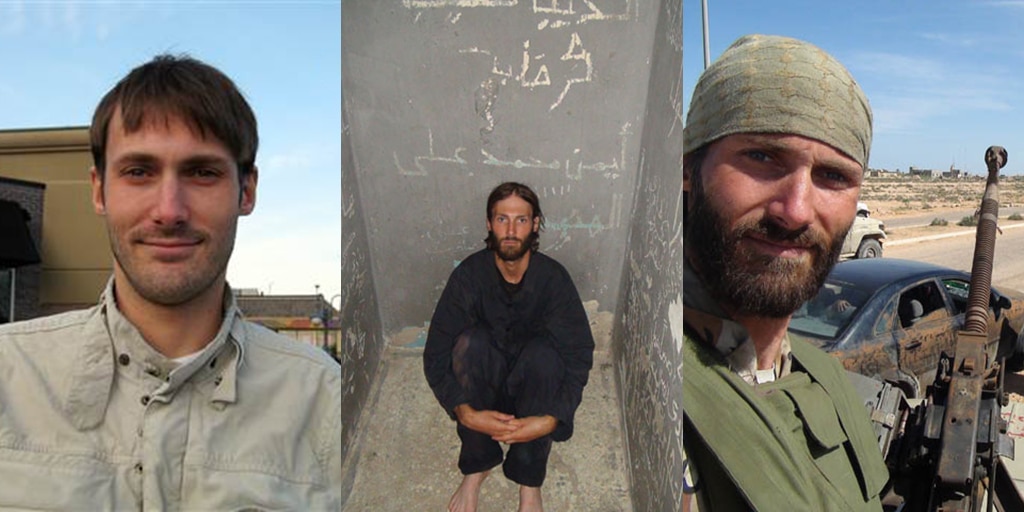
Profile of Matthew VanDyke
The role of Matthew VanDyke has drawn particular attention.
VanDyke is known to have operated in multiple global conflict zones, including Libya and Syria, and has been involved in training forces in irregular warfare environments. He runs a private organisation that provides military training and advisory services.
Investigators are examining his past activities, including public calls for recruiting volunteers into conflict zones, to assess whether a broader pattern of engagement with non-state armed groups exists.
His presence in the network has added weight to concerns that the operation involved professional-level expertise rather than ad hoc support.
Intelligence Trail
Officials indicate that the network had been under watch for months.
Inputs from foreign intelligence agencies played a role in tracking the movement of the accused across regions and identifying their activities. Surveillance efforts helped map travel routes, meeting points, and suspected training locations.
VanDyke was intercepted at Kolkata airport shortly before departure, while other members were detained in parallel operations across multiple cities.
The coordinated nature of the arrests suggests a pre-planned enforcement action based on sustained intelligence gathering.
Legal Action and Global Response
All seven accused have been charged under the Unlawful Activities Prevention Act, India’s primary anti-terror law. They were remanded to custody as the investigation entered a critical phase.
The case has triggered international attention.
Ukraine has sought access to its detained nationals and raised concerns about their treatment, while maintaining that the matter requires further clarification. The United States has said it is aware of the situation but has not issued a detailed statement.
Competing Narratives
While Indian agencies are treating the case as a serious security breach, alternative interpretations have also emerged.
Ukrainian officials have indicated that some of the individuals may not have been fully aware of India’s restricted area regulations, suggesting that part of the case could involve violations linked to movement and permits.
However, Indian investigators maintain that the scale of activities, repeated cross-border movement, and nature of training point to a far more organised and deliberate operation.
Expanding Investigation
The focus of the investigation is now widening.
Authorities are working to identify local facilitators who may have assisted the network within India, map financial transactions, and trace the full extent of the drone supply chain.
There is also an effort to determine whether additional foreign operatives remain active in the region or have exited the country undetected.
Strategic Implications
The case is being seen within security circles as a potential indicator of evolving threats.
The combination of foreign expertise, emerging drone warfare capabilities, and existing insurgent networks presents a complex challenge. It reflects a shift toward hybrid methods where non-state actors gain access to advanced technologies and training traditionally associated with formal military forces.
Officials believe the exposure of this network may have prevented a larger security risk from taking shape along India’s eastern frontier.
“The investigation is ongoing and all possible angles, including larger conspiracy and external linkages, are being examined,” officials said, underscoring the gravity of the case and the uncertainty surrounding its full scope.


