

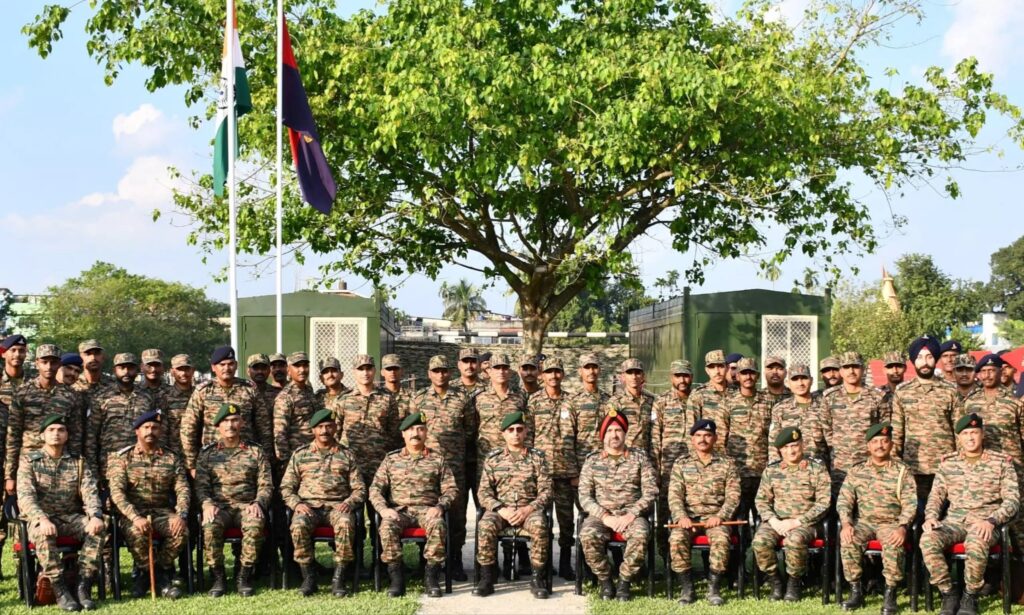
The Siliguri Corridor, a mere 20 to 22 kilometres wide at its narrowest point, connects the Indian mainland with the seven northeastern states. Flanked by Nepal to the north and Bangladesh to the south, the corridor’s security is of immense geopolitical importance. Any disruption here could effectively isolate the northeast, making its defence and connectivity critical to India’s sovereignty.
For decades, the corridor has been viewed as a vulnerable choke point, and the latest military reinforcements mark one of the most significant defensive upgrades in the region’s history.
The new outposts: Kishanganj, Chopra, and Dhubri
The forward camps at Kishanganj and Chopra are designed to provide logistical depth, surveillance, and quick deployment capabilities. Kishanganj, positioned in north Bihar, strengthens lateral mobility between central and eastern command structures. Chopra, near the Bangladesh border, enhances early-warning capabilities and cross-border observation.
Further east, the newly established Lachit Borphukan Military Station in Bamuni, Dhubri, will act as a long-term operational and logistics hub. Named after the famed Ahom general, it will anchor Army presence in lower Assam and ensure sustained monitoring of border activities along the Brahmaputra basin.
Rising tensions and the Bangladesh–China connection
This military expansion follows recent developments in Bangladesh’s defence modernization program, which has introduced Chinese-made HQ-17AE air defence systems, JSG-400 radar arrays, and FK-3 surface-to-air missiles along its northern frontier just across from India’s border in Assam and West Bengal.
These systems were part of a $4.7 billion defence deal signed in 2024 between Dhaka and Beijing. While both sides have officially maintained that the deployments are “purely defensive,” the move has drawn close attention in New Delhi.
The Indian establishment views the presence of advanced Chinese-supplied missile and radar systems near the Siliguri corridor as a potential strategic concern, given the area’s historic vulnerabilities and proximity to critical transport and supply routes.
Water, borders, and the delicate balance
India and Bangladesh continue to negotiate contentious issues like Teesta River water-sharing, cross-border movement, and small-scale territorial disputes along the Indo-Bangladesh frontier. The cumulative friction, though managed diplomatically, underscores the fragile balance of regional relations.
India’s latest deployments, while defensive in nature, serve a dual purpose securing national interests and signaling strategic readiness in a region witnessing deepening Chinese influence.
Strategic and regional implications
By fortifying the Siliguri Corridor, India enhances its ability to respond to emerging threats in the eastern theatre. The integration of new garrisons creates redundancy, rapid deployment capability, and persistent surveillance coverage across a region often considered the country’s soft underbelly.
Analysts note that the timing of these deployments just months after Bangladesh’s modernization push reflects India’s intent to stay strategically ahead and ensure that its eastern connectivity remains uninterrupted under any contingency.
The development also fits within India’s larger Indo-Pacific security posture, which emphasizes infrastructure development, border vigilance, and regional partnerships to counter expanding Chinese influence across South Asia.
Beyond security: infrastructure and local impact
Apart from their strategic value, the new garrisons are expected to boost local infrastructure, transportation, and employment opportunities. Civil-military coordination in the area will likely strengthen, improving law enforcement, border monitoring, and disaster management readiness.
The naming of the Dhubri station after Lachit Borphukan also reflects the Army’s effort to integrate regional heritage into national defence consciousness, bridging symbolism with strategy.
India’s Message to the Region
India’s decision to establish new military garrisons at Dhubri, Kishanganj, and Chopra is a calculated response to shifting geopolitical realities in South Asia. The fortification of the Siliguri Corridor not only secures the nation’s most critical land link to the northeast but also sends a clear strategic signal amid rising Chinese involvement in Bangladesh’s military modernization.
As the regional balance continues to evolve, India’s proactive measures reaffirm its commitment to safeguarding connectivity, ensuring deterrence, and preserving long-term stability along its eastern frontier.


