

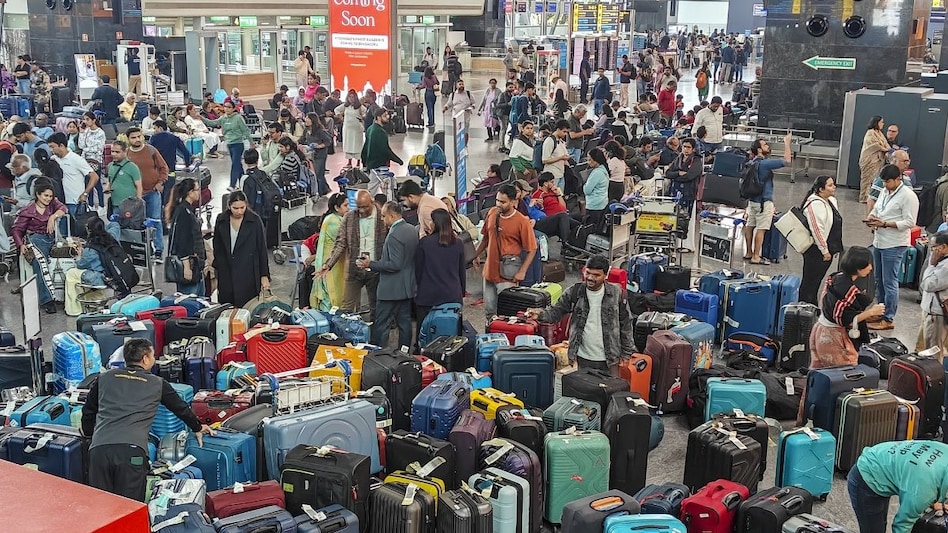
IndiGo, India’s largest airline, has triggered a national storm of anger, disbelief and heartbreak as thousands of passengers continue to suffer through unprecedented cancellations, delays and airport chaos. What should have been a routine travel day turned into a nationwide aviation collapse, exposing structural failures, regulatory tensions and shocking scenes of human distress.
Across India’s busiest airports Delhi, Mumbai, Bengaluru, Chennai, Hyderabad, Pune, Ahmedabad- the situation spiraled into a humanitarian and operational nightmare. And the question now echoing across the country is blunt:
Has IndiGo become too big to care?
A Crisis That Didn’t Need to Happen
The official trigger behind the chaos was the enforcement of DGCA’s new Flight Duty Time Limitations (FDTL). These rules, meant to protect pilots from fatigue, require stricter rest periods, reduced night duties, and tighter scheduling control. Aviation safety experts have long warned that India’s pilots operate under extreme stress, often flying dangerous night-heavy rosters.
IndiGo had two years to prepare for these changes. Yet, when the new norms became fully active, the airline behaved as if it had been ambushed overnight. This raises a disturbing question: how did the airline with the biggest market share, the largest crew strength, and the most aggressive scheduling model fail so dramatically while other carriers continued to operate?
Many critics believe IndiGo simply refused to adapt, betting that the government would bend the rules once the entire system collapsed. And looking at what unfolded, that bet may have actually paid off.
Passenger Outrage Hits Boiling Point
Social media exploded after several passengers recorded themselves stranded for hours without clarity, support or basic assistance. What should have been routine departures turned into scenes of public breakdown, medical distress and complete operational collapse.
A French passenger’s emotional outburst has now gone viral, capturing global attention. In the widely circulated clip, she cried:
“I want to go back to my country. It’s you who canceled my ticket. So I want a new one, the same as before! I will return to France. I don’t need anyone; I’m going back to France. I want my ticket! They have ruined everything.”
Her words have become symbolic of the simmering passenger anger that IndiGo is struggling to contain.
Father Breaks Down: ‘My Daughter Is Bleeding’
But the most disturbing moment in this unfolding crisis came from a video that shook the nation.
A father, crying helplessly, pleaded for sanitary pads for his bleeding daughter after being stranded for hours inside the airport. His raw desperation exposed the human cost of this crisis in a way no corporate apology ever could.
He was heard saying:
“My daughter needs sanitary pads… she is bleeding. I am crying. Flights are not running on time. There is speculation going on in the name of power.”
This single video has become the emotional centerpiece of the IndiGo meltdown, raising troubling questions about emergency preparedness, humanitarian handling and airport response mechanisms.
Government Steps In- And Not Quietly
With delays cascading and public anger rising, the Ministry of Civil Aviation intervened. Civil Aviation Minister Ram Mohan Naidu Kinjarapu announced a series of immediate corrective measures to stabilise the situation. These include:
- Temporary relaxation of FDTL rules to allow IndiGo some breathing room.
- An inquiry committee to investigate what went wrong and who is responsible.
- Mandatory refunds for cancelled flights.
- Strict monitoring of airfares to prevent sudden price spikes.
- 24×7 control room to assist affected passengers.
- Deadline for returning stranded baggage to passengers by December 7.
- Indian Railways adding extra coaches to help stranded passengers reach their destinations.
The Minister’s statement reflected strong displeasure:
“We have formed a committee to inquire where things went wrong and who did it wrong. We will take necessary action. This will not be left unattended. Whoever is responsible will have to pay for it.”
The government’s tough stance indicates the seriousness with which it views the crisis, especially given IndiGo’s dominant position in India’s domestic aviation market.
Why IndiGo Was Hit the Hardest
Although the new FDTL rules apply to all airlines, IndiGo’s operational model made it more vulnerable. Aviation analysts highlight several key reasons:
- High dependence on night and early-morning flights.
- Extremely tight aircraft rotation schedules that leave little room for disruption.
- Insufficient standby pilots and inadequate roster buffers.
- Over-optimised scheduling that collapses when even a small gap appears.
While other airlines also faced challenges, none experienced a meltdown of this magnitude. This raises serious concerns about internal planning, leadership oversight and long-term workforce management at IndiGo.
Political and Public Controversy Grows
Public commentary has taken a much sharper tone. Many passengers and observers believe this crisis was avoidable. Some allege that IndiGo and other major carriers continued selling tickets despite knowing their crew would not be able to legally operate the flights.
Conspiracy theories have also emerged, especially given the timing ahead of high-profile international visits. Many online voices argue that foreign-led airline managements may be attempting to pressure the government by engineering chaos. Others have linked the situation to broader industry trends such as recent aircraft incidents and global fleet issues.
Whether these narratives hold weight or not, they reflect the growing mistrust between passengers and India’s aviation giants.
IndiGo Responds
IndiGo issued a public apology, acknowledging the crisis and assuring passengers that the airline is working to stabilise operations. It promised to reboot internal systems, adjust rosters and restore normal schedules as early as possible.
However, the airline also admitted that operations may take several weeks to fully normalise. According to government estimates, IndiGo may not be back to full stability until February 2026.
Can IndiGo Bounce Back?
IndiGo has committed to normalizing operations by 10 February 2026, after filing a detailed roadmap with the DGCA to fill crew gaps, restructure rosters, and stabilize flight schedules.
However, restoring public trust may take far longer. For passengers, the memory of airport chaos, lost luggage, missed connections, and poor communication will not fade easily. For rivals in the aviation market, this crisis has exposed a genuine vulnerability in India’s largest airline. For IndiGo itself, it serves as a stark reminder of the risks of over-optimized scheduling without adequate buffer or contingency planning.
For the broader aviation industry, the hope is that airlines will plan more conservatively, regulators will balance safety norms with practical implementation, and passengers will finally get the safety, predictability, and reliability they deserve.
For now, as travelers brace for more turbulence in the coming weeks, the nation watches closely to see whether IndiGo can truly recover on time, and without further cancellations.


