

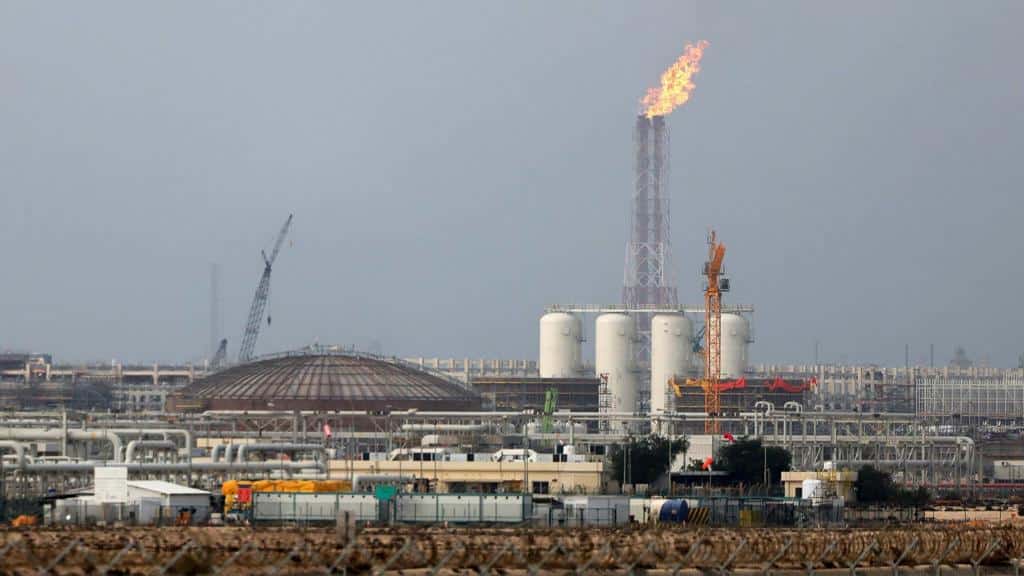
Iran-linked strikes on Qatar’s Ras Laffan Industrial City have pushed the West Asia conflict into a far more dangerous phase, hitting what analysts describe as the nerve centre of global LNG supply. As the world’s largest liquefied natural gas hub, Ras Laffan accounts for nearly one-fifth of global LNG output, making any disruption here immediately consequential far beyond the region.
Initial reports indicate that missiles struck sections of the LNG complex, triggering fires and forcing partial shutdowns of key processing units. The attack follows earlier strikes on Iran’s South Pars gas field, underlining a clear escalation pattern where energy infrastructure itself has become the primary target.
Supply Shock Already Visible
The impact of the strike is already being felt across global energy markets. Brent crude has climbed to around 111 dollars per barrel, while LNG prices in Asia and Europe are rising as buyers scramble to secure alternative cargoes.
This is no longer a theoretical risk. The disruption at Ras Laffan has tightened supply at a time when global LNG markets were already operating with limited spare capacity. Traders are increasingly factoring in the possibility that even if physical supplies resume, elevated prices may persist due to lingering uncertainty and logistical constraints.
Hormuz Adds to the Risk
The Strait of Hormuz remains a critical factor in amplifying the crisis. A significant portion of global LNG shipments passes through this narrow route, and heightened tensions have slowed shipping activity, with vessels facing delays and rerouting.
This dual pressure of disrupted production and constrained transit is creating a supply squeeze that is difficult to resolve quickly. Even limited interruptions in such a tightly balanced system can have outsized effects on availability and pricing.
India’s Dependence Exposed
For India, the developments bring a key vulnerability into sharp focus. Qatar supplies roughly 40 to 50 percent of India’s LNG imports, making it the country’s primary external source of natural gas.
With a large share of these imports transiting through the Strait of Hormuz, India faces a compounded risk. Any sustained disruption, whether at the production level or along shipping routes, directly affects domestic supply conditions.
This dependence means that what appears to be a regional conflict quickly translates into a domestic energy concern.
Supply Risks Extend to Homes and Industry
The disruption comes at a time when India is already facing pressure on LPG availability, adding another layer to the emerging energy strain. Analysts warn that the impact may not be limited to rising prices alone, with piped natural gas supply to households and industries also at risk if LNG imports tighten further.
City gas networks, which depend on steady LNG flows, could face constraints, forcing prioritisation between domestic and industrial consumers. This raises the possibility of supply adjustments in the near term if the crisis deepens.
Costs Begin to Rise
The effects are expected to ripple through the Indian economy in a cascading manner. Rising LNG prices are likely to push up the cost of compressed natural gas used in transport and piped natural gas supplied to households.
Higher gas prices also feed into fertiliser production, increasing the risk of costlier agricultural inputs and, eventually, upward pressure on food prices. At the same time, industries dependent on gas are likely to face tighter margins as input costs rise.
Even in a scenario where supply stabilises, elevated global prices could continue to exert pressure across sectors.
Industry Under Pressure
Energy-intensive industries in India are particularly exposed to the evolving crisis. Gas-based power generation, often used to manage peak demand, may become more expensive, potentially affecting electricity tariffs.
Manufacturing sectors such as fertiliser, steel MSMEs, petrochemicals, and ceramics are also likely to face rising costs. The cumulative effect could slow industrial activity if the disruption persists over a longer period.
The impact is already visible on the ground. India’s auto sector, a key driver of industrial growth, is facing the risk of production slowdowns as gas shortages begin to strain supply chains. Steel producers have warned of potential shutdowns and have sought government support to secure fuel supplies, while smaller manufacturers are reporting disruptions. The government has responded by prioritising gas allocation for essential sectors and curbing supplies to industry, underscoring the seriousness of the emerging energy crunch.
Global Dependence and Divergence
The impact of the disruption is not uniform across countries. India remains among the most exposed due to its reliance on Qatari LNG, but several other economies are also vulnerable.
Countries such as Pakistan and Bangladesh, which depend heavily on LNG imports, face a higher risk of supply constraints. Italy, with a significant share of LNG in its energy mix, is also exposed, while South Korea and Taiwan rely substantially on imported gas to power their economies.
At the same time, more diversified economies with a lower share of gas in their energy mix are relatively better positioned to absorb the shock, though at higher costs.
Tight Market Ahead
With limited spare capacity available globally, countries are turning to alternative suppliers such as the United States and Australia. However, increased competition for cargoes is expected to keep markets tight.
This suggests that the current disruption may have effects that extend beyond the immediate crisis window. Even as supply chains adjust, the balance between demand and availability is likely to remain fragile.
Strategic Concerns Deepen
The targeting of major energy infrastructure has raised broader concerns about the stability of global supply systems. Analysts warn that continued attacks on such facilities could further destabilise markets and prolong the crisis.
“Any disruption to energy infrastructure in the Gulf risks destabilising global markets and affecting millions of consumers worldwide,” a senior energy policy expert told international media, reflecting growing concern within the global energy community.
With tensions still high, the risk of further escalation remains, keeping energy markets volatile and reinforcing the strategic importance of energy security in an increasingly uncertain geopolitical environment.


