

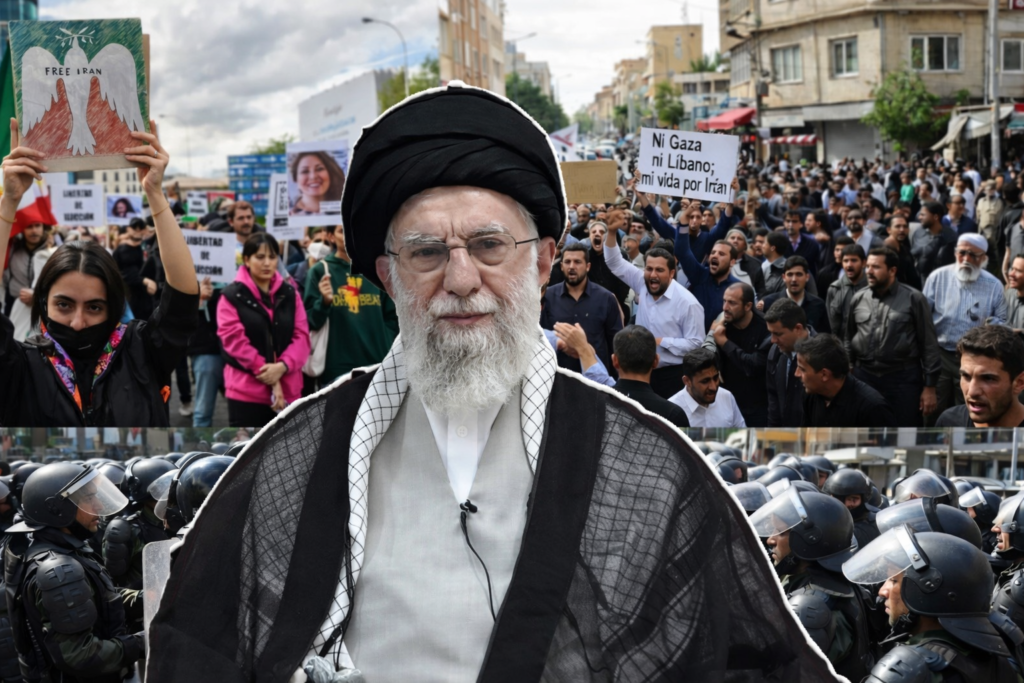
Iran’s Supreme Leader Ali Khamenei has rejected criticism from the United States, telling President Donald Trump to focus on domestic issues, as nationwide protests continue across Iran amid a sweeping internet and mobile communications shutdown.
The remarks, broadcast on state television, came as security forces intensified efforts to contain demonstrations that have spread across major cities since late December. Human rights groups report dozens of deaths and thousands of detentions, though independent verification remains limited due to restrictions on information.
Nationwide Unrest
Protests first erupted in Tehran before spreading to cities including Mashhad, Isfahan, Shiraz, Tabriz, Ahvaz, Kermanshah and Qom. Demonstrations initially focused on inflation, unemployment and rising food prices, but have since expanded into broader expressions of political dissent.
Crowds have been recorded chanting “Death to the Dictator” and slogans directed at Iran’s senior leadership. In several locations, shopkeepers closed businesses, while students staged walkouts and street marches.
Security forces, including riot police, Revolutionary Guard units and plainclothes officers, were deployed in large numbers. Video footage recorded before communications were restricted showed clashes in residential neighbourhoods and city centres.
Internet Shutdown
On January 8, Iranian authorities imposed a near-total shutdown of internet and mobile phone services across much of the country. Internet monitoring organisations reported connectivity dropping sharply within hours.
Officials did not announce how long the restrictions would remain in place. Iran has previously imposed similar blackouts during periods of unrest to disrupt protest coordination and restrict the flow of information abroad.
The communications shutdown has complicated efforts to confirm casualty figures and arrest numbers, with most information emerging from rights groups and delayed uploads of video footage.
Leader’s Remarks
In a televised address, Khamenei accused Iran’s adversaries of exploiting the unrest and dismissed comments from Washington. Referring to Trump, he said foreign leaders should “focus on the problems in their own country” rather than commenting on Iran.
Iranian officials have repeatedly alleged that protests are being encouraged by foreign governments, particularly the United States and Israel. State media has portrayed the demonstrations as limited in scale and influenced by outside actors.
Activists and opposition figures have rejected these claims, describing the unrest as the result of domestic economic hardship and political frustration.
Deaths and Arrests
Human rights organisations monitoring the situation estimate that at least 40 people have been killed since the protests began, with some reports suggesting a higher toll. Thousands of arrests have been reported across multiple provinces.
Families of detainees have reported difficulty obtaining information about relatives, with access to lawyers restricted in many cases. Iranian authorities have not released comprehensive nationwide figures for deaths or detentions.
Iran’s judiciary has warned that those involved in unrest will face severe punishment, framing participation in protests as a threat to national security.
Economic Strain
Iran’s economy has been under sustained pressure, with inflation sharply reducing purchasing power and essential goods becoming increasingly expensive. The national currency has weakened significantly, while wages have failed to keep pace with rising costs.
Sanctions linked to Iran’s nuclear programme, alongside domestic economic mismanagement, have contributed to prolonged instability. In recent days, the government announced direct subsidy payments to households in an effort to ease rising food prices.
The measures were introduced as protests continued across multiple regions.
Exiled Opposition
The unrest has coincided with renewed calls from Reza Pahlavi, the exiled son of Iran’s last monarch, urging Iranians to continue demonstrations and seek political change.
In several cities, protesters were heard chanting slogans in support of the former royal family. Public expressions of monarchist sentiment have been rare in Iran since the 1979 revolution.
There has been no indication of a unified opposition leadership coordinating the protests.
State Television
During the unrest, Iran’s state broadcaster Islamic Republic of Iran Broadcasting aired clips featuring American political commentator Tucker Carlson, whose commentary has criticised U.S. foreign policy.
Footage recorded by viewers before the communications blackout showed the segments being broadcast while demonstrations were ongoing. The content focused on U.S. political debates rather than events unfolding inside Iran.
Authorities have not publicly explained the decision to air the material. The broadcasts were noted by activists and media observers amid the broader restrictions on domestic communication.
Military Warnings
As protests continued, senior Iranian military commanders issued warnings to the United States, saying Iran was prepared to respond to any attack.
Military officials said Iran had strengthened its defensive and deterrent capabilities and would take action if threatened. Statements emphasised that Iran did not seek war but would respond decisively to any aggression.
The remarks added a military dimension to the unfolding domestic crisis.
U.S.–Iran Tensions
The unrest has unfolded against a backdrop of renewed tensions between Tehran and Washington. Trump has warned Iran against using lethal force against protesters and said the situation was being closely monitored.
Iranian officials have accused the United States of attempting to destabilise the country and have linked domestic unrest to broader geopolitical pressure.
International Response
Several European governments have expressed concern over reports of violence and the nationwide communications shutdown, calling for restraint and respect for the right to peaceful assembly.
Diplomatic engagement has remained limited, with access to reliable information from inside Iran severely restricted.
Information Control
The combination of a communications blackout, judicial warnings and tightly managed state media output highlights the central role of information control in the government’s response to unrest.
Independent reporting from inside the country remains limited.
Situation Unclear
With internet access still heavily restricted, security forces maintaining a strong presence in major cities and military rhetoric intensifying, it remains unclear how the situation will develop.
Protests have continued despite the crackdown, while Iran’s leadership has shown no indication of policy concessions. The country faces ongoing uncertainty as unrest persists.


