

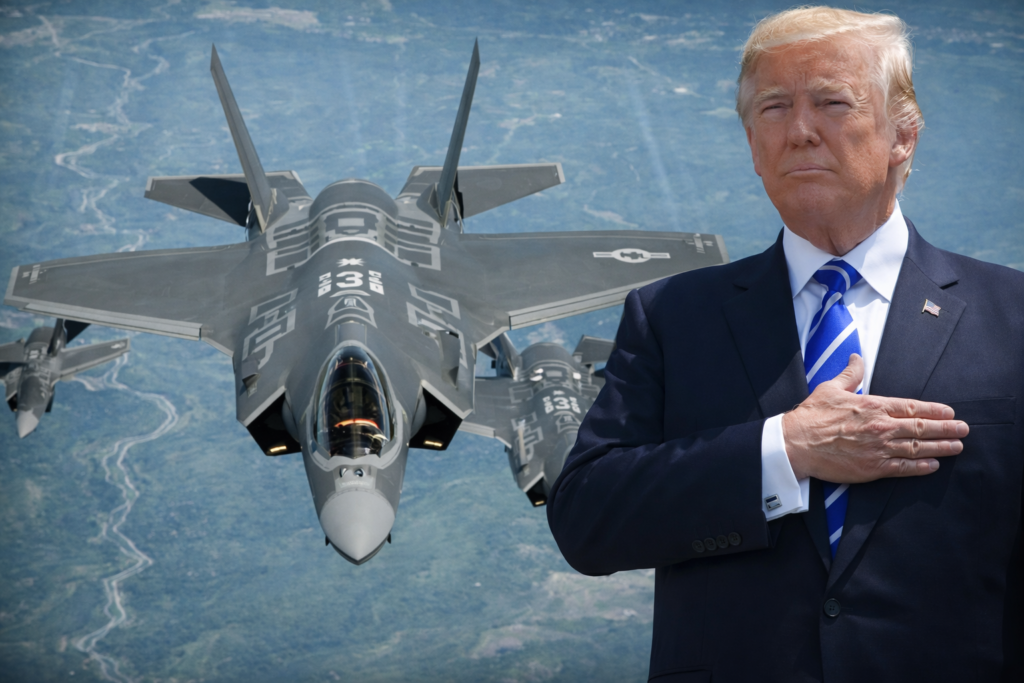
The United States has stepped away from the brink of military confrontation with Iran after President Donald Trump said he had received assurances that Iranian authorities had halted the killing of anti-government protesters and shelved planned executions, easing fears of an imminent strike that had stirred global concern.
Mr Trump’s announcement followed several days of rising tension, during which Washington reviewed military options, repositioned US personnel in the Middle East and warned of strong action if Iran carried out executions of demonstrators. Senior US and Iranian officials have since signalled a temporary de-escalation, with statements from both sides suggesting an effort to lower the immediate risk of direct conflict.
“We’ve been told that the killing in Iran is stopping. It’s stopped. It’s stopping,” Mr Trump said at the White House. He added that “there’s no plan for executions, or an execution, or executions”, saying he had been informed of this “on good authority”. He did not identify the source of the information and acknowledged it had not been independently verified.
The president, who earlier warned that the United States would take “very strong action” if Iran began hanging protesters, said his administration would continue to monitor developments closely. “We’re going to watch and see what the process is,” he said, leaving open the possibility of future action.
Violence inside Iran and global alarm
Iran has faced widespread unrest since late December, as protests erupted in cities across the country. What began as demonstrations over economic hardship and political discontent evolved into broader calls for political change. Human rights groups describe the unrest as one of the most serious challenges to Iran’s clerical establishment in decades.
The response by Iranian security forces has drawn international condemnation. According to activist groups reporting to international organisations, the crackdown has resulted in thousands of deaths. Estimates vary widely, ranging from more than 2,500 verified fatalities to claims exceeding 10,000. Iranian authorities dispute those figures and say security forces acted against violent actors rather than peaceful protesters.
Global concern intensified after Iran’s judiciary announced fast-track trials for detained demonstrators. Officials warned that those accused of serious offences would face swift punishment, raising fears that executions could be imminent.
One case that drew particular attention was that of Erfan Soltani, a 26-year-old protester sentenced to death on charges of “waging war against God”. Amnesty International and other rights groups warned that his execution would signal a new phase of repression. Iranian state media later reported that the execution did not proceed as scheduled.
Iran’s official responses
Iranian officials have rejected claims that executions are planned. Foreign Minister Abbas Araqchi addressed the issue directly when questioned about reports of hangings.
“There is no plan for hanging at all,” he said in a television interview. “Hanging is out of the question.”
Iran’s leadership has framed the unrest as a security challenge, accusing foreign powers of interference and incitement. Judiciary officials have called for swift punishment of those detained, describing some protesters as violent or linked to terrorist activity, while insisting the state remains in control.
State media portrayed US warnings as political pressure and dismissed suggestions that Iran was acting under external threat.
US military movements and regional strategy
As tensions escalated, the United States took precautionary steps to protect its forces in the region. American officials confirmed that some personnel were withdrawn from key bases in the Gulf, including Qatar’s Al Udeid Air Base, amid fears of potential Iranian retaliation.
A senior Western military official said at the time that “all the signals” pointed to a possible US attack, underscoring how rapidly the situation had deteriorated. The US military also raised alert levels, though officials stressed this reflected contingency planning rather than a confirmed strike order.
Iran responded by placing its own forces on heightened alert and warning that any US attack would be met with retaliation against American forces and allied interests across the Middle East.
Why the crisis escalated
The standoff intensified after reports emerged of trials and punitive measures against detained protesters. International media and human rights groups warned that hundreds could face execution, prompting a sharp response from Washington.
Mr Trump said the United States would not stand by if Iran carried out hangings, framing the issue as a humanitarian red line rather than a broader geopolitical dispute.
Iranian security measures, including widespread internet shutdowns, further fuelled global concern. Restrictions on communications made independent verification of casualty figures and legal proceedings difficult, deepening uncertainty and mistrust.
International reaction
Diplomatic circles expressed cautious relief following the signs of de-escalation, while continuing to voice concern over the humanitarian situation inside Iran.
Arab states including Saudi Arabia, Qatar, Oman and Egypt are believed to have quietly urged restraint and encouraged communication between Tehran and Washington. One Arab official said the situation had “de-escalated for now”, adding that the United States appeared willing to give time for talks and assessment.
European governments and United Nations officials called for independent verification of Iran’s claims that executions had been halted. The UN Security Council scheduled consultations to discuss the crisis and its implications for regional stability.
Analysts warn tensions remain fragile
Despite the pause, analysts caution that the calm may prove temporary. Mr Trump has made clear that he has not ruled out military action and continues to weigh other options, including sanctions and diplomatic pressure.
His reliance on assurances regarding reduced violence has not convinced human rights organisations, which report ongoing arrests and harsh treatment of detainees across Iran.
Former US defence officials described the episode as a dangerous phase driven by miscalculation rather than deliberate intent, with rhetoric, military posturing and conflicting narratives creating conditions ripe for misunderstanding.
What comes next
For now, Washington has adopted a watch-and-wait approach, maintaining a posture that leaves all options on the table. Tehran, facing internal dissent and heightened international scrutiny, must balance efforts to restore order with the risk of provoking renewed external pressure.
The protests, repression and the threat of foreign intervention have combined to create one of the most complex geopolitical flashpoints in recent years. While the pause has opened a narrow window for diplomacy, deep mistrust on both sides leaves the longer-term outlook uncertain.
Whether this moment marks the beginning of de-escalation or merely a pause before renewed confrontation may depend on events inside Iran and on whether the assurances that stayed Washington’s hand translate into lasting restraint on the ground.


