

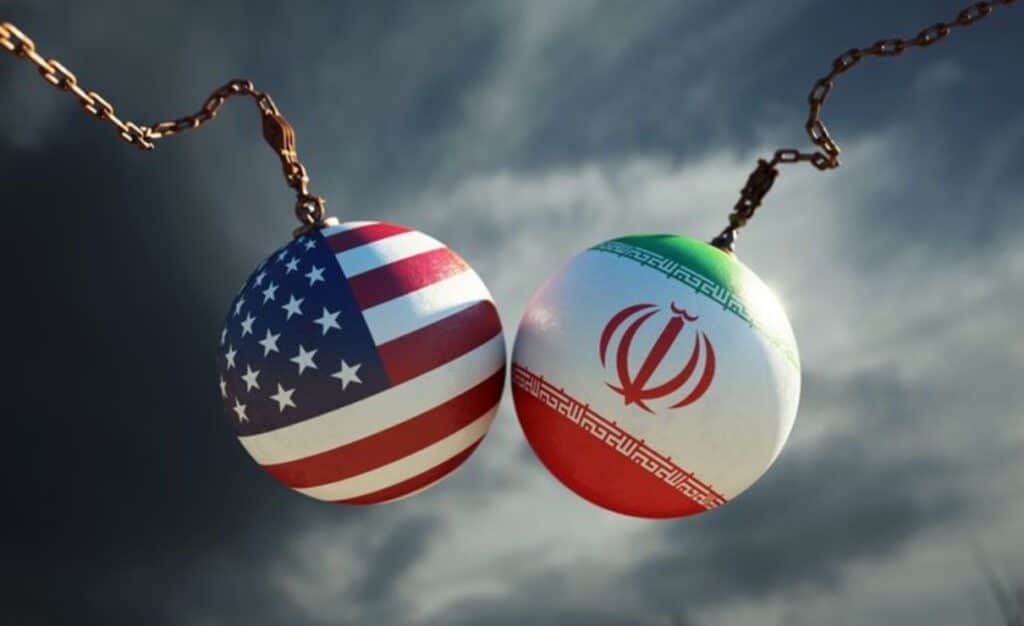
The conflict between Iran and United States is entering a critical phase marked by a growing disconnect between political messaging and battlefield reality. While Washington has begun signalling that military operations could conclude within weeks, developments across the region suggest the conflict is continuing to expand in both scope and intensity.
Airstrikes are now targeting industrial infrastructure deep inside Iran, shipping routes in the Gulf remain under sustained threat, and regional actors are increasingly being drawn into the confrontation. At the same time, global markets and governments are reacting to rising risks around energy supply and economic stability. The result is a war that is sending two opposing signals at once: one pointing toward a possible exit, and the other toward a broader and more prolonged conflict.
US Signals Exit Even as Military Posture Expands
Donald Trump has said the United States could conclude military operations within “two to three weeks,” suggesting that Washington may be seeking a rapid end to the conflict. “We could end this war in two to three weeks,” Trump said.
He has also indicated that a formal agreement with Tehran may not be required. The war could end without Iran making a deal, he said. However, these statements have been accompanied by continued military positioning in the region. Reports indicate that additional US forces are being deployed, including the movement of the aircraft carrier USS George H.W. Bush, reinforcing an already significant naval presence.
This combination of de-escalatory rhetoric and sustained military build-up has created uncertainty over Washington’s actual intentions. While officials have framed the campaign as a limited effort to degrade Iran’s capabilities, the scale of deployments suggests preparations for a wider contingency.
Strikes Shift to Economic Core and Industrial Infrastructure
US-led airstrikes have continued across Iran, with a growing focus on economic and industrial targets. Heavy strikes have reportedly caused significant damage at one of Iran’s largest steel complexes in Isfahan, while another major plant in Khuzestan has halted production.
These facilities are central to Iran’s non-oil economy. Steel production represents a major source of domestic revenue and industrial output, making it a critical component of the country’s economic resilience. “We want to knock out every single thing they have,” Trump said, describing the scope of US operations.
The targeting of such infrastructure indicates a shift toward economic warfare. By disrupting industrial production, the campaign appears aimed at weakening Iran’s ability to sustain prolonged conflict, extending pressure beyond military assets into the broader economy.
Strikes have also affected fuel depots and logistics networks, adding to internal economic strain and complicating supply chains within the country.
Iran Retaliates Across Gulf as Conflict Widens
Iran has responded with a series of missile and drone attacks targeting regional infrastructure and US-linked assets. Strikes and fallout have been reported in Kuwait, Bahrain, and United Arab Emirates, including a large fire at fuel storage tanks near Kuwait’s airport and damage to facilities in Bahrain.
In the UAE, debris from intercepted drones reportedly resulted in a civilian fatality, highlighting the broader risks posed by the expanding conflict.
Iranian officials have rejected US proposals to end the war. Iranian officials described US terms as “unrealistic” and said the country would not negotiate under pressure. Iran’s foreign minister has also said trust in the United States is “at zero,” and indicated that Tehran is not deterred by the possibility of further escalation.
The conflict has also intensified in Israel and Lebanon. Iranian missile strikes have hit central Israel, including Tel Aviv, causing injuries across multiple locations. At the same time, Hezbollah has increased its activity, with Israeli forces carrying out strikes in Beirut and southern Lebanon as ground operations deepen.
This widening engagement across multiple fronts has transformed the conflict into a broader regional confrontation.
Hormuz, Tankers and the Global Oil Risk
The Strait of Hormuz remains the most critical economic flashpoint in the conflict. Iranian officials have warned that the waterway would only fully reopen under what they described as new conditions, signalling a potential shift in control over one of the world’s most important energy routes.
The strait typically carries around one-fifth of global oil trade, making any disruption highly significant.
Shipping risks have increased, with more than 20 vessels reportedly struck or damaged across the Gulf since the conflict began. A tanker north of Qatar was recently hit, sustaining damage above the waterline.
Rather than requiring large-scale destruction, these incidents are raising costs and uncertainty for global shipping. Increased insurance premiums and operational risks are already affecting trade flows, contributing to volatility in oil markets.
At the same time, Kharg Island, Iran’s main oil export terminal, remains under close watch. Any sustained disruption to operations there could have immediate consequences for global supply.
Markets React as Diplomacy Stalls and Risks Grow
Financial markets have reacted sharply to shifting signals from Washington. Equity markets across Asia, Europe, and the United States have risen following comments suggesting a possible end to the conflict. Oil prices have also pulled back from recent highs, with Brent crude briefly falling below key levels.
However, central banks and policymakers are warning of longer-term risks. The Bank of England has said the conflict is increasing pressure on the global financial system, citing the potential for slower growth, higher inflation, and tighter financial conditions.
Governments are also beginning to respond. Some countries have issued guidance on fuel conservation and economic measures, reflecting concerns that the impact of the conflict could extend beyond a short-term shock.
Despite ongoing communication channels, diplomatic progress remains limited. Iran has said it will not accept terms imposed under pressure, while US officials continue to signal that military objectives could define the end of the conflict.
Outlook
The Iran–US conflict is now defined by a clear contradiction. Political signals from Washington point toward a possible near-term exit, while military activity and regional developments suggest the conflict is still expanding.
This divergence has made the trajectory of the war increasingly difficult to assess. While markets appear to be pricing in a potential de-escalation, the situation on the ground continues to reflect elevated risk.
The coming weeks will be critical in determining whether the conflict moves toward resolution or evolves into a more prolonged and complex regional crisis.mics and global markets in the months ahead.


