

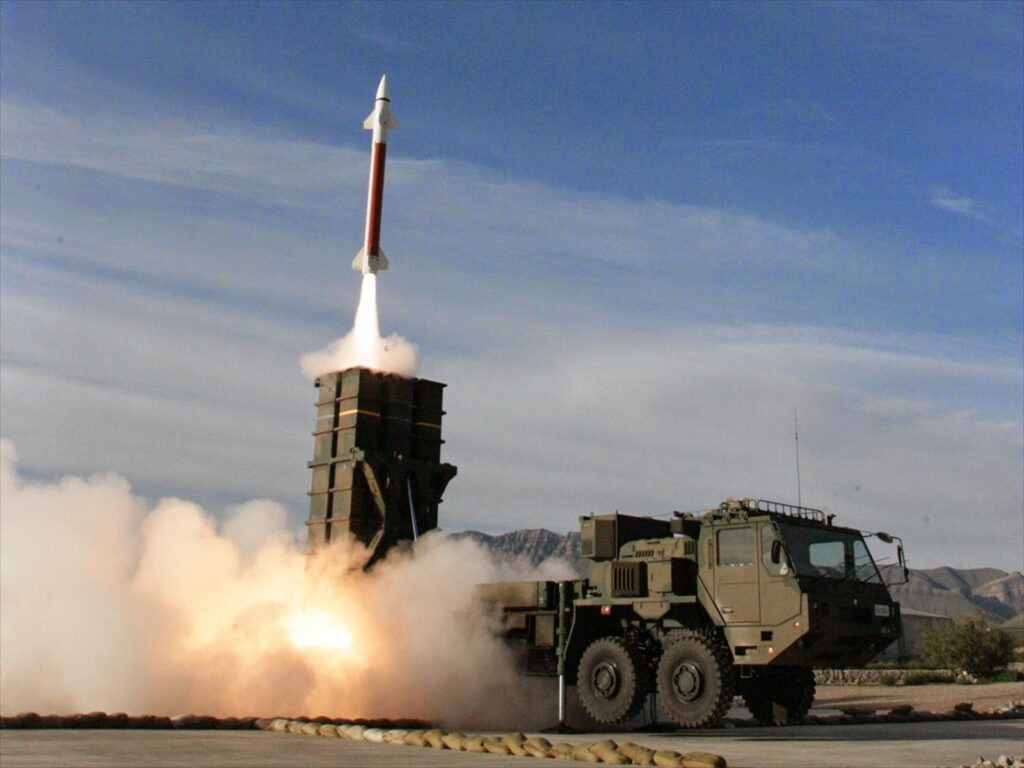
China and Taiwan lie at the center of rapidly intensifying regional tensions after Japan confirmed the deployment of a Type 03 surface to air missile system on Yonaguni, its westernmost island located just 110 kilometers from Taiwan. With Chinese military aircraft entering Taiwan’s Air Defense Identification Zone at record frequency and People’s Liberation Army naval operations tripling in surrounding waters over the past three years, Japan argues that strengthening its defensive readiness is critical to safeguarding the Ryukyu island chain and maintaining security across the Indo Pacific region.
China has sharply condemned the deployment, calling Japan’s action a direct provocation and accusing Tokyo of interfering in what Beijing claims is its internal sovereignty issue. Chinese officials warn Japan not to overestimate its capabilities, while Tokyo maintains that the system is purely defensive and essential in what it describes as the most dangerous security environment since the end of the Second World War. The development marks one of the most serious escalations in China Japan relations in decades and underscores how the contest for control and influence over Taiwan is redefining the balance of power in Asia.
What Triggered the Rift
Tensions escalated dramatically after Japan’s Prime Minister Sanae Takaichi stated in parliament on 7 November 2025 that “a Chinese blockade or attack on Taiwan could create a survival threatening situation for Japan, under which Japan must be prepared to take necessary measures to defend its sovereignty and its people.” Her wording invoked Japan’s 2015 security laws permitting collective self defense when national survival is threatened.
China’s Foreign Minister Wang Yi condemned her remarks, warning that “Japan is provoking China on the Taiwan question and has crossed a red line. China urges Japan to immediately correct its mistakes and stop playing with fire.”
Japan rejected the threats and summoned the Chinese ambassador, with Takaichi asserting that “Japan will never yield to intimidation. Our responsibility is to protect the lives and freedom of our citizens.”
Why Yonaguni Matters

Yonaguni holds enormous strategic significance. It is the closest Japanese territory to Taiwan, positioned near vital sea lanes and air corridors. The Type 03 Chū-SAM air defense missile system, capable of intercepting aircraft and cruise missiles at ranges of around 50 kilometers, strengthens Japan’s air defense coverage across the southwestern island chain.
During his inspection visit to Yonaguni, Japan’s Defence Minister Shinjiro Koizumi reaffirmed the deployment, stating that Japan will proceed with stationing the Type 03 Chū-SAM system on the island due to rising tensions with China, explaining that the move will “help lower the chance of an armed attack” on the country. He emphasized that enhanced defensive posture acts as a deterrent and is necessary to protect Japanese citizens amid increasing regional volatility.
The First Island Chain and the Strategic Battle for the Pacific
At the heart of China’s concern is the First Island Chain, a strategic arc stretching from the Kuril Islands through Japan and Taiwan, down to the Philippines and Borneo. Created in 1951 under U.S. Secretary of State John Foster Dulles, the chain was designed as a Cold War defensive perimeter to contain communist military expansion across the Pacific.
The chain restricts China’s access to the open Pacific and enables the United States and its allies to control critical maritime chokepoints. Taiwan anchors the midpoint of the chain and has long been described as an “unsinkable aircraft carrier,” a term famously used by General Douglas MacArthur. If China seized Taiwan, it would gain the ability to project naval and air power beyond the chain, threaten Japan and the Philippines, and potentially sever maritime routes that supply 80 to 90 percent of Japan’s energy imports.
Losing Taiwan would force the United States to retreat to the Second Island Chain around Guam and Palau, significantly weakening American deterrence and credibility in the Indo Pacific.
China’s Strategy and Taiwan’s Defense
Most military analysts believe China might first attempt a naval blockade using warships, submarines and coast guard fleets to cut off Taiwan’s trade and energy access, forcing political concessions. A full invasion would allow China to seize Taiwan’s ports and airfields and establish forward bases capable of threatening U.S. and Japanese forces.
Taiwan’s defense approach is based on asymmetric warfare or “porcupine strategy,” relying on mobile missile systems, drones, sea mines and hardened defenses intended to buy time for U.S. reinforcement. Polls show more than 72 percent of Taiwanese citizens willing to fight to defend the island.
Economic and Global Importance
Taiwan produces around 92 percent of the world’s most advanced semiconductors, making it a critical hub in global supply chains. The semiconductor industry contributes about 13 to 15 percent of Taiwan’s GDP and is valued at approximately 160 billion US dollars annually, supporting vital sectors including electronics, automotive manufacturing, aviation and defense.
Any disruption caused by conflict, blockade or cyberattacks would trigger an immediate global economic shock. Analysts warn that a major interruption could cost the world economy trillions of dollars, affecting everything from smartphones and electric vehicles to advanced military systems. This extraordinary economic significance elevates Taiwan from a regional issue to a central pillar of global technological stability.
Japan’s Strategic Role
Japan is indispensable to U.S. regional security, hosting more than 54,000 American troops and serving as a logistical and intelligence hub for the Pacific. In a Taiwan contingency, Japan could play major roles in anti submarine warfare in the Miyako Strait, missile defense and access to bases and airspace.
Japan is also rapidly expanding its defensive capabilities, raising military spending to 2 percent of GDP, purchasing long range Tomahawk missiles and deepening cooperation with allies. Its assistance to Ukraine and collaboration on naval drone technology have additional implications for limiting Russia’s potential support for Chinese operations.
Regional and Diplomatic Ripple Effects
The crisis has expanded beyond military posturing. China has issued travel warnings, encouraged cancellation of flights to Japan and tightened restrictions on Japanese seafood and cultural exports.
Inside Japan, strong nationalist reaction followed inflammatory online remarks from a Chinese official interpreted as a threat against Japan’s leadership, hardening public sentiment.
Regional nations are watching closely. Many expect South Korea to strengthen alignment with pro Taiwan policies, while the Philippines continues building defense capability against Chinese expansion in the South China Sea.
Strategic Economic Stakes in the Taiwan Crisis
Taiwan produces around 92 percent of the world’s most advanced semiconductors, making it a central pillar of the global technology economy. The semiconductor industry contributes 13 to 15 percent of Taiwan’s GDP and is valued at nearly 160 billion US dollars annually, supporting critical sectors ranging from consumer electronics and automobiles to aerospace and defense manufacturing.
Any disruption caused by conflict, blockade or cyberattacks would trigger an immediate worldwide economic shock. Analysts warn that even a short interruption in Taiwan’s chip output could cost the global economy trillions of dollars, halting production lines and crippling industries dependent on advanced computing.
This unprecedented dependence means Taiwan is not just a regional flashpoint but an economic lifeline for the international system. As tensions rise, one fact becomes increasingly clear: The world cannot afford a war over Taiwan, and the future of global stability may hinge on what happens next in the waters between China and Japan!


