

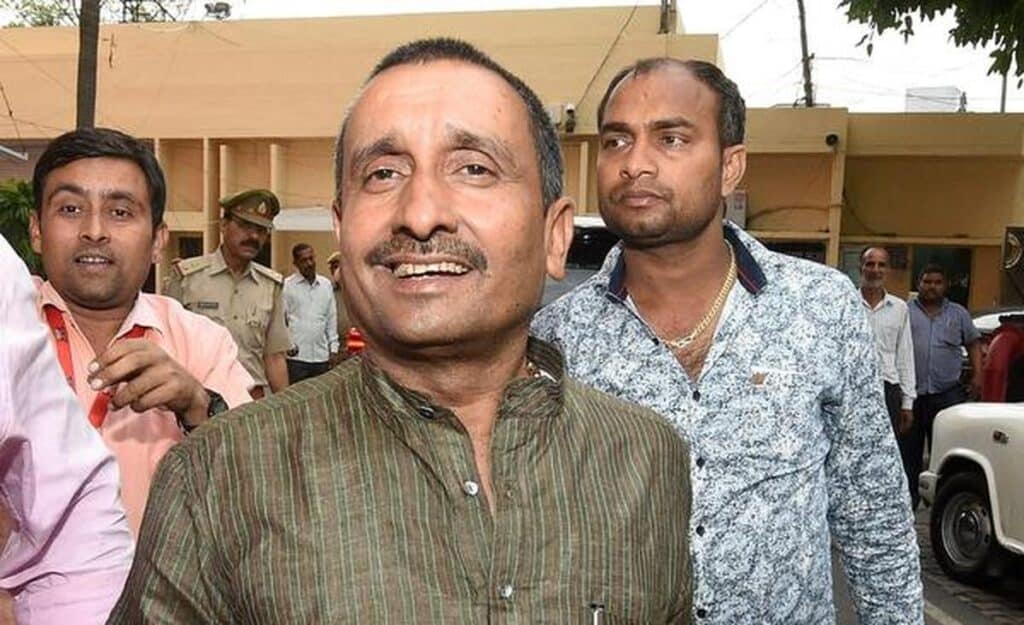
In a shocking turn of events, the Delhi High Court on December 23, 2025, suspended the life sentence of Kuldeep Sengar, the former BJP MLA convicted in the 2017 Unnao rape case. The court granted him bail pending appeal, citing technical legal grounds, including interpretation of his MLA status and procedural delays in the appellate process. The ruling has left the survivor and her family devastated, triggered nationwide protests, and reignited debates on women’s safety, judicial accountability, and the influence of political power in high-profile cases.
Kuldeep Sengar’s conviction in the Unnao case was a landmark moment, exposing abuse of political power and systemic failures in protecting survivors of sexual violence. Nearly six years after the heinous crime, the suspension of his life sentence has reignited public discourse on the POCSO Act, legal loopholes, and the safety of survivors in politically sensitive cases.
The Unnao Rape Case
The Unnao rape case first came to light in 2017 when a 17-year-old girl accused Kuldeep Sengar, then a four-time BJP MLA from Uttar Pradesh, of sexual assault, intimidation, and harassment. Following her complaint, her family faced severe threats and violence, culminating in the custodial death of her father, who was allegedly framed by Sengar’s associates.
Due to concerns about police impartiality and witness intimidation, the Supreme Court transferred the case to Delhi in 2019, providing a secure environment for trial. In December 2019, Kuldeep Sengar was convicted for rape and sentenced to life imprisonment. He was also convicted in the custodial death of the survivor’s father, receiving a 10-year prison term, which he continues to serve. The case became a symbol of political influence obstructing justice and highlighted the vulnerabilities faced by survivors in India.
Delhi High Court Suspends Life Sentence
The Delhi High Court suspended Kuldeep Sengar’s life sentence on December 23, 2025, granting conditional bail pending appeal. The decision was based on three main factors:
MLA Status and Legal Interpretation
The bench noted that Kuldeep Sengar’s status as an MLA did not qualify him as a “public servant” under the POCSO Act’s aggravated provisions. Consequently, the charge carrying life imprisonment was deemed inapplicable. Instead, the conviction fell under Section 4 of POCSO, which carries a seven-year minimum sentence, already served by Sengar.
Procedural Delays in Appeal
The court highlighted that appeals against the conviction are still pending, and continued incarceration during the appellate process could be considered unreasonable under procedural law. The ruling was therefore procedural, not an acquittal.
Strict Bail Conditions
The High Court imposed stringent conditions to protect the survivor:
- Personal bond of ₹15 lakh with three sureties.
- Mandatory residence in Delhi until the appeal is decided.
- Surrender of passport and weekly reporting to police.
- No contact with the survivor or her family, maintaining a 5 km no-entry radius from her residence.
Despite the suspension of the life sentence, Kuldeep Sengar remains in jail due to his 10-year sentence for the custodial death of the survivor’s father.
Survivor’s Emotional Response and Supreme Court Challenge
The survivor has publicly condemned the High Court’s decision as a serious setback to justice. During protests at India Gate, she broke down in tears, revealing that she had considered ending her life upon hearing of Kuldeep Sengar’s bail but refrained for her family’s sake.
She has announced plans to approach the Supreme Court to challenge the suspension of his life sentence, seeking to reinstate the original conviction and sentence. She also expressed concerns over the withdrawal of security and ongoing risks to herself and her family, highlighting the real-world dangers survivors continue to face.
Nationwide Protests and Public Outrage

The Delhi High Court’s ruling triggered immediate protests across Delhi, with the survivor and her mother reportedly removed twice by police while staging demonstrations at India Gate. Citizens, activists, and civil society groups criticized the court for granting bail to a politically powerful offender, demanding justice and accountability.
Some protestors announced plans to march to Parliament, amplifying the national discourse on judicial accountability, political interference, and women’s safety.
Rahul Gandhi Speaks Out
Rahul Gandhi, Leader of the Opposition, strongly condemned the ruling, calling it “disappointing and shameful.” He criticized the removal of the survivor and her mother during protests and highlighted the broader failure to protect women and survivors of sexual violence. Gandhi emphasized that granting bail to Kuldeep Sengar, a politically influential figure, undermines public trust in the justice system and sends the wrong message about accountability for powerful offenders.
Legal Experts’ Analysis
Legal analysts have weighed in, noting that while the Delhi High Court acted within procedural law, the case exposes gaps in the POCSO Act, especially in defining “public servant” for aggravated offences. Experts argue that legislative clarity is essential to prevent similar loopholes in high-profile sexual assault cases.
The ruling also underscores the need for fast-tracked appeals and enhanced witness protection to prevent prolonged trauma for survivors while ensuring justice is not delayed.
What’s Next
The survivor plans to file a Supreme Court petition challenging the High Court’s suspension of Kuldeep Sengar’s life sentence. Meanwhile, Sengar’s appeal in the Delhi High Court is scheduled for January 2026. The Supreme Court’s intervention could clarify statutory interpretations and set a precedent for bail in serious sexual offence cases involving politically influential individuals.
Implications for Women’s Safety and Justice
The Unnao case has become a touchstone for discussions on gender-based violence, judicial accountability, and political influence in India. Key concerns include:
- Survivor vulnerability when offenders hold political power.
- Legal loopholes allowing high-profile offenders to evade full accountability.
- Psychological trauma caused by prolonged procedural delays.
- Erosion of public trust in the justice system.
Experts stress the need for legislative reforms, witness protection, and expedited trials to restore faith in the judiciary and protect survivors of sexual crimes.
Current Situation
As of December 24, 2025:
- Protests continue in Delhi and other cities following the High Court ruling.
- The survivor and her family remain under tight security amid ongoing threats.
- Public discourse online has intensified, criticizing Kuldeep Sengar’s bail and highlighting concerns about women’s safety.
- Political leaders continue to debate the ruling, making it a national flashpoint for justice and accountability.
What’s Next for Justice
The Delhi High Court’s suspension of Kuldeep Sengar’s life sentence underscores the complex intersection of law, politics, and gender rights in India. With the Supreme Court challenge pending, ongoing public protests, and heightened media attention, the case continues to shape debates on women’s safety, judicial transparency, and accountability for powerful offenders.
The case highlights the fragility of justice for survivors when perpetrators wield political influence and underscores the urgent need for legal reforms, clear statutory language, and robust protective mechanisms for victims of sexual violence.


