

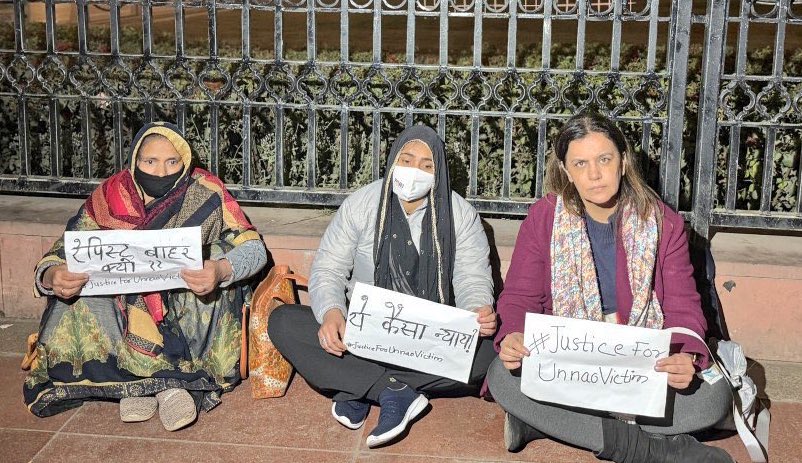
The Unnao rape case continues to dominate national headlines following the Delhi High Court’s suspension of Kuldeep Singh Sengar’s life sentence and the granting of bail pending appeal. The case has taken a new turn with allegations from the survivor’s lawyer that the Central Government, Uttar Pradesh government, and the CBI are working against the interests of the victim. The ruling has ignited widespread outrage among legal experts, civil society, and activists, who have described it as legally flawed, procedurally questionable, and a potential setback for victim protection in high-profile sexual assault cases.
Sengar, a former BJP MLA, remains in Tihar Jail serving a 10-year sentence for the custodial death of the survivor’s father. However, the suspension of his life sentence for rape has heightened fears for the survivor’s safety and raised concerns about the broader integrity of judicial proceedings in politically sensitive cases like Unnao.
High Court Order and Bail Conditions
The Delhi High Court’s ruling allowed Kuldeep Singh Sengar conditional freedom while the appeal against his life sentence proceeds. The court emphasized that the suspension does not constitute an acquittal. Sengar was required to comply with strict conditions, including maintaining distance from the survivor and her family, reporting regularly to police authorities, and refraining from witness intimidation.
Despite the suspension of his life sentence, Sengar continues to serve his 10-year sentence for the custodial death of the victim’s father, demonstrating the complex legal scenario surrounding the Unnao case. The High Court’s order has prompted several petitions in the Supreme Court, seeking to overturn the bail suspension on the grounds that it misinterprets statutory provisions and undermines justice for the survivor.
Legal analysts have pointed out that the High Court’s focus on procedural technicalities, rather than the gravity of the crime, raises serious questions about the application of judicial discretion in cases involving influential individuals.
Supreme Court Challenge
Following the High Court ruling, petitions were filed in the Supreme Court challenging the suspension. Advocates argue that the High Court ignored critical findings of the trial court, which documented Sengar’s systematic intimidation of witnesses and his abuse of political influence.
The CBI filed a Special Leave Petition, arguing that suspension of the life sentence is not only legally unsound but also disregards the severity of the crime and the history of harassment faced by the survivor. Experts note that this case tests the judiciary’s ability to balance technical legal interpretations with the substantive need for justice, especially in high-profile cases like Unnao where public faith in the system is at stake.
Legal Flaws in Sentence Suspension
Legal observers have highlighted several significant flaws in the Delhi High Court’s suspension of Sengar’s life sentence. The ruling that Sengar, as an MLA, did not qualify as a public servant under IPC for aggravated sexual assault under POCSO has drawn sharp criticism. This interpretation, experts argue, undermines the intent of the law, which aims to prevent abuse of power and protect minors from sexual exploitation.
Furthermore, suspension of a life sentence is considered an exceptional remedy under Indian law. It is generally granted only when there is prima facie evidence that a conviction may not stand on appeal or when continued incarceration would result in irreparable injustice. Critics contend that the Delhi High Court overlooked these principles, favoring statutory technicalities over substantive justice.
The Unnao case is particularly complex because it involves systematic threats, harassment, and the custodial death of the victim’s father. These factors, legal experts argue, should have weighed heavily against any suspension. By not factoring in these realities, the ruling raises ethical and legal concerns about prioritizing procedural interpretation over protection of survivors.
Advocate’s Allegations
The survivor’s lawyer, Mehmood Pracha, has made serious allegations regarding institutional bias in the handling of the Unnao case. Pracha claims that the Central Government, Uttar Pradesh government, and CBI have acted in ways that disadvantage the survivor, potentially influencing the judicial process in favor of Sengar.
According to the lawyer, certain CBI officers introduced selective evidence favorable to Sengar, while deliberately scaling back or withdrawing security for the survivor’s family. He points to subsequent attacks on family members as proof that these decisions increased vulnerability. The advocate has formally requested the cancellation of Sengar’s interim bail, emphasizing the heightened threat perception and lack of adequate security arrangements.
Pracha also stated publicly that both the Centre and the UP Government appear to be exercising pressure to reduce institutional safeguards for the survivor, a claim that has intensified the public debate on state accountability and victim protection.
Public and Political Reaction
The High Court’s ruling has generated intense public and political reactions. The Unnao rape survivor has expressed fear for her life, stating that she believes she could be murdered and her family “finished” following the suspension of Kuldeep Singh Sengar’s jail term. Family members echoed her fears, saying they felt safer under custodial protection than facing Sengar’s temporary release.
Protests erupted outside the Delhi High Court and India Gate, during which police reportedly dragged the victim while she was peacefully protesting. The incident intensified public outrage, with political leaders, activists, and civil society condemning both the ruling and the handling of the survivor’s protest. Many described the situation as a dangerous precedent, highlighting the risks of leniency toward politically powerful convicts and underscoring the urgent need for robust victim protection measures.
AI Image Controversy
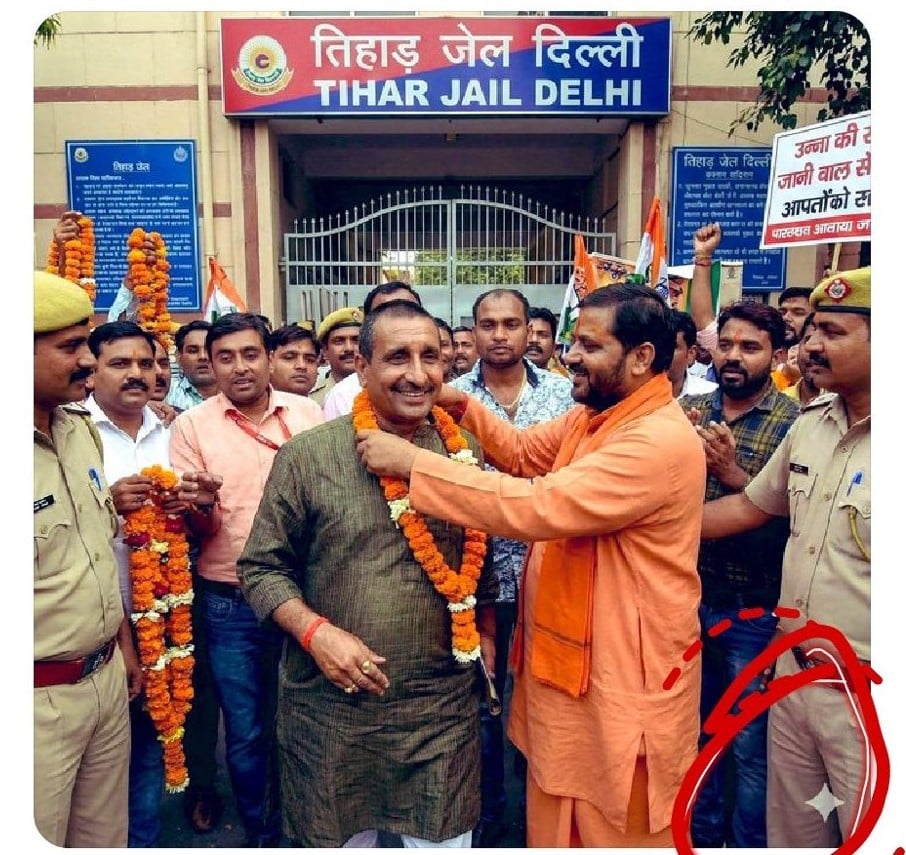
Compounding the public discourse, a fake AI-generated image showing Sengar being garlanded circulated on social media, reportedly shared by a Karnataka political figure. The image was quickly identified as manipulated, with distorted hands, unnatural shadows, and a visible Gemini watermark.
Critics highlighted the irony, noting that the minister involved had recently supported legislation proposing up to seven years in jail for spreading fake news. This controversy underscores the growing challenge of AI-generated misinformation in high-profile criminal cases, raising concerns about its potential to distort public perception and influence opinion in sensitive cases like Unnao.
Judicial Context
Supreme Court precedents emphasize that suspension of life sentences should be granted sparingly. In cases like Chhotelal Yadav v State of Jharkhand, the court clarified that suspension is appropriate only when there is clear evidence that a conviction may be overturned.
Experts argue that the Delhi High Court’s ruling in Sengar’s case deviates from these established principles, focusing on technical interpretations rather than the severity of the offences or the protection of the Unnao rape survivor. The decision has prompted significant debate among legal scholars regarding judicial responsibility and victim safety in high-profile cases.
Next Steps
The Supreme Court is expected to hear petitions challenging the High Court ruling. The key considerations include whether the High Court misinterpreted aggravated offence provisions under POCSO and IPC, whether suspension of life imprisonment is justified without prima facie evidence of acquittal, and whether prior incidents of intimidation, threats, and custodial death were appropriately accounted for.
The outcome of the Supreme Court review will have broader implications for justice delivery, institutional accountability, and public confidence in India’s legal system, particularly in cases involving political figures accused of sexual offences.
Implications for Justice
The suspension of Kuldeep Singh Sengar’s life sentence raises fundamental questions about judicial discretion, the treatment of powerful offenders, and the protection of victims. Experts warn that the ruling could undermine public confidence in the justice system for sexual offences, set a precedent for leniency toward influential convicts, and influence the handling of rape convictions involving public figures in the future.
The Supreme Court’s decision will determine not only Sengar’s fate but also establish critical benchmarks for accountability, protection of survivors, and the integrity of judicial processes in high-profile cases like Unnao.


