

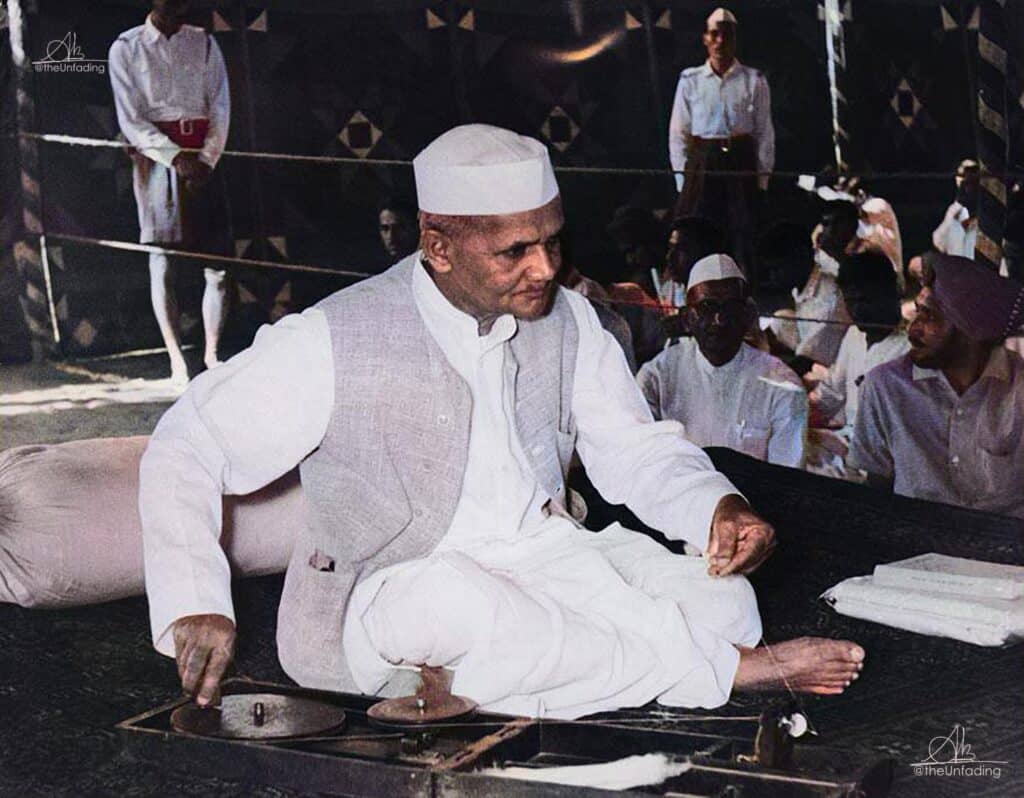
On 2 October, while the nation pays tribute to Mahatma Gandhi, another towering figure often slips into the background — Lal Bahadur Shastri, India’s second Prime Minister, remembered as the humble yet resolute “Mitti ka Lal.” Today marks his 121st birth anniversary, and it is time we bring his legacy into the spotlight he deserves.
A Humble Beginning, A Steadfast Spirit
Born in 1904 in Mughalsarai, Uttar Pradesh, Shastri lost his father at an early age and was raised by his mother in modest circumstances. He dropped the caste-based surname “Srivastava,” reflecting his commitment to equality and simplicity. Inspired by Mahatma Gandhi, Shastri joined the freedom struggle, endured multiple imprisonments, and slowly rose in the Indian National Congress. Despite becoming Prime Minister, he remained a man of the people, known for his modest lifestyle, khadi attire, and incorruptible character.
“Jai Jawan, Jai Kisan” — A Nation’s Call
Perhaps Shastri’s most powerful contribution was his iconic slogan “Jai Jawan, Jai Kisan.” Coined during the 1965 Indo-Pak war, it was not just a phrase but a philosophy that placed the soldier and the farmer at the heart of the nation. At a time when India faced food shortages and external aggression, Shastri reminded the country that its strength lay in the courage of its soldiers and the hard work of its farmers.
Leading Through the 1965 Indo-Pak War
Shastri’s tenure as Prime Minister was short, lasting only 19 months, yet it coincided with one of India’s most critical military challenges. In August 1965, when Pakistan launched aggression, Shastri guided India with calm determination. Under his leadership, Indian forces responded firmly, boosting national morale. The war ended with the Tashkent Declaration in January 1966, but tragically, Shastri passed away in Tashkent the very next day, leaving the nation shocked and grieving. His courage during the war cemented his place as a leader who could stand tall in crisis.
Architect of the Green and White Revolutions
Even before India achieved self-sufficiency, Shastri recognized the dangers of relying on foreign food imports. He laid the foundation for the Green Revolution, supporting scientists and reformers like M. S. Swaminathan and C. Subramaniam, encouraging high-yield farming, and even urging citizens to sacrifice one meal a week to conserve food. His symbolic act of tilling land at his own residence showed farmers that their work was as sacred as a soldier’s duty.
Parallelly, Shastri spearheaded the White Revolution, promoting the Amul cooperative model and establishing the National Dairy Development Board (NDDB). These initiatives would later transform India into one of the world’s largest producers of milk and food grains, turning scarcity into abundance.
Building Strong Institutions
Shastri also strengthened India’s institutional backbone. His leadership saw the rise of bodies like the Food Corporation of India (FCI), the Commission for Agricultural Costs and Prices (CACP), the Central Vigilance Commission (CVC), and the Border Security Force (BSF). His administration was marked by honesty and efficiency, qualities that made him a rare figure in Indian politics.
Why His Legacy Fades
Despite these achievements, Shastri often remains overshadowed. His brief tenure gave him little time to build a larger political base. Sharing his birth anniversary with Mahatma Gandhi means Gandhi Jayanti naturally takes precedence in public memory. His sudden and mysterious death in Tashkent further diverted attention from his accomplishments, while later political narratives rarely gave him his due place in history. Yet, the truth remains — “Shastri was a visionary whose policies continue to define India’s agricultural and security landscape!”
Reviving the Spirit of Jai Jawan, Jai Kisan
On this Lal Bahadur Shastri Jayanti, remembering him is not just about paying homage but about reviving his values. His simplicity, humility, and integrity are qualities sorely needed in today’s political climate. His vision of empowering both the farmer and the soldier holds renewed relevance at a time when India faces agricultural distress and security challenges. Shastri’s life teaches us that true leadership lies not in grandeur but in service, sacrifice, and courage.


