

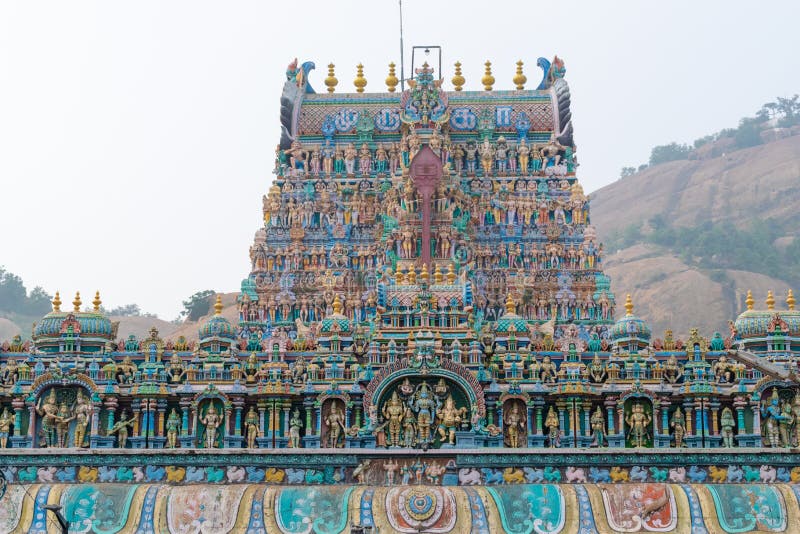
Madurai temple developments in Tirupparankundram have grown into one of Tamil Nadu’s most volatile religious and political crises in recent years. What initially appeared as a routine request related to the Karthigai Deepam festival has now spiralled into heated courtroom arguments, large-scale police deployment, political detentions, and a petition before the Supreme Court. As both communities assert their rights over the hilltop space where the ritual was scheduled, the dispute surrounding the Deepathoon lamp near a centuries-old dargah has placed the region at the centre of state-wide debate.
With multiple High Court orders, contentious administrative action, and sharply worded political statements, the case has highlighted long-standing ambiguities around land ownership and the government’s obligation to honour judicial directives. For many residents of Madurai and beyond, the unfolding events reflect deeper concerns over community coexistence, constitutional rights, and the charged political climate in Tamil Nadu.
Origin of the Issue
The conflict originates from the annual ritual of lighting the Deepathoon lamp by devotees of the Arulmighu Subramaniya Swamy Temple, one of the most revered shrines dedicated to Lord Murugan. The site for the ritual lies close to a 14th-century Tirupparankundram dargah, leading to a long-running disagreement over whether the land belongs to the temple or the dargah administration.
Petitioners argued that the disputed stretch has historically been part of temple land and used for religious purposes during the Karthigai Deepam festival. Muslim groups countered that the site falls under the traditional boundary of the dargah. As tensions rose, temple devotees approached the Madras High Court, seeking formal permission and protection to carry out the ritual peacefully.
Judicial Orders and Administrative Pushback
On December 2, and again on December 4, two separate judges of the Madras High Court issued orders directing the police to ensure protection for devotees participating in the ritual. Both judges emphasised that the festival had been conducted without disturbance in previous years and that the administration must honour constitutionally protected religious practices.
However, the district administration adopted a markedly different approach. Citing law-and-order concerns, police officials prevented devotees from accessing the ritual site, sealed entry points, and deployed over 1,000 personnel across Tirupparankundram. Authorities insisted that the situation on the hill was “sensitive” and needed stringent measures to prevent community confrontation.
This decision, viewed by petitioners as a deliberate violation of the High Court’s order, triggered contempt of court proceedings. The conflict between the bench’s instructions and the administration’s actions is now one of the core issues before the judiciary.
Political Tensions Increase
The Madurai temple issue soon shifted from a legal matter to a heated political battleground. The BJP, which has been actively highlighting issues related to Hindu religious rights in Tamil Nadu, mobilised leaders to support the devotees and condemn the state government’s handling of the situation.
Multiple leaders, including MLA Nainar Nagendran, were detained when they attempted to reach the hill. Nagendran delivered one of the strongest criticisms of the administration, stating that the government had shown “clear hostility towards Hindu customs” and had “defied a judicial order without justification.”
Tamil Nadu BJP chief K. Annamalai also questioned the government’s commitment to constitutional protections, saying that “the right to practise one’s religion cannot depend on political convenience.”
The ruling DMK, meanwhile, accused the BJP and allied groups of attempting to “politicise a sensitive local issue” and of provoking communal tensions. Senior ministers reiterated that the administration’s decisions were based solely on inputs regarding public safety, not on political alignments.
Supreme Court Involvement
With contempt proceedings underway and criticism mounting, the Tamil Nadu government moved the Supreme Court, seeking an urgent stay on the High Court’s directives. The state argued that enforcing the order immediately, amid unresolved land ownership disputes and rising tensions, could provoke unrest.
On December 5, the Supreme Court agreed to consider the matter for urgent listing, setting the stage for a significant legal battle. The apex court’s decision is expected to clarify:
- the extent of administrative discretion during religious disputes,
- whether the High Court’s directive should be enforced immediately, and
- how land ownership should be evaluated in historically shared religious spaces.
Legal experts suggest that the Supreme Court’s stance will likely set a precedent for future cases involving overlapping religious claims.
Land Ownership Ambiguity
The Madurai temple dispute is complicated by historical gaps in documentation. Temple authorities maintain that the land has long been under the HR&CE Department, citing old records suggesting ritualistic use. However, the dargah’s custodians argue that the hill’s heritage extends to their establishment and that the contested area falls within their boundary.
Historians have noted that the Tirupparankundram hill has traditionally been a shared religious space — a rare example of both Hindu and Muslim traditions coexisting on the same landscape. But modern administrative rules and identity politics have made coexistence more fragile.
This uncertainty over land ownership forms the heart of both the legal and administrative dispute. Without a clear demarcation, every action taken by either community or the state risks being interpreted as overreach.
Administrative Concerns
Senior police officials justified their heavy deployment by pointing to intelligence inputs suggesting increased mobilisation by groups on both sides. With political leaders amplifying the issue, the administration feared a flashpoint that could quickly escalate.
Yet, critics argue that once the court issued explicit orders, the state was bound to either comply or seek an immediate stay. The decision to restrict access without securing such a stay has fuelled accusations of administrative impropriety.
Wider Political Implications
The Madurai temple dispute has resonated far beyond the confines of the hill. With elections on the horizon, religious sensitivities have taken centre stage in Tamil Nadu’s political narrative. The BJP’s assertive intervention suggests the party sees this as an opportunity to question the DMK’s approach to religious rights, particularly Hindu practices.
The DMK, on the other hand, accuses the opposition of “manufacturing conflict” to widen communal divides. As both parties intensify their rhetoric, the issue has evolved from a local dispute into a symbolic fight over cultural identity, state authority, and constitutional freedoms.
What Lies Ahead
The next phase of the dispute hinges on the Supreme Court’s response. Whether the ritual will be permitted in the coming days, and whether the contempt proceedings will advance, depends largely on the Court’s evaluation of the High Court order and the government’s justification for its actions.
For now, the Madurai temple dispute stands as a sharp reminder of how religious heritage, administrative choices, and political strategies intersect in complex and unpredictable ways. The coming weeks will determine whether the situation stabilises or continues to shape Tamil Nadu’s social and political discourse.


