

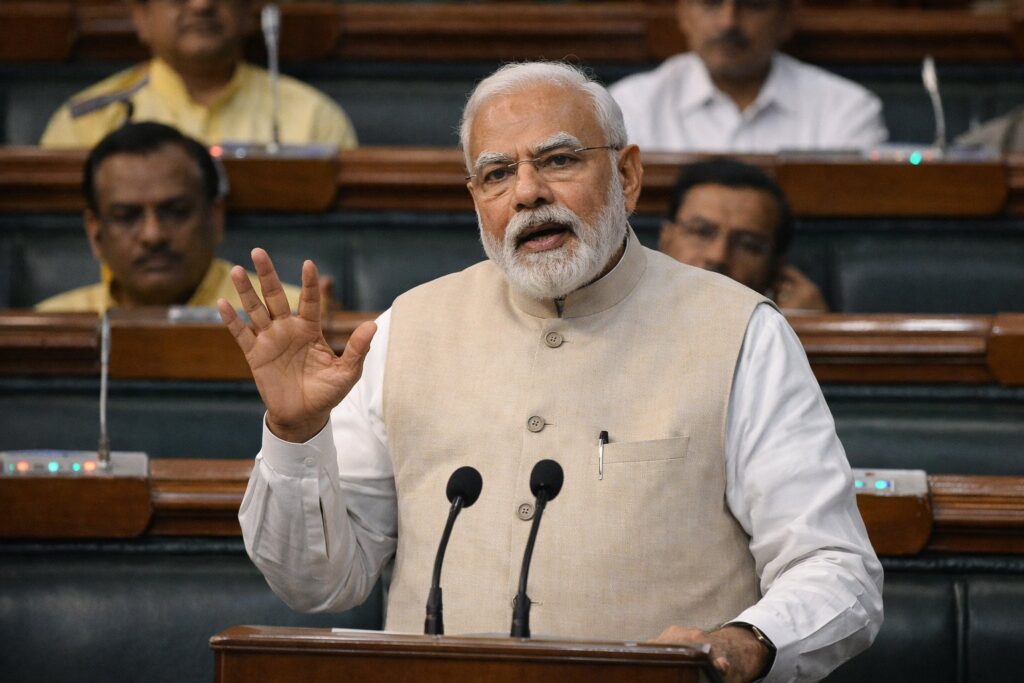
The escalating conflict involving the United States, Israel and Iran entered a sharper phase on March 24, with fresh strikes, widening regional spillover and deepening disruption to global energy flows, prompting Prime Minister Narendra Modi to issue a strong warning in Parliament.
Describing the situation as “worrisome”, Modi told lawmakers that the ongoing Iran war poses “unprecedented challenges” for India, with direct implications for energy security, global trade routes and the safety of Indian citizens abroad.
The escalation comes as the conflict entered its fourth week, with continued Israeli strikes inside Iran, retaliatory attacks by Tehran and growing uncertainty over US strategy. With tensions centred around the Strait of Hormuz, India faces increasing exposure to supply disruptions and economic stress.
War Intensifies
The Iran war has entered a critical phase, with Israel launching sustained air and missile strikes on Tehran and key Iranian military infrastructure over the past 24 hours. Targets include missile bases, command centres and energy-linked facilities, indicating a broader and more sustained military campaign.
Iran has retaliated with coordinated missile and drone attacks across the region, including strikes affecting Gulf-linked infrastructure and maritime routes. The conflict has expanded beyond Iran, with hostilities reported in Lebanon and Iraq, raising the risk of a wider regional war involving multiple actors and proxy forces.
Airspace disruptions, naval deployments and heightened military alerts across the Gulf underline the seriousness of the situation as global powers continue to monitor developments closely.
Hormuz Disruption
At the centre of the Iran war is the Strait of Hormuz, a vital maritime corridor handling a significant share of global oil shipments and energy flows.
Iran’s actions have disrupted movement through the Strait, with oil tankers facing delays, rerouting and sharply rising insurance costs. The possibility of partial closure has triggered concern across global markets, given the route’s importance to international energy supply chains.
The Prime Minister underlined the importance of keeping global shipping lanes open, warning that disruptions to maritime trade routes could have severe consequences for energy-importing countries like India.
For India, the stakes are high. A substantial portion of its crude oil imports passes through this corridor, making any prolonged disruption a direct threat to fuel supply, pricing stability and industrial output.
Leaders’ Positions
Global leadership positions remain sharply divided, complicating efforts to de-escalate the Iran war.
Donald Trump has indicated that diplomatic engagement with Iran may still be possible, even suggesting a pause in certain military actions. However, Tehran has rejected such claims, describing them as misleading and part of psychological pressure tactics.
Israeli Prime Minister Benjamin Netanyahu has signalled that operations will continue, with Israel preparing for a prolonged military campaign aimed at degrading Iran’s capabilities.
Iran’s Supreme Leader Ali Khamenei has warned that any further escalation will be met with decisive retaliation, raising fears of broader disruption to global trade and security.
Modi in Parliament
Addressing Parliament, Narendra Modi outlined the seriousness of the Iran war and its direct implications for India.
“The situation in West Asia is worrisome and calls for serious attention,” he said, adding that the conflict is already affecting global economic stability and essential supply systems.
“We must be prepared for every challenge. The conflict may be long-lasting,” Modi warned, cautioning that the situation requires sustained vigilance similar to the preparedness seen during the Covid period.
He stressed that the crisis has disrupted global trade routes, impacting shipping, logistics and supply chains worldwide, while also affecting critical sectors such as fuel, fertilisers and transportation.
Rajnath Reviews Security
Parallel to the political response, Rajnath Singh chaired a high-level meeting to review India’s defence preparedness amid the escalating Iran war.
The meeting included the Chief of Defence Staff, the three service chiefs and senior defence officials, focusing on assessing regional security dynamics and preparing for potential spillover risks.
Rajnath Singh warned that a prolonged conflict could trigger a wider energy and fertiliser crisis, stressing that no country, including India, would remain unaffected if the situation intensifies.
He emphasised that modern conflicts increasingly impact economic systems, supply chains and strategic infrastructure, requiring continuous monitoring and preparedness.
Energy Impact
The most immediate consequence of the Iran war for India lies in the energy sector, particularly crude oil, LPG and fertiliser supply chains dependent on West Asia.
Modi informed Parliament that the government is closely monitoring fuel availability and has taken steps to ensure stability despite global disruptions. He noted that India currently has adequate crude oil reserves to manage short-term supply shocks.
The government is also diversifying energy imports by sourcing oil and gas from multiple regions to reduce dependence on conflict-affected routes.
Rising oil prices, increased freight costs and uncertainty in supply chains are expected to exert pressure on domestic markets, making energy management a key priority.
Indians Abroad
The safety of Indian citizens in the region remains a critical concern as the Iran war expands across multiple conflict zones.
“Security of Indians is our biggest priority,” Modi said, highlighting ongoing efforts to monitor and assist Indian nationals across the Gulf region.
He noted that nearly one crore Indians live and work in West Asia, making the situation a major national concern beyond economic implications.
Indian embassies remain on high alert, coordinating closely with local authorities, with particular focus on workers in shipping and energy sectors affected by disruptions in the Strait of Hormuz.
Government Measures
The government has initiated coordinated measures to manage the domestic impact of the Iran war and maintain economic stability.
These include ensuring adequate supply of fuel, coal and fertilisers, closely monitoring logistics and shipping routes, and taking strict action against hoarding and black marketing of essential commodities.
The Centre has also moved to convene an all-party meeting to discuss the evolving situation, signalling the seriousness of the crisis and the need for a unified national response.
Authorities are maintaining close coordination with states to prevent supply disruptions and ensure continuity of essential services across sectors.
Economic Risks
The broader economic impact of the Iran war is becoming increasingly visible, with rising volatility across global energy and trade markets.
Oil prices have surged amid supply concerns, while shipping disruptions and increased insurance costs are affecting international trade flows.
For India, these developments translate into higher import costs, potential inflationary pressures and challenges for industries dependent on stable energy inputs.
While Modi stated that India’s economic fundamentals remain strong, he acknowledged that prolonged instability in West Asia could create sustained challenges for growth and supply stability.
Diplomatic Engagement
India has intensified diplomatic engagement amid the Iran war, maintaining communication with key stakeholders including Iran, Israel and the United States.
Modi emphasised that attacks on civilians, energy infrastructure and commercial shipping are unacceptable, warning that such actions threaten global economic stability and maritime security.
He reiterated that dialogue and diplomacy remain the only viable path forward, while stressing the importance of ensuring freedom of navigation, particularly through the Strait of Hormuz.
India’s approach reflects a calibrated strategy aimed at safeguarding national interests while supporting efforts to reduce tensions in the region.


