

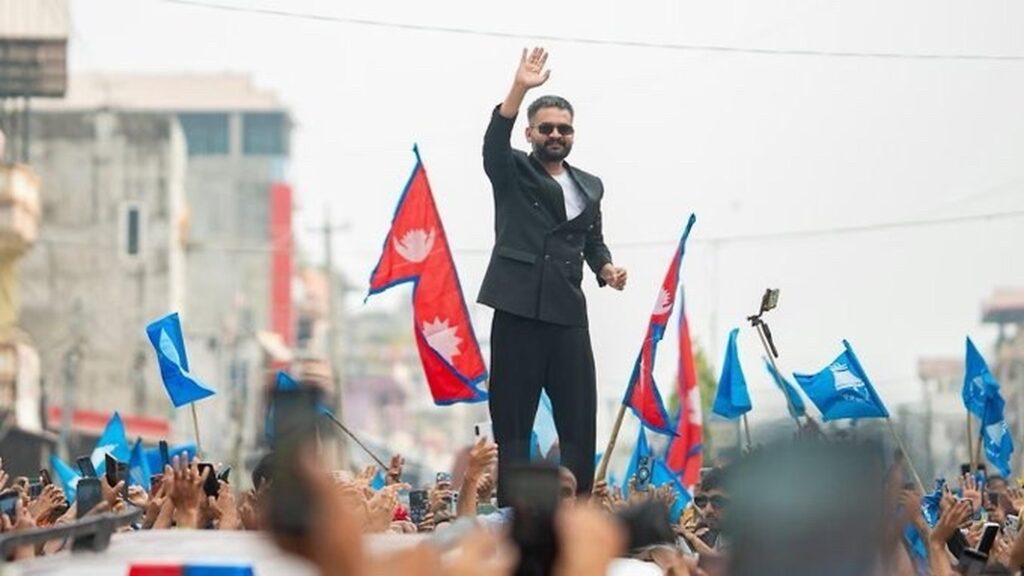
Nepal’s 2026 parliamentary election is unfolding as one of the most dramatic political upheavals in the country’s democratic history. Early results show the Rastriya Swatantra Party (RSP), led by Kathmandu mayor Balendra “Balen” Shah, surging far ahead of Nepal’s traditional political forces.
Vote counting began after polling on March 5 and early trends indicate a powerful anti-establishment wave. The RSP has already secured dozens of seats and is leading in many more constituencies across the country. If the trends hold, the party could secure a parliamentary majority and reshape Nepal’s political order.
The election is the first national vote since the mass youth protests of 2025 that shook the political establishment and forced early elections. For many voters, the ballot became an opportunity to dismantle a system they believe failed to deliver stability, jobs and accountability.
Landslide trend
Nepal’s parliament consists of 275 members, with 165 elected through direct constituencies and 110 chosen through proportional representation. A party needs 138 seats to secure a majority.
Early counting suggests the RSP is approaching that threshold. Reports from election officials and media indicate the party has already won more than three dozen seats and is leading in over eighty constituencies. Some projections suggest the party could eventually lead in more than 100 seats, putting it on course for a historic victory.
Supporters of the party have even begun discussing the possibility of a two-thirds parliamentary majority, a scenario that would give the new political force unprecedented legislative power.
Although final results may take several days because ballots from remote mountainous regions must be transported for counting, the overall trend points to a decisive shift away from Nepal’s traditional parties.
Rise of Balen
At the center of the political wave is Balendra Shah, widely known as Balen. The 35-year-old engineer, rapper and current mayor of Kathmandu has emerged as the face of a generational political transformation.
Shah first gained national attention after winning the Kathmandu mayoral race as an independent candidate in 2022. His reputation for administrative reforms and anti-corruption measures helped build a strong public image, particularly among younger voters.
Before entering politics, Shah was a well-known hip-hop artist whose music frequently criticized corruption and political mismanagement. That outsider persona helped him cultivate a loyal youth following long before his formal entry into politics.
His party, the Rastriya Swatantra Party, has positioned itself as an alternative to Nepal’s entrenched political elite. Campaign messages focused heavily on transparency, efficient governance and economic modernization.
Collapse of old parties
The election results represent a severe setback for Nepal’s long dominant political parties.
For decades the country’s politics have been shaped by three major forces: the Nepali Congress, the Communist Party of Nepal (UML) led by former prime minister KP Sharma Oli, and the Communist Party of Nepal (Maoist Centre) led by Pushpa Kamal Dahal, also known as Prachanda.
Early counting suggests candidates from these parties are trailing behind RSP contenders in several key constituencies.
One of the most closely watched contests is the race between Balen Shah and former prime minister KP Sharma Oli. Early vote counts show Shah leading comfortably, symbolizing the wider rejection of the old political guard.
Several other high profile political families are also facing defeats as younger candidates from the new party challenge established dynasties.
Kathmandu sweep
The scale of the political shift is particularly visible in Kathmandu Valley, Nepal’s political and economic center.
The RSP has performed exceptionally well in the capital region, winning nearly all constituencies in the Kathmandu district and making significant gains in neighboring Lalitpur and Bhaktapur.
Analysts say the strong urban support reflects deep frustration among educated and middle class voters who have grown impatient with years of political instability and corruption allegations.
Kathmandu’s voters also include a large concentration of young professionals and students who played a major role in the protests that preceded the election.
Youth uprising
The political earthquake can be traced directly to the Gen-Z protests of 2025, which triggered one of the largest political mobilizations Nepal has seen in decades.
Demonstrations erupted across major cities after a series of controversial government decisions and allegations of corruption. Students and young professionals led mass rallies demanding institutional reform and accountability.
The protests quickly escalated. Violent clashes between protesters and security forces left dozens dead and hundreds injured. The unrest eventually forced the dissolution of parliament and the announcement of early elections.
The 2026 vote therefore became a political outlet for the anger that had spilled onto the streets months earlier.
Digital campaign
The RSP’s rapid rise was powered by an unconventional campaign strategy that relied heavily on digital communication and grassroots mobilization.
Instead of relying on traditional party networks, Shah’s campaign built an extensive online presence supported by hundreds of volunteers and social media activists.
A core team of political strategists coordinated messaging, voter outreach and fundraising operations. Financial support also came from members of the Nepali diaspora, particularly those living in North America.
The strategy allowed the party to bypass traditional political structures and connect directly with voters across the country.
Key battles
Several parliamentary races have drawn national attention as symbols of the broader political shift.
In Chitwan-2, RSP leader Rabi Lamichhane is leading comfortably against rival candidates from older parties. In Kathmandu, young RSP candidates are challenging political figures with decades of experience.
One notable contest features Sobita Gautam, who is leading against Renu Dahal, the daughter of former prime minister Pushpa Kamal Dahal. The race highlights the growing rejection of political dynasties among voters.
These high profile battles illustrate how the election is reshaping Nepal’s political hierarchy.
Voter turnout
The scale of the election was significant. Nearly 19 million eligible voters were registered across the country.
Preliminary data indicates voter turnout reached around 60 percent, a relatively strong participation rate given Nepal’s difficult terrain and logistical challenges.
Polling stations were set up across remote mountain regions, plains districts and urban centers. In some rural areas ballots must still be transported by helicopter before counting can be completed.
The Election Commission has indicated that the final nationwide results may take several days to compile.
Governing test
Despite the electoral surge, governing Nepal will present major challenges for any new administration.
The country continues to face high youth unemployment, slow economic growth and heavy dependence on remittances from workers abroad. Infrastructure development remains uneven and political instability has often slowed reform efforts.
Nepal has experienced frequent government changes over the past two decades, with coalition politics often limiting policy continuity.
If the RSP forms the next government, it will need to convert popular support into institutional reforms and economic policies capable of addressing these structural problems.
Regional stakes
Nepal’s political transformation could also carry broader geopolitical implications.
The Himalayan nation sits strategically between India and China, two regional powers competing for influence in South Asia. Previous governments have attempted to balance relations between the two neighbors while maintaining partnerships with Western countries.
A new political leadership may reshape aspects of that foreign policy balance, particularly as Nepal seeks investment and economic development.
Regional observers will be watching closely to see how a potential Shah administration approaches diplomatic ties and economic partnerships.
Political turning point
The 2026 election marks a defining moment for Nepal’s democracy.
For millions of voters, the results represent a rejection of entrenched political elites and a demand for generational change. The rise of a party led by a former rapper and urban reformist reflects the depth of public frustration with traditional politics.
Whether this political wave produces lasting reforms remains uncertain. But the early results already signal one clear outcome.
Nepal’s political landscape has been fundamentally reshaped and the era of unquestioned dominance by the country’s old parties appears to be ending.


