

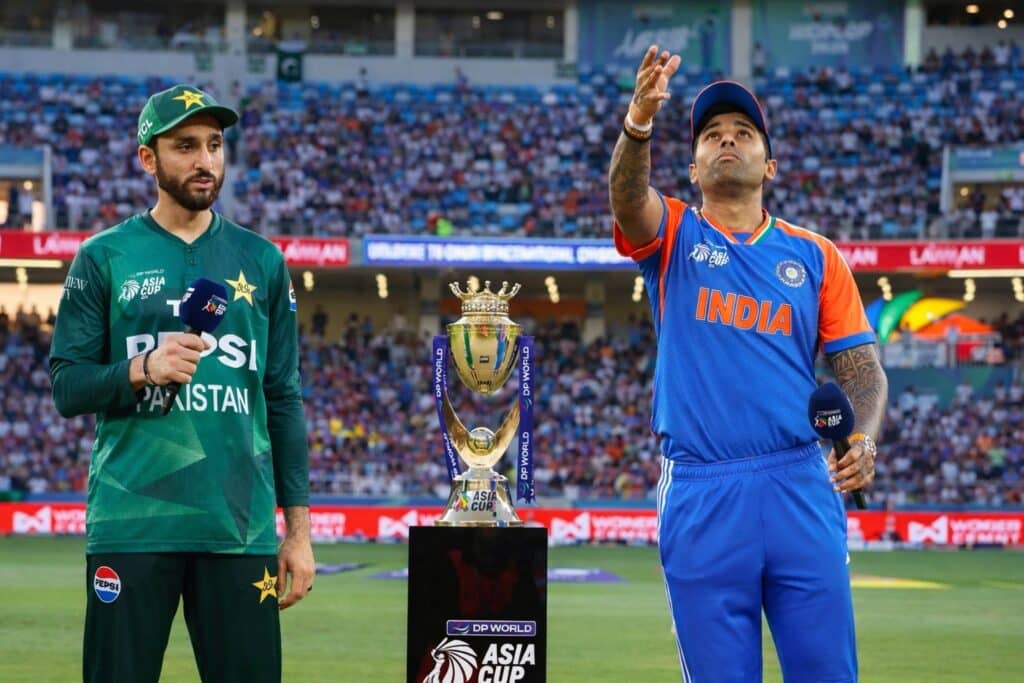
Pakistan has reversed its decision to boycott its T20 World Cup 2026 group match against India, ending days of uncertainty that threatened to destabilise the tournament and challenge the authority of international cricket’s governing framework. The match is now set to take place on 15 February at the R Premadasa Stadium in Colombo.
The reversal followed sustained pressure from the International Cricket Council, regional cricket boards and diplomatic interlocutors, after Pakistan initially cited objections to the ICC’s handling of Bangladesh’s withdrawal from the tournament. The episode exposed the extent to which political considerations continue to intersect with global cricket governance, particularly in high-stakes fixtures involving India and Pakistan.
Boycott Decision
The controversy began when the Government of Pakistan announced that its national team would not play India in the T20 World Cup, while remaining otherwise committed to the competition. The decision was presented as a protest against the ICC’s refusal to penalise Bangladesh after it declined to travel to India for scheduled matches due to security concerns.
Pakistan argued that the ICC’s response created an uneven standard. Officials maintained that Bangladesh’s replacement without sanction undermined principles of equal treatment among member boards. In Islamabad’s view, participation in the India match under those circumstances was politically and administratively untenable.
The Pakistan Cricket Board confirmed that the matter was a government directive rather than a sporting decision. Players continued tournament preparations but acknowledged that the final call rested outside the board’s authority.
The ICC responded by reiterating that selective participation breached the Members Participation Agreement signed by all competing nations. It warned that failure to fulfil scheduled fixtures could result in disciplinary action, including forfeiture and further sanctions.
ICC Intervention
As the situation escalated, the ICC engaged in direct talks with the Pakistan Cricket Board, stressing that tournament integrity depended on uniform adherence to participation rules. Officials made clear that exceptions based on political considerations would undermine the credibility of global events.
Bangladesh, whose withdrawal triggered the dispute, publicly urged Pakistan to reconsider. Senior figures within the Bangladesh Cricket Board stated that the India-Pakistan match was central to the tournament’s sporting and commercial framework and warned that a boycott would harm cricket’s collective interests.
Sri Lanka Cricket also intervened as host of the fixture. It highlighted the extensive security, logistical and financial arrangements already in place and cautioned that cancellation would have broader economic and reputational consequences for the host nation.
During negotiations, Pakistan reportedly sought concessions from the ICC, including assurances related to Bangladesh’s future participation and wider scheduling matters involving India. The ICC rejected demands beyond its regulatory mandate, reaffirming that bilateral relations and political disputes fall outside its remit.
Policy Reversal
The impasse ended when the Government of Pakistan issued revised instructions authorising the team to play India as scheduled. The statement cited consultations with international stakeholders and the need to safeguard the continuity of the World Cup.
The ICC subsequently confirmed Pakistan’s full participation in the tournament, including the India fixture in Colombo. It reiterated that Bangladesh would not face sanctions and emphasised its commitment to maintaining consistent governance standards across member nations.
The reversal was widely welcomed by cricket administrators as a necessary step to preserve the tournament’s structure. With the dispute resolved, attention shifted back to competitive preparations, although the episode left unresolved questions about the influence of political authority over sporting commitments.
Competitive Credibility
The boycott episode has underscored the vulnerability of international cricket to political intervention, particularly in fixtures carrying significant commercial and symbolic weight. The India-Pakistan match remains the most commercially valuable fixture in global cricket, underpinning broadcast revenues and sponsorship models for ICC tournaments.
A refusal to play would have disrupted group standings, raised contractual issues, and set a precedent for selective withdrawal from fixtures. It would also have weakened the ICC’s ability to enforce participation agreements.
The incident further highlighted the fragile nature of cricketing ties between India and Pakistan, where bilateral series remain suspended and encounters are confined to neutral venues at multinational events.
For Bangladesh, the episode reaffirmed protections against punitive action but also exposed the complexities surrounding security assessments and host nation obligations.
Pakistan’s reversal ensured that the T20 World Cup’s marquee fixture will proceed as planned. Yet the dispute will likely inform future debates on governance, neutrality and enforcement within international cricket.
As the tournament progresses towards February, the focus returns to the field. The events preceding the India-Pakistan match, however, will remain a defining off-field episode of the 2026 T20 World Cup.


