

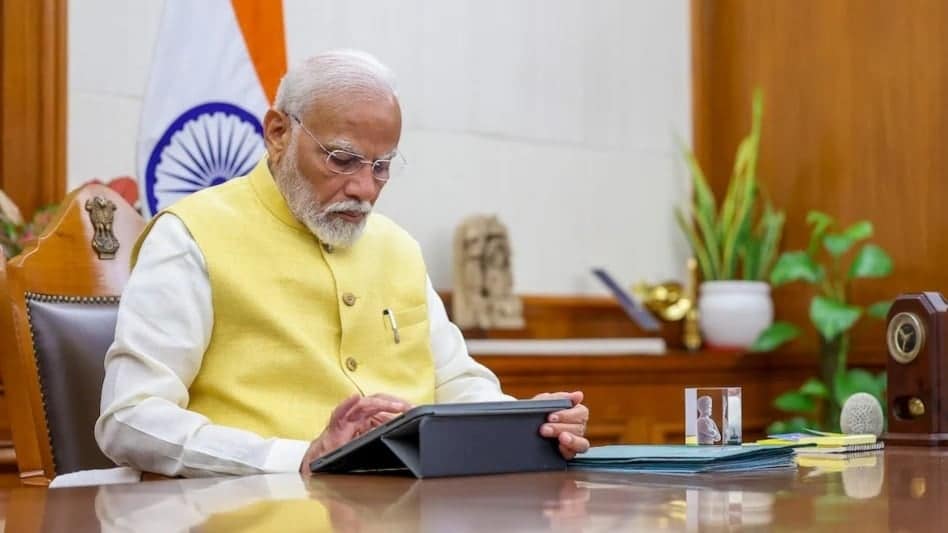
Addressing the Lok Sabha amid escalating tensions in West Asia, Narendra Modi presented a detailed assessment of the unfolding crisis, outlining its immediate and long-term implications for India’s citizens, economy and strategic interests. His remarks come at a time when the conflict is disrupting key global energy routes, straining supply chains and raising concerns over the safety of millions of Indian nationals living in the Gulf region.
With maritime corridors such as the Strait of Hormuz under heightened risk and global markets reacting to uncertainty in oil supplies, the Prime Minister’s address focused on India’s preparedness across multiple fronts, including diplomatic engagement, energy security, domestic stability and coordinated institutional response mechanisms.
Crisis and Global Impact
Prime Minister Modi described the developments in West Asia as a matter of serious concern with consequences extending far beyond the region. “The situation in West Asia is worrisome and is having a very adverse impact on the global economy,” he said, placing the conflict within the context of rising uncertainty in international markets.
He noted that disruptions linked to the conflict are affecting critical supply chains, energy corridors and shipping routes that connect major economies. The region’s central role in global oil and gas supply has amplified the economic impact, with volatility already visible in fuel markets and trade flows.
The government, he indicated, is closely tracking these developments due to their direct implications for India’s economic stability and external trade environment.
Safety of Indians Abroad
A significant portion of the Prime Minister’s address focused on the safety of Indian nationals in the region. Nearly one crore Indians reside across Gulf countries, including workers, professionals and seafarers operating along sensitive maritime routes.
Prime Minister Modi acknowledged that the crisis has already resulted in casualties among Indian citizens. At the same time, he emphasized the scale of assistance and evacuation measures undertaken so far. “Safety of Indians abroad is our biggest priority during this global crisis. We have rescued more than 3,75,000 people since this war started,” he said.
He further noted that Indian missions in the region are actively coordinating with local authorities and community networks to provide real-time assistance. Efforts are ongoing to ensure safe movement, access to essential services and timely evacuation wherever required.
Diplomatic Engagement and Monitoring
India’s diplomatic outreach has been intensified in response to the crisis. The Prime Minister confirmed that he has directly engaged with leaders in West Asia to address concerns related to the safety of Indian nationals. “I have spoken twice with leaders of West Asian countries and have received assurances regarding the safety of Indians,” he said.
These engagements are part of a broader diplomatic effort to maintain communication channels across the region while ensuring that Indian interests are safeguarded.
At the institutional level, the government has established a continuous monitoring mechanism. “An inter-ministerial group has been formed, which will meet every day to monitor the situation and its impact,” the Prime Minister said, referring to the decision taken after a meeting of the Cabinet Committee on Security.
This group is tasked with assessing developments across security, economic and logistical fronts, enabling coordinated and timely responses as the situation evolves.
Energy and Supply Strategy
Energy security remains a central concern amid the ongoing conflict. The Prime Minister highlighted that India has diversified its energy sourcing, with imports now coming from 41 countries. This strategy is aimed at reducing exposure to disruptions in any single region.
He also pointed to the availability of strategic reserves. “We have made arrangements to ensure that the country does not face any shortage of energy resources,” he said, noting that 53 lakh metric tonnes of fuel reserves are currently in place.
Referring to maritime activity, the Prime Minister stated that Indian vessels continue to operate through the Strait of Hormuz despite the conflict. “Our ships are crossing the Strait of Hormuz even as the conflict continues,” he said, indicating that trade routes remain functional under close supervision.
He also outlined structural measures taken in recent years to strengthen resilience. “India has reduced its oil imports by 4.5 crore barrels,” he said, linking this to efforts aimed at reducing vulnerability to external shocks. In addition, he noted the expansion of renewable energy capacity, particularly solar power, as part of a long-term strategy to lower dependence on fossil fuels.
Addressing supply chain disruptions, the Prime Minister said the government is actively working on mitigation strategies. “Continuous efforts are also underway to determine how we can overcome the disruptions that have occurred in the supply chain,” he said.
Domestic Preparedness and Economic Stability
The Prime Minister also outlined steps taken within the country to maintain stability during the crisis. He stated that authorities are monitoring essential supplies and taking action against practices that could disrupt the market. “The government is taking strict action against gas hoarding and black marketing,” he said.
He emphasized the need for public cooperation in maintaining stability. “I urge citizens to stay calm and patient,” he said, cautioning against panic-driven actions that could strain supply systems.
Security arrangements within the country have been strengthened as a precautionary measure, with agencies placed on alert to respond to any potential spillover risks. These steps are part of a broader effort to ensure that internal stability is maintained while the external situation remains uncertain.
Impact on Students
The ongoing conflict has also affected Indian students in the Gulf region. The Prime Minister confirmed that CBSE examinations have been postponed in affected countries due to safety concerns.
He stated that authorities are working to ensure that students do not face academic loss as a result of these disruptions, with measures being explored to safeguard their academic progression.


