

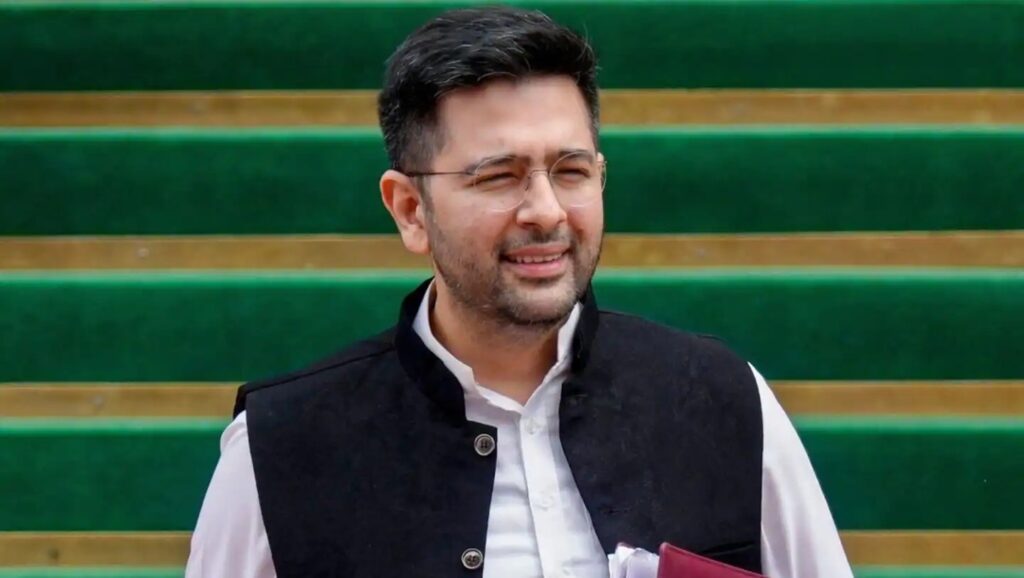
Raghav Chadha’s removal from a key parliamentary role has triggered sharp political reactions and raised questions about internal dynamics within the Aam Aadmi Party. On April 2, 2026, Raghav Chadha was dropped as Deputy Leader in the Rajya Sabha and replaced by Ashok Mittal, marking a significant shift in the party’s parliamentary strategy.
The party formally communicated to the Rajya Sabha Secretariat that Chadha should not be allotted speaking time under its quota. In parliamentary terms, this effectively reduced his ability to represent the party on the floor of the House. For a leader who had emerged as one of AAP’s most visible national faces, the move marked a sharp and sudden shift in his standing.
The decision immediately raised questions about internal dynamics within AAP and what it revealed about the party’s current political priorities.
Growing divide
At the centre of the development lies a growing disconnect between Chadha’s political style and the direction the party appears to be taking. Over the past few years, Chadha built his parliamentary identity around policy-driven issues, focusing on concerns that directly impact the middle class. His interventions often highlighted rising costs, financial pressures, and regulatory gaps.
However, as the political climate became more confrontational, expectations within AAP began to change. The party, particularly during periods of legal and political challenges involving Arvind Kejriwal, appeared to prioritise a more aggressive and unified opposition stance against the Bharatiya Janata Party.
Chadha’s relatively restrained approach during these moments was increasingly viewed within the party as a lack of political alignment. His absence from key developments and limited direct engagement in high-intensity political debates contributed to the perception that he was not fully in step with the party’s evolving strategy.
AAP’s allegations
As the situation unfolded, leaders within AAP outlined a series of concerns that they said contributed to Chadha’s removal. These concerns pointed to a broader pattern rather than isolated instances.
According to party leaders, Chadha chose not to participate in several coordinated opposition actions inside Parliament. He was accused of refusing to sign an impeachment motion brought forward by opposition parties, including the Trinamool Congress, at a time when unity among opposition members was being emphasised. He was also criticised for not joining parliamentary walkouts, which are often used to register collective protest.
Another key allegation related to his handling of public issues. Party leaders claimed that Chadha did not take up certain matters when asked, including discussions around rising LPG prices, which were seen as directly affecting households across the country. This raised concerns within the party about his responsiveness to both organisational direction and political messaging.
Atishi, Leader of Opposition in the Delhi Assembly, publicly articulated these concerns, placing them within a broader political narrative.
“Our country is going through a crisis today. Democracy and the Constitution are being attacked.”
She linked Chadha’s actions to what she described as a reluctance to confront the central government at a critical time.
“He is scared to speak against the BJP and Prime Minister Modi… Many opposition leaders got scared and joined the BJP. Raghav Chadha could be next.”
These remarks reflected a rare instance of direct internal criticism being expressed openly, signalling that the issue had moved beyond internal deliberation to a more public assertion of party position. Similar concerns were echoed by Saurabh Bharadwaj, reinforcing the perception of a collective stance within the party leadership.
Chadha responds
Raghav Chadha responded to the development with restraint, choosing not to directly confront the party leadership. In a public message, he framed the situation in terms of limitation rather than defeat.
“I have been silenced, not defeated… I will continue to raise the voice of the common man.”
The statement reflected a careful political balance. Chadha acknowledged the decision while maintaining his identity as a leader focused on public issues. His response avoided escalation, suggesting an attempt to remain within the party framework despite the setback.
Notably, Arvind Kejriwal has not issued a direct public statement on the matter. In political practice, such silence often indicates implicit approval of the decision while allowing other leaders to communicate the rationale. This approach helps manage internal tensions without amplifying them publicly.
What it means
The replacement of Chadha with Ashok Mittal reflects a broader strategic shift within AAP. Mittal’s relatively low-profile presence suggests a move towards tighter organisational control and more disciplined messaging. The decision indicates that the party is prioritising alignment and cohesion as it navigates a competitive political environment.
At the same time, the party has chosen not to remove Chadha entirely. By keeping him within its ranks while limiting his parliamentary role, AAP appears to be adopting a strategy of containment. This allows the party to signal expectations clearly while avoiding the risks associated with a complete break.
For Chadha, the development marks a significant turning point. While he continues to hold a position in the Rajya Sabha and retains public recognition, his influence within the party has been reduced. His future within AAP will depend on whether he aligns more closely with its current direction or continues to maintain a distinct political approach.
More broadly, the episode highlights a shift within AAP itself. A party that once emphasised policy-driven politics is adapting to a landscape that increasingly rewards centralised messaging and political assertiveness. The handling of this situation suggests that the party is moving towards a model where internal discipline and strategic clarity take precedence, even if it means sidelining one of its most prominent leaders.


