

Red Corridor, once synonymous with widespread insurgency and some of India’s toughest internal security challenges, is now shrinking at an unprecedented pace. Once spanning across large parts of central and eastern India, it has been reduced to scattered and weakened pockets. This raises an important national question: Has the Maoist movement lost the capacity to resurface? Recent progress suggests the answer is closer than ever before.
Between 2014 and 2024, Naxal-related incidents declined by 53 percent, security personnel fatalities fell by 73 percent, and civilian deaths dropped by 70 percent. By late 2025, authorities reported 1,225 Maoist surrenders and 270 neutralisations. These numbers highlight a significant collapse in the insurgents’ strength and reach.
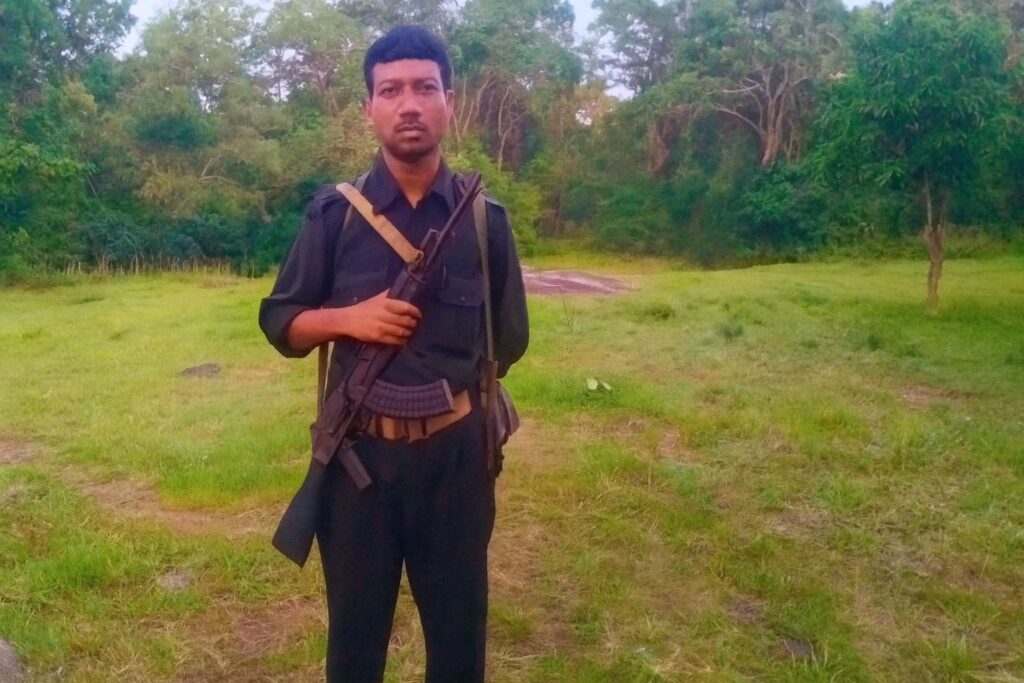
Madvi Hidma, one of India’s most feared and influential Maoist commanders, is now at the center of a historic turning point in the country’s internal security landscape. His killing on 18 November 2025 during an encounter in the Maredumilli forest region of Andhra Pradesh has sent a clear message across the Maoist ranks: the era of the old guard is ending, and the once-formidable Red Corridor is on the verge of collapse.
Hidma, a tribal from Sukma district, was the chief of the Maoists’ dreaded PLGA Battalion No. 1 and a key member of the CPI (Maoist) Central Committee. Linked to around 26 major attacks on security forces and civilians, he had long been considered the mastermind behind some of the deadliest ambushes in the Bastar region. For years, he operated in dense jungles that offered both sanctuary and strategic advantage.
But by late 2025, his operational space had narrowed sharply. Security camps expanded, drone surveillance intensified and Maoist support networks crumbled across state borders. What was once his impenetrable territory had turned into confined pockets. His death marks not just the end of an individual commander, but the weakening of the Maoist command structure itself.
The Shrinking Red Corridor: From Dominance to Fractured Pockets
The Red Corridor, which once spanned over 100 districts, has shrunk to 18 districts by 2025, with only a handful still severely impacted. This transformation reflects sustained, coordinated efforts across multiple states to reclaim territory and dismantle Maoist infrastructure.
Regions formerly synonymous with ambushes and landmine attacks now report stronger policing, improved mobility and expanded administrative presence. The Maoists, who once enforced their own system of control over villages, have been reduced to small, disoriented groups with diminishing influence.
The Red Corridor’s sharp contraction is not a sudden phenomenon but the result of consistent pressure, targeted operations, development-led governance and a growing wave of surrenders.
Wave of High-Profile Surrenders Undermines Maoist Strength
The collapse of Maoist networks is also visible in the surge of senior cadre surrenders. Telangana recorded 427 Maoist surrenders in 2025, including two of the longest-underground leaders in India’s insurgency history.
P. Prasad Rao (alias Chandranna), underground for 45 years, and Bandi Prakash (alias Prabhath), underground for 42 years, surrendered with state support and rehabilitation packages. Their decisions reflect internal rifts, fatigue, and diminishing ideological conviction within the movement.
Prasad’s statement that it was “not a surrender, but a decision to join civil society” captured the mood among many aging cadre, signalling a broader erosion of faith in the Maoist cause.
March 2026: The Government’s Target for a Naxal-Free India
Union Home Minister Amit Shah has set March 2026 as the target for a completely Naxal-free India. This effort is anchored in a three-pronged model of security, development and rehabilitation.
Over the past decade, the government has strengthened the security grid by building 576 fortified police stations, setting up 336 security camps, and creating 68 night-landing helipads to enhance troop mobility. Forces have also entered and secured regions such as Abujhmaad, long considered the Maoists’ deepest stronghold.
Technology and Financial Crackdowns Cripple Maoist Operations
The modern phase of counter-insurgency is dominated by technology. Security agencies now depend on AI-based analytics, drone and satellite surveillance, mobile data monitoring and social media tracking to identify movement patterns and eliminate Maoist bases.
Major operations such as Black Forest and Kagar in 2024 led to the elimination of several top commanders. Meanwhile, the crackdown on Maoist finances has delivered further blows. The NIA seized ₹40 crore, the ED confiscated ₹12 crore, and state agencies seized another ₹40 crore in assets linked to Maoist funding.
Budgetary support also surged, with the Centre allocating ₹3,331 crore under the SRE scheme, ₹991 crore under the Special Infrastructure Scheme and ₹3,769 crore for development in LWE-affected regions.
Development Turns the Tide in Former Strongholds
Development has proven to be the most decisive counter-insurgency tool. Between 2014 and 2025, more than 12,000 kilometres of roads were constructed across former Maoist belts. Mobile towers brought remote villages online, while over 1,000 bank branches, 937 ATMs, 38,000 banking correspondents and 6,000 post offices connected communities to essential services.
Skill-building institutions such as 48 Industrial Training Institutes and 61 Skill Development Centres have provided alternative livelihoods for local youth, cutting into the Maoists’ traditional recruitment base.
Rehabilitation policies offering housing, education and employment to surrendered cadres have further accelerated defections and reintegration.
Ground Reality: Reclaimed Territories and Reduced Maoist Depth
Security forces now maintain full administrative control over former Maoist bastions such as Budha Pahar, Parasnath, Baramsia and Chakrabandha. The Maoists’ Tactical Counter Offensive Campaign in 2024 failed to gain traction, underscoring their depleted strength.
However, experts caution that sustained development, transparent governance and community engagement are essential to preventing any residual cells from regrouping.
The Road Ahead
With the death of Madvi Hidma, one of the last remaining pillars of the Maoist leadership, India has crossed a symbolic threshold in its fight against Left-Wing Extremism. Combined with the shrinking of the Red Corridor, historic surrenders, and sweeping development, Hidma’s fall marks a decisive turn in India’s internal security narrative.
As the nation advances toward its 2026 goal, one truth stands clear: when development reaches the last mile, extremism loses its last breath!


