

Pipeline Halt Triggers EU Tensions
A sudden halt in Russian oil flows through the Druzhba pipeline has escalated into a significant political confrontation inside the European Union, exposing deep divisions over energy security, sanctions policy and financial support for Ukraine.
Transit through the Soviet-era Druzhba pipeline stopped on 27 January after infrastructure inside Ukraine was reportedly damaged in a Russian drone strike. Ukrainian authorities said the disruption was caused by military attacks targeting energy facilities and confirmed that repairs were under way despite continued security threats.
The interruption has directly affected Hungary and Slovakia, two landlocked EU member states that continue to rely on Russian crude delivered through the southern branch of the pipeline.
Hungary Defends Energy Sovereignty
Hungary has rejected suggestions that it should rapidly shift away from Russian oil imports, framing the issue as one of sovereign decision-making.
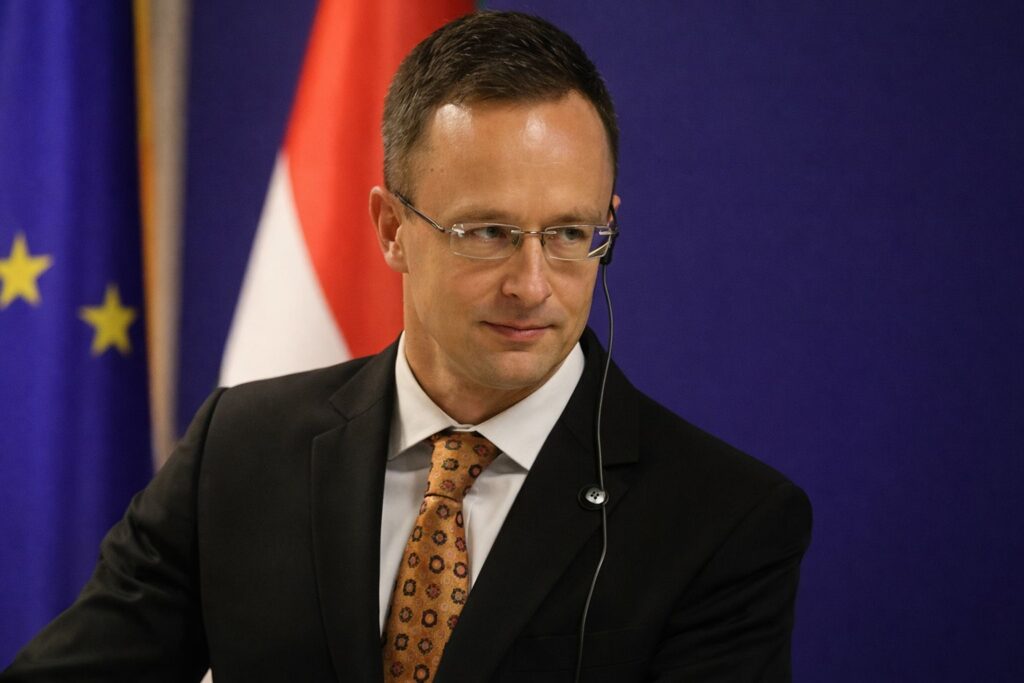
Foreign Minister Péter Szijjártó said Budapest would not accept external pressure regarding its energy procurement choices.
“It is our national sovereign right to decide what kind of energy sources we buy and where we buy our energy sources from,” Szijjártó said. “We are not ready to buy more expensive sources and less reliable sources than the current ones. It is our sovereign right to decide.”
He added that Hungary’s energy security could not be subordinated to political considerations in Brussels or elsewhere.
Prime Minister Viktor Orbán reinforced that position, arguing that economic stability must remain the government’s priority.
“We will not support measures that endanger Hungarian families and businesses,” Orbán said in a radio interview. “Before new sanctions or financial commitments are made, the oil transit situation must be resolved.”
Budapest Blocks EU Aid and Sanctions
The dispute has moved beyond energy logistics into EU policymaking. Hungary has blocked approval of a proposed €90 billion European Union financial assistance package for Ukraine and withheld support for a new round of sanctions targeting Russia.
Under EU rules, foreign policy decisions require unanimity among member states. Hungary’s veto has therefore stalled both the sanctions package and macro-financial support discussions.
European Commission President Ursula von der Leyen emphasised the importance of unity.
“Our support for Ukraine remains firm,” she said. “At the same time, energy security for all member states must be safeguarded.”
Diplomats in Brussels privately describe the impasse as one of the most serious internal disputes since Russia launched its full-scale invasion of Ukraine in February 2022.
Kyiv Rejects Political Allegations
Ukrainian officials deny any suggestion that the pipeline halt is politically motivated.
A senior Ukrainian energy official said repair operations were proceeding under wartime conditions.
“Russia continues to attack our infrastructure,” the official said. “We are working to restore transit capacity as quickly as possible.”
President Volodymyr Zelenskyy has accused Moscow of using energy infrastructure attacks as a strategy to weaken European cohesion.
“Russia seeks to divide Europe,” Zelenskyy said in a recent address. “Energy blackmail is part of its strategy.”
Kyiv has indicated that partial restoration of oil transit could begin by 25 February if security conditions permit safe access to damaged facilities.
Strategic Role of the Druzhba Pipeline
The Druzhba pipeline remains one of the longest crude oil pipeline systems in the world, transporting Russian oil across Belarus and Ukraine into Central Europe.
Following the EU’s embargo on most seaborne Russian oil in 2022, Hungary and Slovakia were granted temporary exemptions due to their landlocked geography and refinery configurations, which are heavily dependent on Russian Urals crude.
Hungary’s primary refinery at Százhalombatta, operated by MOL Group, is optimised for Russian-grade crude. Transitioning to alternative blends would require technical modifications and increased transport costs.
Hungarian officials argue that replacing pipeline deliveries with seaborne imports routed via the Adriatic and Croatian infrastructure would be significantly more expensive and less efficient.
Budapest has begun drawing on strategic reserves while securing maritime shipments to offset the disruption, but officials caution that these measures are not sustainable long term.
Slovakia Declares Energy Emergency
Slovakia has aligned closely with Hungary’s position. Bratislava declared an oil supply emergency following the pipeline halt and temporarily halted certain electricity exports to Ukraine, citing domestic energy security concerns.
Slovak Prime Minister Robert Fico said his government must prioritise national stability.
“Slovakia cannot endanger its own energy security,” Fico said. “We must act responsibly toward our citizens and economy.”
The coordinated stance underscores the structural vulnerabilities faced by Central European states that remain reliant on transit infrastructure crossing Ukrainian territory.
Pressure on European Cohesion
The standoff comes weeks before the fourth anniversary of Russia’s invasion of Ukraine, a symbolic milestone at a time when European leaders are seeking to demonstrate continued unity and resolve.
Several EU member states have expressed concern that linking oil transit disputes to broader financial assistance packages could weaken collective decision-making.
Germany and the Baltic states have reiterated that maintaining sanctions pressure on Moscow remains central to limiting Russia’s war capacity.
A senior EU diplomat said discussions were under way to prevent the energy dispute from derailing long-term funding mechanisms for Ukraine.
“There is recognition that energy security concerns must be addressed,” the diplomat said, “but there is also determination to maintain support for Kyiv.”
Domestic Political Context
Hungary’s position is unfolding against a domestic political backdrop. Parliamentary elections are scheduled for April, and the government has repeatedly framed disputes with Brussels as matters of national sovereignty.
Orbán has long criticised EU sanctions policy, arguing that restrictions on Russian energy have contributed to inflationary pressures and economic strain within Europe.
“Sanctions have not brought peace,” he said recently. “They have created economic difficulties in Europe.”
Analysts note that energy prices remain a sensitive political issue across the region, particularly in countries where Russian supplies historically formed the backbone of industrial and household energy consumption.
Economic and Geopolitical Implications
Energy analysts warn that prolonged disruption to Druzhba flows could increase crude price volatility in Central Europe and complicate refinery operations dependent on consistent supply specifications.
At the same time, continued Russian strikes on Ukrainian infrastructure present ongoing operational risks that complicate repair timelines.
The dispute highlights a broader structural tension within the European Union. While Brussels has invested heavily in diversification strategies, LNG terminals and renewable energy capacity, legacy pipeline infrastructure built during the Soviet era continues to shape present-day political realities.
For Hungary, continued Russian oil imports represent economic pragmatism and energy security. For many other EU members, reducing dependence on Moscow remains a strategic imperative tied to collective security.
Next Steps for the EU
EU leaders are expected to revisit both the sanctions package and the proposed financial assistance framework at the next European Council meeting if the deadlock persists.
Officials in Brussels say technical consultations are ongoing to separate immediate energy transit concerns from longer-term macro-financial commitments to Ukraine.
Whether oil flows resume in the coming days may determine how quickly tensions ease. However, the episode has underscored persistent divisions within the European Union over sanctions policy, energy sovereignty and the balance between national economic priorities and collective geopolitical strategy as the war enters its fourth year.


