

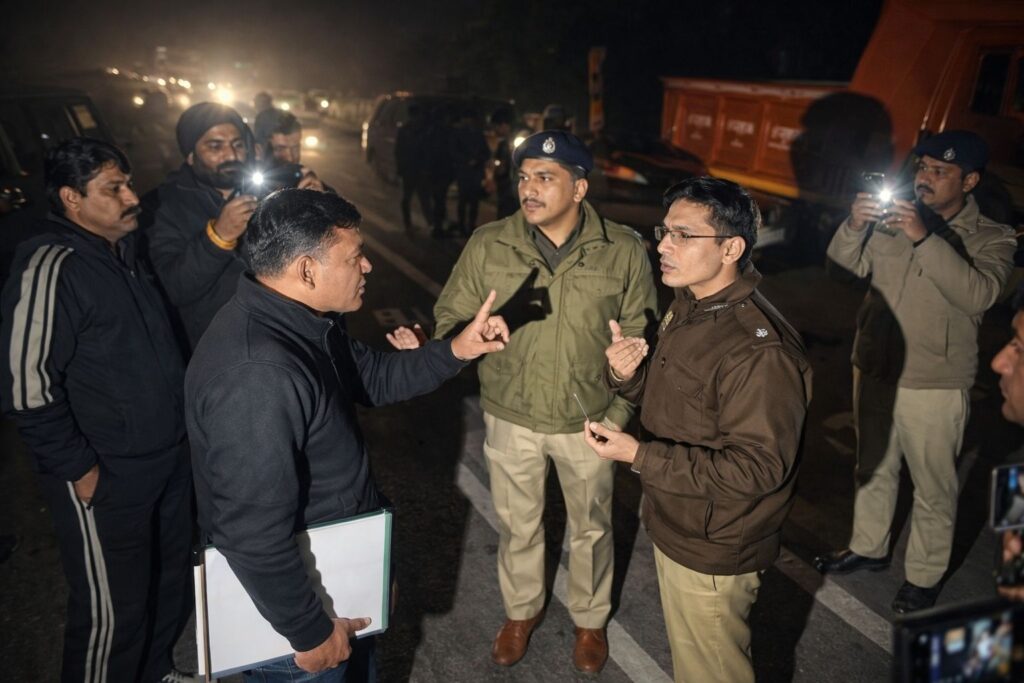
A dramatic 24-hour confrontation between the Delhi Police and the Himachal Pradesh Police unfolded in Shimla after three workers of the Indian Youth Congress were arrested in connection with a protest linked to a high-profile AI summit in the national capital.
The episode, which saw Delhi Police officers detained by their Himachal counterparts and an FIR registered over alleged procedural violations, has sparked legal and political debate over inter-state policing powers, federal protocol and due process.
By early Thursday morning, the standoff ended after a local court granted transit remand, allowing the accused to be taken to Delhi. However, the confrontation has left behind questions about coordination, jurisdiction and political sensitivities.
AI Summit Protest Case
The arrests stem from a “shirtless protest” staged during the India AI Impact Summit at Bharat Mandapam in New Delhi earlier this month. According to Delhi Police, Youth Congress activists entered the venue area and displayed political slogans during the high-level technology event attended by policymakers and industry leaders.
Police registered a case under provisions related to unlawful assembly and disruption of public order. Several individuals were detained in earlier phases of the investigation. Officials said the probe later pointed to additional persons allegedly involved in planning or facilitating the protest.
Early Morning Operation
On February 25, a Delhi Police team travelled to Rohru in Shimla district to arrest three suspects linked to the protest case. The trio were staying at a resort in the Chirgaon area.
Delhi Police officials said the arrests were lawful and part of an ongoing investigation. They maintained that officers are empowered under the Code of Criminal Procedure to arrest an accused anywhere in India in connection with a cognisable offence.
However, Himachal Pradesh Police stated that local authorities were not informed in advance about the operation.
Interception on the Highway
As the Delhi Police convoy began its return journey with the three accused, it was intercepted by Himachal Police at multiple checkpoints, including areas near Solan and the Shoghi barrier.
Local officers sought documentation related to the arrests and transit procedure. Himachal authorities alleged that the visiting team had not completed required formalities, including coordination with the local police station and securing transit remand before moving the accused out of the state.
Officials also claimed that equipment including a CCTV DVR and a vehicle were taken from the premises without following proper seizure procedures. An FIR was registered at Chirgaon police station against unidentified Delhi Police personnel under sections related to alleged abduction and wrongful confinement.
Officers Detained
Nearly 20 Delhi Police personnel were detained and questioned during the standoff. Himachal Police clarified that the officers were not formally arrested but were stopped as part of jurisdictional verification.
The situation escalated into a public face-off, with both sides asserting their legal authority. Audio and video clips circulating on social media showed heated exchanges between officers over procedural compliance.
A senior Himachal Pradesh official described the episode as a serious matter of protocol. Naresh Chauhan, Principal Media Advisor to the Chief Minister of Himachal Pradesh, said the action by the Delhi Police represented a “serious breach of procedure” and that proper coordination between state forces was essential.
Court Hearing in Shimla
The three accused were produced before a local court in Shimla late Wednesday night. After medical examination and legal submissions, the court granted transit remand to Delhi Police, permitting them to move the accused to the national capital within a specified period.
Even after securing the remand order, the Delhi Police convoy was reportedly stopped again for verification linked to the FIR registered in Himachal Pradesh. Eventually, after documentation was reviewed and formalities completed, the team was allowed to proceed.
By early Thursday, Delhi Police left Himachal Pradesh with the three accused.
Delhi Police Stand
Delhi Police officials maintained that they had followed legal provisions and obtained transit remand as required. Sources said the arrests were part of a lawful investigation into the AI Summit protest and were not politically motivated.
Officials emphasised that Section 48 of the Code of Criminal Procedure allows police officers to pursue and arrest an accused anywhere in India for cognisable offences, subject to judicial oversight.
Political Reactions
The involvement of Youth Congress workers added a political dimension to the confrontation. Leaders of the Indian National Congress criticised the arrests and questioned why state authorities were not informed beforehand.
Congress representatives described the incident as an attempt to intimidate opposition workers. State leaders in Himachal Pradesh underlined that law and order is a state subject under the Constitution and said procedural safeguards must be respected.
No detailed statement was immediately issued by the central government, though the episode drew reactions from political figures across party lines.
Federal and Legal Questions
The confrontation highlights the delicate balance within India’s federal policing structure. While police forces have nationwide powers of arrest in cognisable cases, established practice requires coordination with local authorities to prevent jurisdictional disputes.
Transit remand serves as a judicial safeguard when accused persons are moved across state boundaries. Legal experts note that failure to strictly adhere to procedural norms can trigger disputes even if the underlying investigation is valid.
The FIR registered in Himachal Pradesh remains under review. It is unclear whether the matter will escalate into prolonged legal proceedings or be resolved administratively between the two forces.
What Happens Next
The three accused are now in Delhi Police custody as the AI Summit protest investigation continues. Meanwhile, Himachal Pradesh Police are examining the procedural aspects of the arrest operation conducted within their jurisdiction.
Senior officials from both states are expected to review the sequence of events and determine whether any internal action or clarification of standard operating procedures is necessary.
The Shimla standoff stands out as a rare public clash between two state police forces. Beyond the immediate controversy, it has brought into focus the importance of coordination, judicial oversight and adherence to protocol in inter-state law enforcement operations.
As the legal process unfolds, the case may shape future debates on how police agencies navigate politically sensitive investigations within India’s federal framework.


