

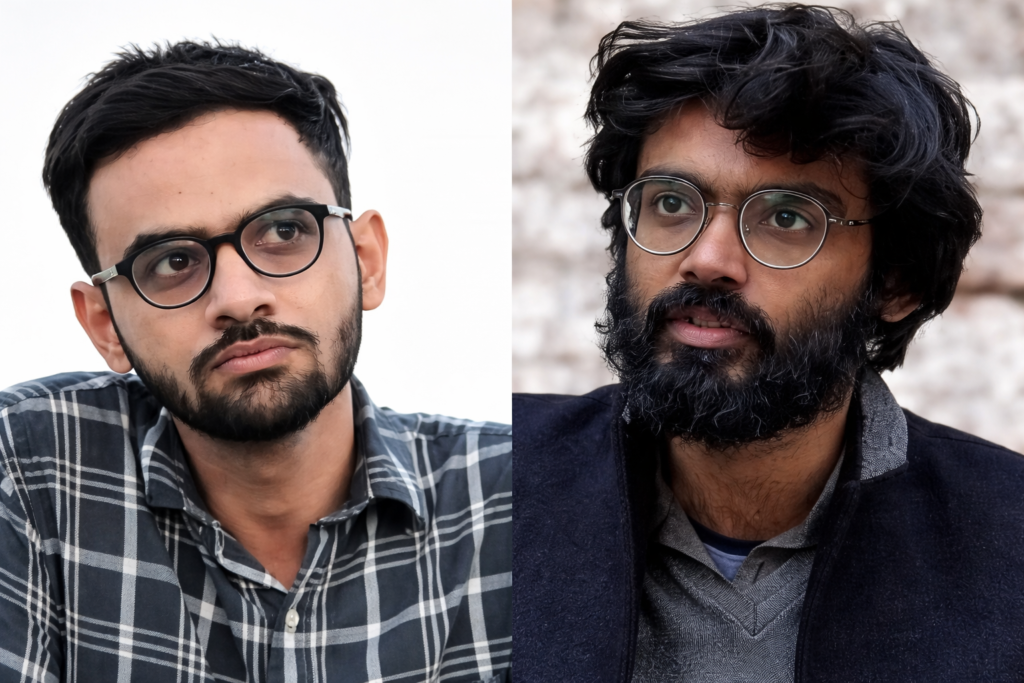
The Supreme Court of India has refused to grant bail to student activists Umar Khalid and Sharjeel Imam in the alleged larger conspiracy behind the February 2020 Delhi riots, holding that the accusations against them meet the stringent legal threshold under the Unlawful Activities (Prevention) Act.
In a judgment delivered on 5 January 2026, a bench comprising Justice Aravind Kumar and Justice N. V. Anjaria ruled that the prosecution material, at this stage of proceedings, discloses a prima facie case against both accused. This finding, the court said, activates the statutory bar on bail under Section 43D(5) of the UAPA.
At the same time, the Supreme Court granted bail to five other accused in the same case, underscoring that bail decisions under UAPA must be based on an individual assessment of roles, rather than a collective approach.
The Delhi riots case
The case arises from the communal violence that erupted in northeast Delhi in February 2020, which claimed 53 lives, left hundreds injured and caused widespread destruction of residential and commercial areas. The violence followed weeks of heightened tension amid protests against the Citizenship Amendment Act, which had sparked demonstrations across the country.
Delhi Police subsequently registered multiple cases, including one invoking the UAPA, alleging that the riots were not spontaneous but the result of a deliberate and coordinated conspiracy. Investigators claimed that protest platforms and political mobilisation were allegedly used to escalate unrest and provoke violence.
Umar Khalid was arrested in September 2020, while Sharjeel Imam has remained in custody since January 2020, initially in connection with alleged speeches during the protests and later as part of the larger conspiracy case. Both have consistently denied all allegations.
What the Supreme Court ruled
The Supreme Court clarified that its decision was confined strictly to the question of bail, not a determination of guilt or innocence. The bench emphasised that at the bail stage under UAPA, courts are required only to assess whether the accusations appear prima facie true, based on the prosecution’s material.
The judges held that the allegations against Khalid and Imam place them on a different footing from other accused, as they are alleged to have played roles linked to planning, coordination and mobilisation, rather than localised or episodic actions.
This distinction, the court said, justified continued custody under the statutory framework governing UAPA cases.
Why bail was denied
Under Section 43D(5) of the UAPA, bail cannot be granted if the court forms a preliminary view that the accusations are credible at first glance. The Supreme Court held that this threshold was met in the case of Khalid and Imam.
The prosecution has relied on speeches, communications, meetings and alleged organisational roles to support its claim of a broader conspiracy. Defence counsel argued that neither accused was directly linked to acts of violence and that the case rests heavily on inference rather than concrete evidence.
However, the bench ruled that such arguments must be tested during the course of trial, not at the bail stage, where the court’s discretion is limited by statute.
The judges also made it clear that their observations do not amount to findings of guilt, and that the accused will have full opportunity to challenge the prosecution’s case during trial.
Bail for other accused
In contrast, the Supreme Court granted bail to Gulfisha Fatima, Meeran Haider, Shifa Ur Rehman, Mohd Saleem Khan and Shadab Ahmed, concluding that the prosecution material against them did not place them on the same level of alleged culpability.
The court stressed that each accused must be assessed individually, even when charged under the same FIR and legal provisions. Bail was granted subject to strict conditions, including restrictions on movement, communication with witnesses and participation in activities that could affect the trial.
The bench warned that any violation of bail conditions would result in cancellation.
Trial history and delay
Before approaching the Supreme Court, Khalid and Imam had their bail pleas rejected by the Delhi High Court, which had also held that the case, at a prima facie level, pointed to conspiracy rather than spontaneous violence.
The proceedings have moved slowly, involving extensive charge sheets, multiple accused and protected witnesses. Umar Khalid has now spent over five years in custody without trial, a fact repeatedly highlighted by his defence.
While acknowledging the prolonged incarceration, the Supreme Court ruled that delay alone cannot override the statutory bar on bail once the legal threshold under UAPA is satisfied.
The UAPA bail framework
The Unlawful Activities (Prevention) Act is designed to address offences that threaten national security and public order. Unlike ordinary criminal law, it imposes exceptionally stringent conditions for bail, giving primacy to the prosecution’s case at the preliminary stage.
Supporters argue that such restrictions are necessary to safeguard investigations and prevent interference with evidence or witnesses. Critics contend that the framework enables extended pre-trial detention, raising concerns about personal liberty and due process.
The Supreme Court’s ruling reflects this tension, reaffirming the statutory limits while granting bail where accused persons are not similarly situated.
Reaction after the verdict
After the bail refusal, Umar Khalid was reported to have told his partner, “This is my life now”, while expressing relief that some co-accused were released. His family described the verdict as deeply disappointing but refrained from making extended public statements.
Political reactions were sharply divided. Leaders from the ruling establishment welcomed the decision, while opposition figures and civil liberties groups criticised the continued incarceration of activists without trial.
Rights organisations reiterated concerns over free speech, dissent and prolonged detention, arguing that the case has become emblematic of broader issues surrounding the use of anti-terror laws.
International attention
Although no specific international statement followed the verdict, global human rights observers have previously raised concerns about extended pre-trial detention under counter-terror legislation and the difficulty of securing bail in such cases.
The Delhi riots case continues to draw attention because of its intersection with protest movements, political expression and national security law.
What lies ahead
The Supreme Court has left open the possibility of fresh bail applications. The bench indicated that renewed pleas may be considered after meaningful progress in the trial, including the examination of protected witnesses or the passage of additional time.
The court also directed the trial court to expedite proceedings, recognising that prolonged delays raise serious questions of fairness, even within the confines of UAPA.
For now, the ruling sends a clear judicial message: in cases involving allegations of large-scale conspiracy and public disorder, bail will depend on the accused’s alleged role, not on the length of incarceration alone.
Why this verdict matters
The judgment is expected to influence how lower courts apply UAPA bail standards, reinforcing a role-based approach while reaffirming the limits imposed by statute.
As the Delhi riots trial continues, the Supreme Court’s decision stands as a significant marker in the ongoing debate over liberty, dissent and the reach of anti-terror laws in India’s criminal justice system.


