

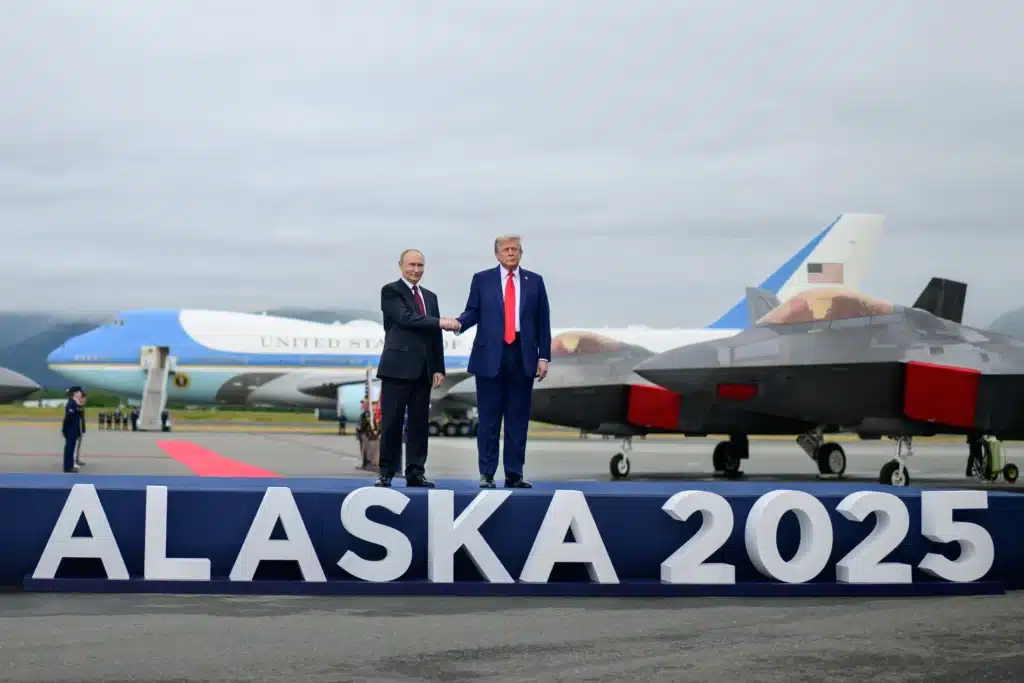
Trump-Putin Summit Highlights
The two leaders issued carefully crafted statements:
Donald Trump called the meeting, “very productive,” but noted that “substantial gaps still remain.” He also emphasized, “Volodymyr Zelenskyy the President of Ukraine has got to make a deal.”
Vladimir Putin mentioned an “understanding,” and indicated a desire to “turn the page” on U.S.-Russia relations without offering concessions either on Ukraine’s demilitarization, or NATO’s expansion.
The meeting effectively was steeped in symbolism—red carpets welcomes, military flyovers, but was sparse on concrete policy outcomes.
Ukraine was not at the table in Alaska and was concerned decisions were being made in its absence, but it looks like Zelenskyy will now have an opportunity to meet Trump in Washington.
Impact on India: Why This Summit Matters
1. Energy and Oil Imports
Trump stated that Russia had “lost an oil customer—India” and warned Russia about potential secondary sanctions on any country that bought Russian crude oil. While Trump noted that sanctions were “not necessary at this moment,” it was clear what he was trying to convey to India. Since 2022, India has been able to take advantage of Russian discounts in crude oil, stabilizing its domestic fuel prices. Certainly, if there were any new sanctions taken, countries would have trouble and may result in restricted oil imports or increased import costs.
2. Trade and Tariffs
India is already subject to additional tariffs by the US on a range of imports. If additional sanctions are imposed or there is stricter enforcement directed at Russia, it may impact India’s export competitiveness at a vital time in its manufacturing-based growth strategy.
3. Defense Procurement
With no hope of a ceasefire in sight, Russia’s defense sector is overrun. As India is still dependent on Russian-origin supply for fighters, submarines, and missiles, spare parts and upgrades may be considerably delayed. This certainly accelerates India’s push to diversify and indigenize its defense procurement.
Key Takeaways from the Trump–Putin Meet
- No breakthrough on Ukraine—dialogue continues, but without results.
- India flagged indirectly in Trump’s oil comments.
- Secondary sanctions risk lingers—not immediate, but possible.
- Energy and defense security at stake—India must adapt supply chains.
- Strategic balancing critical—India must carefully navigate U.S. and Russia ties.
Conclusion: India’s Balancing Act Ahead
The Alaska summit created symbolism without solutions. For India, the conclusions are much clearer: While Washington and Moscow are contemplating their actions, New Delhi, through smart diplomacy and diversifications will need to protect its energy security, trade flows, and defense readiness.


