

Tensions between Iran and the United States escalated sharply following a series of military strikes earlier this year involving Israel. In response, Iran imposed restrictions on movement through the Strait of Hormuz, a critical maritime corridor that carries nearly one fifth of global oil shipments.
The disruption quickly affected global energy markets. Oil prices rose, tanker traffic slowed, and shipping companies reassessed risk exposure in the region. Insurance premiums for vessels transiting the strait increased significantly, reflecting heightened security concerns.
Iran maintained that its actions were lawful and framed them as a defensive response. Officials stated “these measures are in line with our rights under international law following acts of aggression.” Western governments described the restrictions as a threat to global trade flows and energy stability, warning of wider economic consequences if access to the strait remained limited.
The strategic importance of the waterway placed the crisis at the centre of international attention, prompting urgent diplomatic engagement at the United Nations.
UN Vote
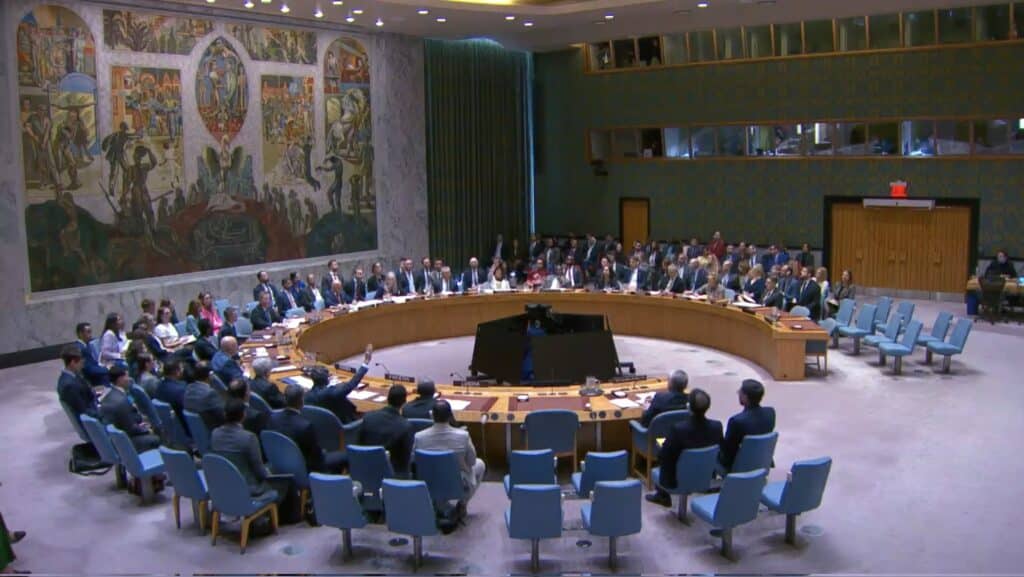
A resolution aimed at addressing the situation was introduced at the United Nations Security Council by Bahrain, with backing from the United States and several allied countries. The initial draft included strong language that would have allowed member states to take action to ensure safe navigation through the Strait of Hormuz.
Negotiations led to significant revisions. Provisions related to enforcement were removed, and the text was narrowed to focus on maritime safety, coordination, and protection of commercial shipping. The revised version stopped short of authorising any form of military intervention.
Despite these changes, the resolution failed to pass. Eleven members voted in favour, but China and Russia exercised their veto powers. Two members abstained.
A representative aligned with the resolution stated “the text was already limited in scope and aimed only at safeguarding navigation.” The outcome highlighted divisions within the council at a time of heightened global concern over energy security.
Veto Reasons
China and Russia opposed the resolution on the grounds that it did not adequately reflect the broader context of the conflict. Both countries argued that the proposal focused narrowly on maritime security while overlooking earlier military actions that contributed to the escalation.
A Chinese statement noted “the draft fails to address the root causes and risks sending the wrong signal at a sensitive moment.” Russia expressed similar concerns, indicating that even a diluted resolution could create conditions for further external involvement in the region.
Both countries emphasised the need for a political solution. They called for immediate de-escalation and renewed diplomatic engagement rather than measures limited to securing shipping lanes.
Iran supported the veto decision. Officials stated “any resolution that ignores the origins of the crisis cannot contribute to stability.” The position reflected Tehran’s broader argument that external military actions must be acknowledged in any international response.
The veto effectively blocked coordinated UN action on the issue, leaving individual countries and regional actors to manage the situation independently.
Ceasefire Terms
Parallel to developments at the United Nations, Iran and the United States reached a temporary ceasefire agreement. The arrangement is limited in duration and is intended to reduce immediate tensions in and around the Strait of Hormuz.
Under the terms of the ceasefire, Iran has permitted the resumption of commercial shipping through the waterway. However, officials indicated that monitoring and oversight mechanisms would remain in place. The United States has paused active military operations while maintaining its strategic presence in the region.
Statements from both sides reflect differing interpretations of the agreement. Iranian officials said “the current conditions reflect a shift created by sustained resistance.” US officials indicated that continued pressure contributed to the pause in hostilities.
The ceasefire does not address underlying issues. Disputes over sanctions, regional influence, and broader security concerns remain unresolved. The temporary nature of the arrangement means that further negotiations will be required to prevent renewed escalation.
Global Impact
The developments underscore a widening divide in international positions on the crisis. The United States and its allies have focused on maintaining open shipping routes and ensuring stability in global energy markets. China and Russia have emphasised diplomacy and opposed measures they view as unbalanced.
China has also highlighted its role in supporting dialogue. Officials stated “efforts have been made to encourage negotiations and reduce tensions.” The approach reflects Beijing’s interest in maintaining stability in energy supply routes that are critical to its economy.
The Strait of Hormuz remains central to global trade, and any disruption continues to carry significant economic implications. The partial restoration of shipping under the ceasefire has eased immediate pressures, but uncertainty persists.
With the UN resolution blocked and the ceasefire limited in scope, the situation remains fluid. Diplomatic engagement is ongoing, but there is no indication of a comprehensive agreement in the near term.
A statement from ongoing discussions noted “current conditions represent a temporary pause while broader issues remain under negotiation.”


