

The United States has signaled it may soon roll back the 25 percent penalty tariffs imposed on Indian goods over New Delhi’s purchases of Russian crude oil, marking a potential shift in one of the most contentious trade disputes between the two strategic partners in recent years.
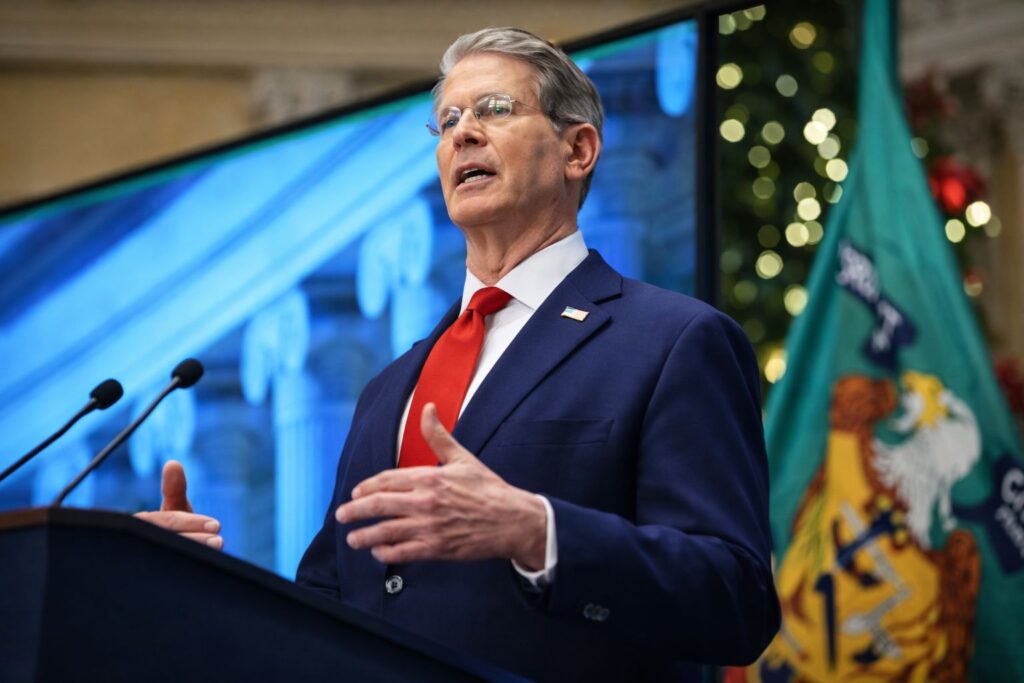
The indication came from US Treasury Secretary Scott Bessent, who said India’s imports of Russian oil have “collapsed”, calling the tariff regime a major policy success. His remarks, made during the World Economic Forum in Davos in a conversation with Politico, suggest Washington now sees room for recalibration after months of economic pressure on Indian exporters.
The tariffs, imposed in August 2025, were designed to deter India from buying Russian crude, which the US argues helps finance Moscow’s war in Ukraine. They added an extra 25 percent levy on Indian goods on top of existing reciprocal tariffs, pushing total duties on some Indian exports close to 50 percent.
Now, with Russia’s share in India’s oil basket shrinking sharply, Washington appears to be considering easing the pressure.
What Bessent Said in Davos
Speaking on the sidelines of the Davos summit, Bessent stated that the tariff strategy had worked as intended.
He said the Indian purchases by refiners of Russian oil have collapsed, adding that the US decision to impose penalties had successfully reshaped India’s energy behavior. While confirming that the tariffs remain in place for now, he noted that “there is a path to take them off.”
The statement marks the clearest signal yet that the US administration is prepared to reconsider the policy if India continues to scale down its reliance on Russian crude.
His comments also reflected frustration with the European Union, which he accused of avoiding similar punitive measures against India while still tightening sanctions on Russia. Bessent described the EU’s stance as contradictory, criticizing Brussels for pursuing a trade agreement with New Delhi while banning refined oil products derived from Russian crude.
Why the Tariffs Were Imposed
The tariff action stemmed from Washington’s concern that India had dramatically increased purchases of discounted Russian crude following Western sanctions on Moscow.
India had become Russia’s largest seaborne oil buyer, refining the crude and exporting fuels such as diesel and jet fuel to Europe and other markets. US officials argued this created a financial lifeline for Russia and undercut Western efforts to isolate Moscow economically.
President Donald Trump publicly criticized India’s energy strategy, accusing Indian refiners of profiting from sanctions arbitrage. The administration framed the tariffs as a tool to pressure New Delhi into aligning more closely with Western sanctions.
The move triggered strong reactions in India, where officials defended oil purchases as essential to ensuring affordable energy for 1.4 billion people.
India’s Russian Oil Imports Fall
Recent shipping and trade data support Washington’s claim that India has reduced its Russian crude intake significantly.
According to Kpler, India imported about 929,000 barrels per day of Russian oil in December 2025, marking the lowest monthly volume since late 2022. This compares with an average of 1.36 million barrels per day in 2024 and around 1.27 million barrels per day in 2025.
Industry sources cited by Reuters indicate volumes could fall further to 600,000 to 650,000 barrels per day, potentially hitting a three-year low.
The decline reflects tighter Western sanctions, banking and shipping constraints, and growing compliance risks. It also signals a broader strategic shift as Indian refiners diversify supplies toward the Middle East, the United States, and other producers.
Refiners Reduce Russian Oil
Several major Indian refiners have scaled back or paused Russian purchases amid rising geopolitical and financial risks.
Reliance Industries, HPCL-Mittal Energy, MRPL, and Hindustan Petroleum have reportedly reduced or halted Russian crude intake. Only a limited number of firms, including Indian Oil, Bharat Petroleum, and Nayara Energy, continue to buy Russian oil, and even these purchases have fallen in volume.
New US sanctions on Russian energy giants such as Rosneft and Lukoil, alongside restrictions on shipping insurance and financing, have complicated procurement. The European Union’s ban on importing refined fuels made from Russian crude has further reduced incentives for Indian refiners to process Russian oil for export markets.
India’s Official Response
India has consistently defended its oil policy, arguing that energy security and affordability remain national priorities.
Ministry of External Affairs spokesperson Randhir Jaiswal reiterated that India purchases energy based on availability, price, and national interest, rejecting claims that the country is undermining global sanctions.
India has also stated it is monitoring a proposed US legislative measure that could impose even harsher penalties on countries buying Russian energy.
That bill, backed by US Senator Lindsey Graham, proposes tariffs of up to 500 percent on imports from nations that continue to buy Russian oil. The measure explicitly targets major consumers such as India, China, and Brazil, raising the stakes in the broader sanctions regime.
EU Factor and Trade Tensions
Bessent’s remarks also highlighted growing transatlantic differences over how to handle India’s role in the Russian oil trade.
While the US imposed direct trade penalties, the European Union has avoided similar tariffs, even as it tightens sanctions on Russian petroleum products. The EU recently banned imports of refined fuels produced using Russian crude, effectively restricting Indian fuel exports while continuing trade negotiations with New Delhi.
European Commission President Ursula von der Leyen has described a potential EU-India free trade agreement as “the mother of all deals,” noting it could cover nearly two billion people and represent around 25 percent of global GDP.
A major EU-India summit is scheduled in New Delhi, underscoring Europe’s interest in deepening economic ties despite energy-related tensions.
Economic Impact on India
The US tariff regime has already affected Indian export-oriented industries.
Sectors such as textiles, apparel, gems and jewellery, leather, seafood, and furniture have reported declining shipments to the United States. Trade analysts estimate that Indian exports to the US could fall sharply in the current fiscal year due to higher duties and competitive pressure.
Manufacturing clusters across Gujarat, Tamil Nadu, Uttar Pradesh, and Rajasthan have faced mounting uncertainty as exporters struggle to absorb the cost impact of the tariffs.
At the same time, India’s earlier access to discounted Russian crude had delivered billions of dollars in savings, making the shift away from Russian oil economically complex.
China and the Global Oil Shift
As India reduces Russian oil intake, China is absorbing a larger share of Moscow’s discounted exports, benefiting from lower prices and redirecting supplies away from other sanctioned producers such as Venezuela.
The shift is reshaping global oil flows. Middle Eastern producers, including Saudi Arabia and Iraq, are regaining market share in India, while Russian crude increasingly moves through alternative shipping routes and so-called shadow fleets.
Energy analysts note that while Russia continues exporting large volumes, logistical bottlenecks and financial constraints are increasing pressure on its energy revenues.
Trump’s Claim and India’s Denial
President Trump recently claimed that Indian Prime Minister Narendra Modi had promised to reduce Russian oil purchases. Indian officials have publicly denied any such commitment, underscoring the diplomatic sensitivity surrounding the issue.
The episode reflects broader negotiations between Washington and New Delhi over trade, defense cooperation, technology access, and market liberalization, with energy policy emerging as a key bargaining point.
Why the US May Ease Tariffs
US officials appear to believe that the tariffs have already achieved their primary objective by altering India’s buying patterns.
Rolling back the penalties could help stabilize bilateral trade relations, prevent India from drifting closer to Russia or China, and support ongoing negotiations over broader economic cooperation.
It may also help limit upward pressure on global oil prices at a time when energy markets remain vulnerable to geopolitical shocks.
At the same time, the looming threat of harsher sanctions under the proposed US bill gives Washington additional leverage as it recalibrates its approach.
Global Impact of the Shift
The potential rollback of the 25 percent US tariffs on India reflects a broader recalibration in global energy diplomacy. Washington is signaling that economic pressure can be eased when strategic goals are met, while India is demonstrating its ability to adjust energy sourcing without fully abandoning strategic autonomy.
For the US, it offers a chance to claim policy success while rebuilding momentum in trade relations. For India, it provides an opportunity to ease export pressure while maintaining flexibility in energy procurement. For global oil markets, it marks another step in the evolving realignment of supply chains shaped by sanctions, geopolitics, and price competition.
As Russia’s war in Ukraine continues and Western sanctions tighten, the balance between economic leverage, energy security, and geopolitical influence remains fragile. The coming months will determine whether tariff relief translates into a broader reset in US-India trade ties or simply a temporary pause in an ongoing strategic contest.


