

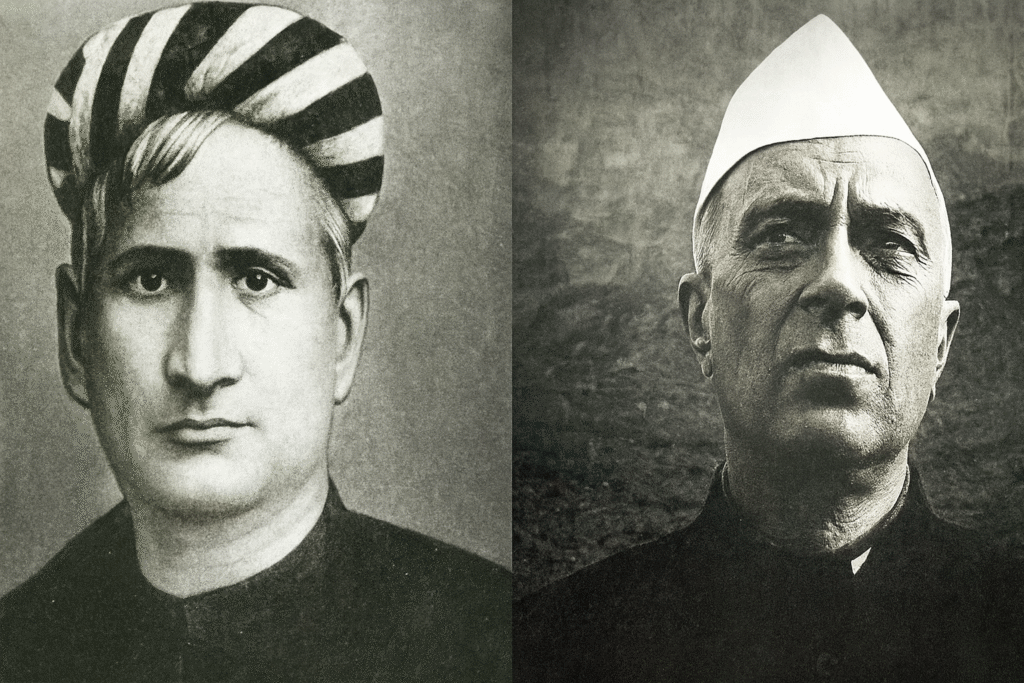
Vande Matram dominated proceedings in both Houses of Parliament as the 150th anniversary of Bankim Chandra Chatterjee’s iconic composition transformed into one of the most confrontational debates of the Winter Session. What began as a commemorative discussion quickly escalated into a political contest centred on history, identity and the legacy of Jawaharlal Nehru.
The ruling benches framed the anniversary as a moment of historical correction, while the opposition argued that the debate was engineered to divert public attention from governance failures. The resulting clash exposed a deep ideological divide that continues to shape national politics.
BJP Accuses Congress of Diluting a National Symbol
The BJP used the occasion to revive allegations that the Congress weakened the national significance of Vande Matram in 1937 by retaining only the first two stanzas for public functions. Treasury bench members argued that the full version, which contains references to Durga and other Hindu imagery, was sidelined to appease the Muslim League.
Prime Minister Narendra Modi set the tone early in his address. He said, “Vande Mataram was not a poem. It was a force that ignited India’s freedom struggle. If parts of it were set aside due to pressure, we must have the honesty to acknowledge it today.”
His statement drew strong reactions from BJP MPs, who accused the Congress of selectively presenting history. Several leaders insisted that the anniversary offered a chance to restore the complete cultural essence of the composition.
Opposition Rejects Historical Framing as Politically Motivated
The Congress countered the government’s claims with equal force. Senior party leaders argued that the 1937 decision was taken collectively within the Congress Working Committee during a period of intense communal tension. They maintained that portraying Nehru as the sole architect of the decision was historically inaccurate.
A Congress MP said, “The attempt to weaponise the freedom movement for present-day politics is deeply troubling. Decisions made during colonial rule cannot be judged through the lens of present-day political convenience.”
The opposition accused the ruling party of misrepresenting history and using cultural symbols as political instruments at a time when Parliament should be addressing issues like economic stress and public service disruptions.
Mehbooba Mufti Calls It Distraction Politics
Outside Parliament, strong criticism came from regional leadership. Former Jammu and Kashmir Chief Minister Mehbooba Mufti condemned the debate as “another exercise in political deflection.”
She stated, “The Centre is indulging in empty symbolism. People are struggling with livelihood pressures, aviation chaos and rising insecurity. Instead of accountability, we are given a history lesson that serves no purpose other than polarisation.”
Mufti alleged that resurrecting historical controversies has become a deliberate pattern to frame political rivals as insensitive to national sentiment.
The 1949 Cartoon Controversy Resurfaces
The argument intensified when BJP members referenced a controversial 1949 cartoon published during the drafting of the Constitution. The artwork depicted Jawaharlal Nehru as delaying the process. BJP MPs claimed this reflected a longstanding pattern of Congress obstructing cultural and constitutional consensus.
Congress leaders dismissed the reference as irrelevant, arguing it was meant to provoke rather than inform the debate. They said such diversions only demonstrated the government’s unwillingness to confront present-day crises.
A Cultural Debate or a Political Battlefield
While Vande Matram holds a powerful emotional place in India’s collective memory, the tone of the debate revealed a larger ideological battle. For the BJP, reclaiming the full version aligns with its narrative of civilisational resurgence. For the opposition, the timing and intensity of the debate point toward an attempt to shift public focus away from governance lapses.
Political observers noted that cultural symbols, once used to unite the freedom movement, now serve as contested markers of political identity. The Parliament session highlighted how deeply intertwined history and electoral politics have become.
Parliament’s Tribute Raises Larger Questions
The anniversary could have been an opportunity to reflect on the complex history and cultural significance of Vande Matram. Instead, it exposed sharply opposed political narratives over how India’s national story should be preserved and retold.
The debate raised a critical question. Can Parliament celebrate cultural heritage without turning it into a political dispute, or will historical icons continue to be pulled into contemporary ideological battles?
As the session concluded, one reality became clear. The legacy of Vande Matram is not simply a historical milestone. It remains a living symbol of national identity, whose interpretation continues to shape political discourse, cultural belonging and the contest for ideological authority in India.


