

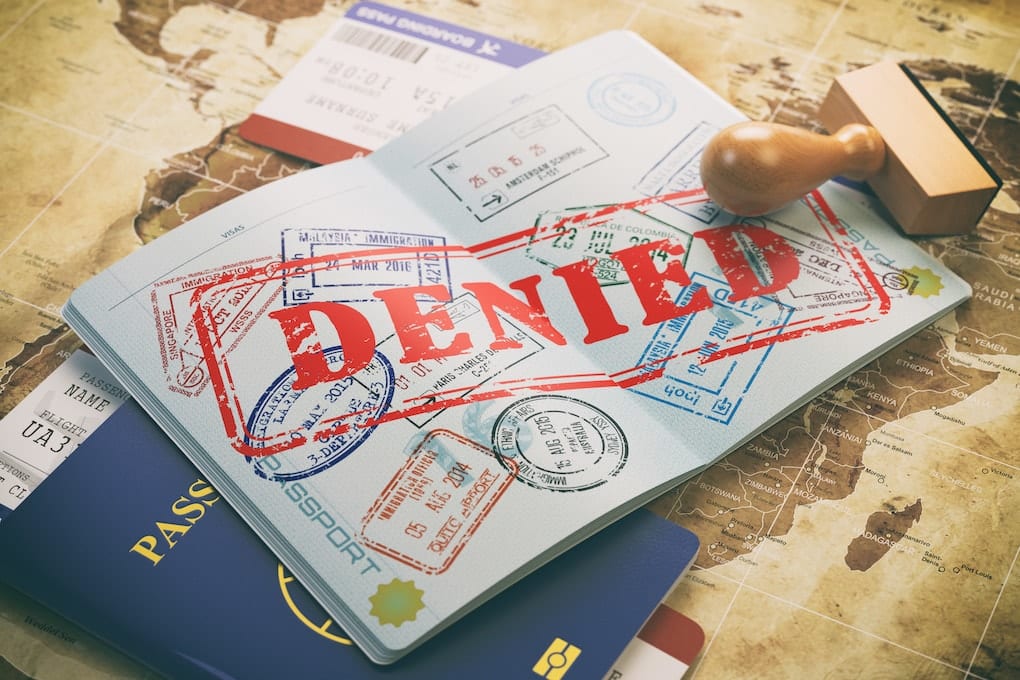
Visa Crackdown by the Canadian immigration authorities has pushed the Canada student visa refusal rate to a record 74% for Indian applicants in 2025. The Immigration, Refugees and Citizenship Canada (IRCC) has enforced strict new screening procedures following a rise in fake acceptance letters and unverifiable financial statements.
For years, Canada was a top destination for Indian students seeking affordable and quality education. But now, thousands of applicants are facing heartbreak as the government’s tough stance reshapes the international education landscape.
Record-Breaking Rejection Rate
Official data shows that nearly three out of four Indian student visa applications were rejected in August 2025, compared to only 32% in 2023. Applications have also dropped from more than 20,000 two years ago to just over 4,500 this year.
Globally, the refusal rate is around 40%, but Indian students are facing almost double that figure. In contrast, Chinese applicants faced only 24% rejections during the same period. Education experts believe this Visa Crackdown could reduce Indian enrollment by nearly half, affecting universities that rely heavily on international tuition income.
Why Canada Tightened Its Visa Rules
The Visa Crackdown is rooted in multiple concerns. Canadian authorities uncovered several cases of fake admission offers and forged financial proofs linked to unauthorized agents in India. To counter this, the IRCC has made documentation checks more rigorous, now demanding complete transparency about the source of funds and stronger proof of genuine study intent.
Under the Canada immigration policy 2025, applicants must also demonstrate that they intend to return to their home country after graduation. Officials say this prevents misuse of student visas as pathways to permanent residency. Additionally, the government cited housing shortages and the rising cost of living as reasons to reduce international student intake.
However, critics believe the crackdown has gone too far. The timing of the policy shift aligns with diplomatic tensions between India and Canada, suggesting that politics may have influenced visa decisions.
Diplomatic Strain Adds to Uncertainty
The cooling relations between Canada and India since 2024 have worsened the situation. Experts point out that the sharp rise in rejection rates followed diplomatic disagreements that affected multiple sectors, including immigration.
While Canadian authorities claim the Visa Crackdown is not country-specific, the steep rise in India’s rejection rate compared with other nations tells a different story. Many education consultants believe Indian applicants are being subjected to extra scrutiny due to strained bilateral relations.
Economic and Academic Fallout
The Visa Crackdown is not only affecting students but also Canadian institutions. Thousands of Indian students have lost large sums in tuition deposits and accommodation bookings. Rejection letters often cite vague reasons such as “insufficient proof of intent” or “incomplete documentation,” leaving applicants confused and financially drained.
For Canadian universities, the decline in Indian enrollment poses a major concern. Institutions in Ontario, British Columbia, and Alberta have already reported significant drops in admission numbers. Since international students contribute billions to the education sector, this downturn could have lasting financial and academic consequences.
From Open Doors to Selective Entry
Canada’s immigration system, once famous for welcoming international talent, is now shifting toward selective entry. Under the new Visa Crackdown, the IRCC has introduced a national cap on study permits, limiting the total number of new international students to 364,000 in 2025, which is nearly 35% fewer than last year. Provinces such as Ontario and British Columbia, which host the largest share of Indian students, will see the steepest cuts.
The financial proof requirement has also more than doubled. As of January 2025, students must show $20,635 CAD in available funds in addition to tuition and travel expenses up from $10,000 CAD, which had remained unchanged for over a decade. The IRCC claims this ensures students are financially secure amid Canada’s housing and cost-of-living crisis.
Officials argue these steps are necessary to maintain integrity in the international education sector, prevent exploitation, and manage population pressures. However, education experts warn that the Visa Crackdown risks discouraging genuine students who contribute billions to Canada’s economy and fill crucial skill gaps in STEM and healthcare. Many see the shift as an overreaction to isolated cases of fraud rather than a balanced reform.
Indian Students Explore New Options
As the Visa Crackdown intensifies, Indian students are exploring other destinations such as the United Kingdom, Australia, and Germany. AgreementsMinistry of External Affairs, mother2.3 lakh Indian students are now enrolled in the UK, marking a 15% increase since 2023. Australia, too, has seen a 12% jump in Indian enrolments, while Germany reported a 9% rise in 2025. These countries are offering smoother visa procedures, transparent financial requirements, and clearer post-study work options compared to Canada’s tightening system.
Education experts advise Indian applicants to verify their college’s status on the IRCC Designated Learning Institution (DLI) list, maintain transparent financial documentation, and craft detailed Statement that reflect genuine academic goals. Consultants also recommend having backup applications ready for other countries as Canada’s approval rates remain uncertain. For many, this diversification is now seen as a safer, smarter way to keep their international education dreams alive.
What the Visa Crackdown Means for Indian Students
The Visa Crackdown has redefined Canada’s student immigration system, with a 74% refusal ratea35% cut in new study permits signaling a stricter entry policy. The IRCC is closely verifying pending applications, causing long delays and uncertainty.
Canada’s education sector, once earning $22 billion annually from foreign students, now faces declining enrollments, while Indian applicants who formed nearly 40% of that base are increasingly choosing the UK, Australia, and Germany instead.


