

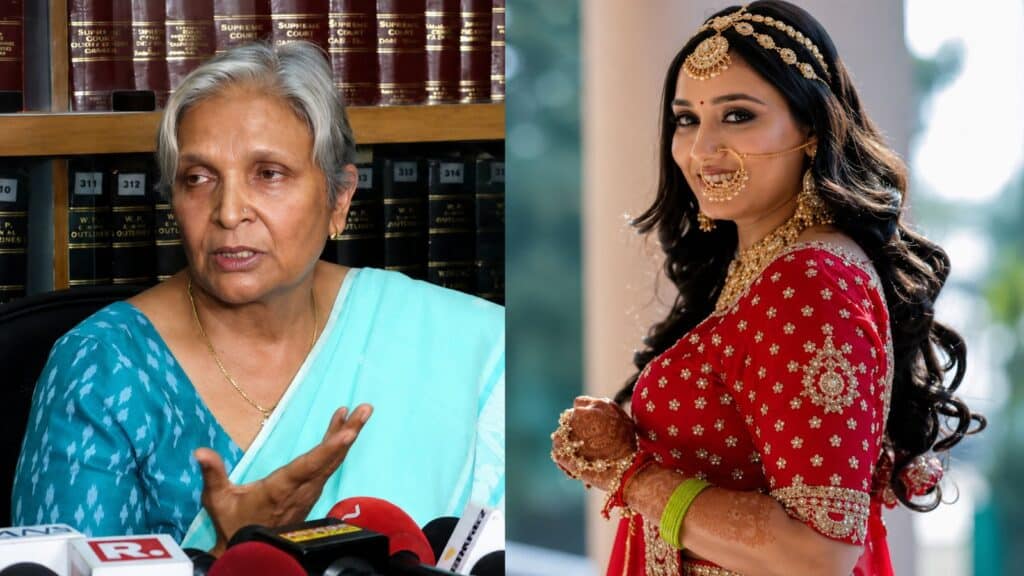
The death of 33 year old model and actor Twisha Sharma inside her marital home in Bhopal has developed into one of India’s most closely scrutinised criminal investigations, drawing in the Central Bureau of Investigation, the Supreme Court, and renewed national attention over dowry related deaths and the handling of criminal probes involving influential families.
What began on May 12 as a suspected suicide case inside a residence in Bhopal’s Katara Hills area has since evolved into a high profile investigation involving allegations of harassment, disputed forensic findings, and claims relating to the handling of evidence. The case escalated significantly after the Madhya Pradesh High Court cancelled anticipatory bail granted to retired district judge Giribala Singh, Twisha Sharma’s mother in law, following which the CBI formally took her into custody.
The Supreme Court later transferred the investigation from Madhya Pradesh Police to the CBI after concerns were raised regarding the credibility of the initial probe. The case has since become the subject of intense public and legal scrutiny across the country.
The Death And The Investigation
Twisha Sharma, originally from Noida, had worked in modelling and media before marrying Bhopal based lawyer Samarth Singh in December 2025. Following the marriage, she moved to Bhopal and began living with her husband and mother in law Giribala Singh.
According to investigators, Sharma was found hanging inside the family residence on May 12. Local police initially treated the matter as a suspected suicide. However, the case quickly drew wider attention after Sharma’s family alleged that she had faced emotional harassment and dowry related pressure after marriage.
Family members later accused both Samarth Singh and Giribala Singh of cruelty and harassment. During court proceedings, Sharma’s parents maintained that the circumstances surrounding her death required a deeper and independent investigation.
“Our daughter had repeatedly spoken about mental pressure after marriage. We want a fair investigation and justice for her,” members of the family said outside court proceedings.
The case became particularly sensitive because Giribala Singh had served as a district judge and later worked within the consumer court system in Madhya Pradesh. Questions were subsequently raised regarding whether all aspects of the case had been independently examined during the initial phase of the investigation.
Forensic Findings And Digital Records
Forensic findings became central to the investigation after details presented during court proceedings indicated inconsistencies requiring further examination.
According to submissions made before the Madhya Pradesh High Court, injuries were identified on Twisha Sharma’s wrists and elbows. Lawyers representing the prosecution argued that the injuries could not be conclusively explained as marks sustained while bringing the body down.
The issue later became an important aspect of arguments seeking custodial interrogation and a wider investigation into the circumstances surrounding Sharma’s death.
Twisha Sharma’s family also sought a second autopsy after raising concerns regarding the conclusions of the initial postmortem examination. The demand intensified scrutiny over whether critical forensic evidence had been fully examined during the first stage of the probe.
Digital communication records also became part of the investigation. During court proceedings, references were made to WhatsApp conversations and electronic records allegedly indicating ongoing tension inside the household before Sharma’s death.
Investigators are examining communication records, timelines, and electronic evidence collected during the probe. The CBI has not publicly disclosed the contents of the digital material, stating that the investigation remains active.
A senior official associated with the investigation stated that forensic and electronic evidence was being examined in detail.
“All evidence collected during the investigation is being analysed according to procedure,” the official said.
High Court Order And CBI Action
The investigation entered a significant phase after the Madhya Pradesh High Court cancelled anticipatory bail granted to Giribala Singh.
During proceedings, the court examined submissions relating to injury findings, digital evidence, and allegations raised by Twisha Sharma’s family. The court also reviewed arguments concerning the handling of material evidence during the earlier stages of the investigation.
Following the High Court order, the Central Bureau of Investigation took Giribala Singh into custody and later conducted a detailed search operation at the family residence in Bhopal.
Investigators reportedly used forensic recording methods and video documentation during the search process while reconstructing the sequence of events connected to Sharma’s death.
The CBI subsequently re registered the FIR after the Supreme Court transferred the investigation from Madhya Pradesh Police to the federal agency.
The Supreme Court’s intervention came amid concerns raised regarding the credibility of the initial investigation and allegations that the case required an independent inquiry.
CBI officials later informed the court that the agency was examining forensic material, witness statements, electronic records, and the handling of evidence immediately after the incident.
“The investigation is continuing and all relevant aspects are being examined,” a CBI official said during proceedings.
The agency also informed the court that custodial interrogation was necessary in connection with the ongoing probe.
Focus On Institutional Scrutiny
The arrest of a retired judicial officer brought wider institutional attention to the case and intensified scrutiny over the handling of the investigation.
Court proceedings later revealed that Giribala Singh had received formal training related to crime scene management during her judicial service. The detail was referenced during arguments concerning the handling and preservation of evidence at the residence following Twisha Sharma’s death.
The allegations relating to evidence handling remain under investigation and no court has delivered final findings on those claims.
During earlier proceedings, Giribala Singh denied wrongdoing and sought legal protection from arrest. Her legal representatives argued before the court that she was cooperating with investigators and that the allegations against her were being contested through legal process.
Samarth Singh, Twisha Sharma’s husband, had already been arrested earlier in connection with the case.
Investigators are continuing to examine the timeline before Sharma’s death, including witness accounts, forensic findings, electronic records, and events immediately following the incident.
National Attention On The Case
The Twisha Sharma death case has become one of the country’s most closely followed criminal investigations in recent months.
Public demonstrations demanding an independent probe were held after allegations emerged that the initial investigation may not have fully examined all evidence connected to the case. Social media campaigns calling for a federal investigation also gained attention before the Supreme Court transferred the matter to the CBI.
The investigation has renewed discussion around the handling of suspicious deaths inside matrimonial homes and the scrutiny applied in cases involving influential individuals.
The CBI investigation is continuing with a focus on forensic reconstruction, witness statements, electronic evidence, and crime scene analysis.
Twisha Sharma’s parents have continued to demand accountability and an impartial investigation into their daughter’s death.
“We want the truth to come before the court. We have faith in the investigation process,” family members said after recent proceedings.
The final outcome of the case will depend on forensic analysis, witness testimony, electronic evidence, and judicial examination during the course of the trial and investigation.


