

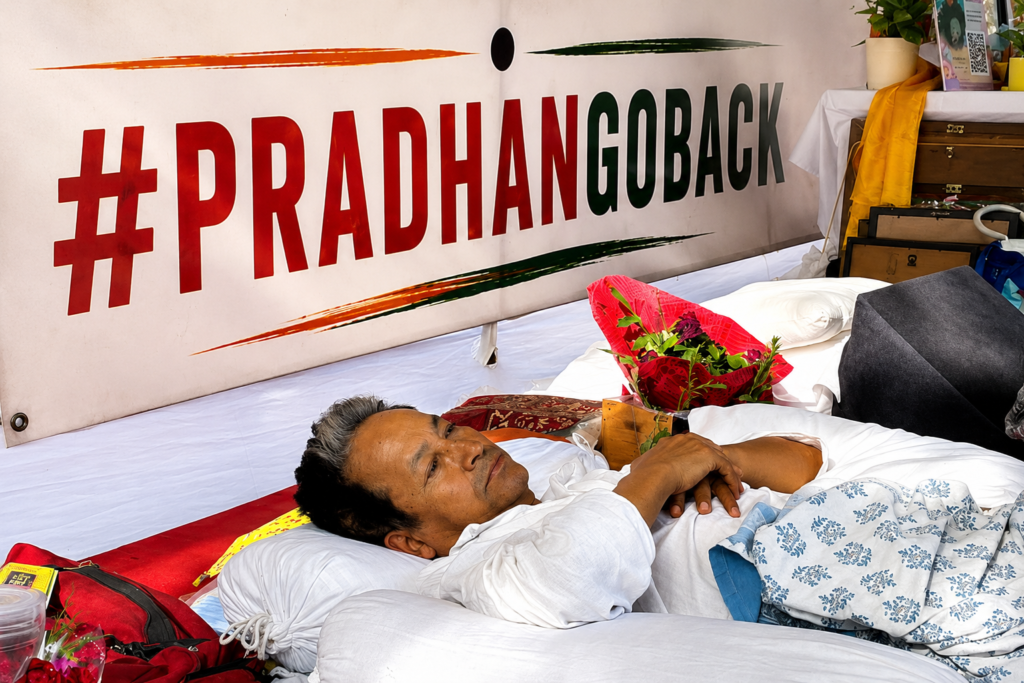
The protest at New Delhi’s Jantar Mantar has entered a critical stage as climate activist and education reformer Sonam Wangchuk completed 16 days of an indefinite hunger strike, with organisers intensifying pressure on the Union government to address alleged failures in India’s examination system.
The agitation, spearheaded by the Cockroach Janta Party (CJP), began on June 28 following public outrage over alleged paper leaks and irregularities in the NEET-UG and JEE entrance examinations. Since then, the demonstration has expanded into a wider campaign demanding accountability within the Ministry of Education and structural reforms aimed at restoring confidence in the country’s examination process.
With Wangchuk’s health reportedly deteriorating and public support growing, organisers are now preparing for a march to Parliament on July 20 to coincide with the opening of the Monsoon Session. They hope the timing will compel lawmakers and the government to respond to their demands.
Health under watch
Medical teams monitoring Wangchuk have expressed concern over his condition after more than two weeks without food.
According to organisers, the 59-year-old activist has lost around 7.8 kilograms since the hunger strike began. Doctors at the protest site have reported persistent fatigue, low blood sugar and a blood pressure reading of 104/66 mm Hg.
Despite the decline in his health, Wangchuk has remained at Jantar Mantar and has said he will continue the fast until the government opens a meaningful dialogue on the issues raised by the movement.
Addressing supporters, he linked the protest to the growing pressure faced by students across the country, saying, As you know, 20 students have committed suicide. It should not happen that next year the number rises to 40 or 80. We are sitting here to prevent such situations.
His remarks reflected the organisers’ broader argument that repeated controversies surrounding national entrance examinations have created deep uncertainty for students and their families.
Calls for accountability
The protest’s principal demand is the resignation of Union Education Minister Dharmendra Pradhan.
Organisers argue that repeated allegations of paper leaks, administrative lapses and logistical failures involving the National Testing Agency have damaged public confidence in India’s examination system.
They are also seeking a comprehensive audit of the examination process and stronger safeguards to ensure future entrance tests are conducted transparently and securely.
According to the CJP, recurring controversies have undermined years of preparation by students competing for admission to medical and engineering institutions while exposing structural weaknesses in the existing system.
The organisers maintain that the government’s response so far has failed to match the scale of public concern and accuse the Ministry of Education of avoiding direct engagement with the issues raised by students and parents.
Reform demands widen
Beyond ministerial accountability, the movement is seeking broader changes to the education system.
The CJP has called for stronger cybersecurity measures to prevent examination leaks, reforms aimed at reducing dependence on private coaching centres and improvements in the quality of government-run schools.
One of Wangchuk’s longstanding proposals is that children of politicians and senior bureaucrats should study in government schools. He has argued that such a policy would ensure those responsible for public education have a direct stake in improving its standards.
The protesters are also demanding compensation of Rs 1 crore for the families of students who have died by suicide due to pressures linked to the current examination system.
Government review
The government has not issued an official response to the demand for the Education Minister’s resignation or announced talks with protest leaders.
However, reports suggest that a nine-member committee constituted by the Ministry of Education is reviewing a proposal to give 50 percent weightage to Class 12 board examination marks for admissions to medical and engineering courses.
The proposal is intended to reduce dependence on entrance examinations and private coaching while easing pressure on students.
Although no formal link has been drawn between the committee’s work and the ongoing protest, the review indicates that broader questions surrounding examination reforms are under consideration.
Organisers step up pressure
CJP founder Abhijeet Dipke said the movement was aimed at protecting the interests of students whose futures had been affected by repeated examination controversies.
Students work hard for years, but incidents like paper leaks render their efforts and the sacrifices made by their parents futile. The government has failed to make the examination system secure, thereby jeopardising the futures of lakhs of students. Comprehensive reforms are essential to ensure transparency and accountability within the education system, he said.
Organisers say the protest has evolved beyond a campaign against examination leaks and now represents a wider demand for accountability within India’s education system.
Focus shifts to Parliament
Attention is now turning to July 20, when the CJP plans to lead supporters on a march to Parliament as the Monsoon Session begins.
The organisers have appealed to students, parents and educators from across the country to join the demonstration in an effort to increase pressure on the government.
We are holding a peaceful protest. The country and the world are watching the state of our democracy. This is not a favour. It is our right. We have the right to hold a peaceful protest under Article 19, and I hope that right continues to be respected, he said.
Awaiting response
As the hunger strike enters its third week, Wangchuk’s health has become a focal point of the protest, underscoring the urgency with which organisers say the government should respond.
The Union government has yet to publicly address the protesters’ ultimatum or indicate whether it is prepared to begin formal discussions on their demands.
With the Parliament march approaching, the demonstration at Jantar Mantar has become one of the country’s most closely watched education protests, placing renewed attention on examination reforms, political accountability and the future of India’s admissions system.


