

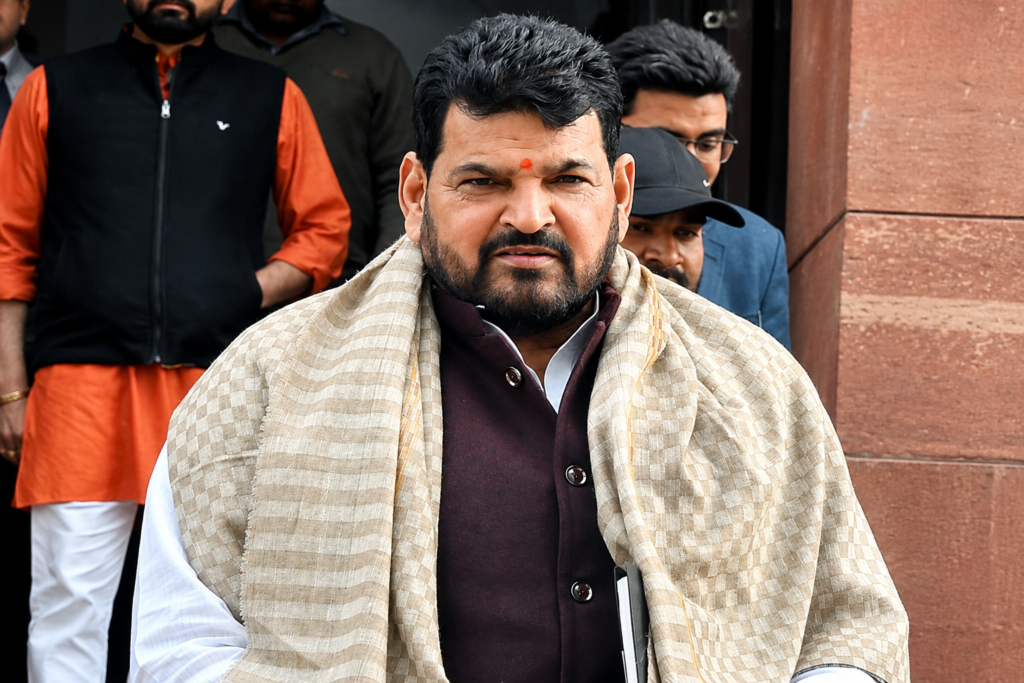
A Delhi court has acquitted former Wrestling Federation of India chief and ex BJP MP Brij Bhushan Sharan Singh in the sexual harassment case filed against him by women wrestlers, closing one of the most closely watched legal battles in Indian sport. The order, delivered on August 3, 2026 by the Rouse Avenue Court, also acquitted co-accused Vinod Tomar, the former assistant secretary of the federation.
The verdict brings to an end nearly three years of litigation that began with a chargesheet filed in 2023 and grew into a national conversation on the safety of women athletes, the accountability of sports administrators, and the limits of protest as a tool for justice. For the wrestlers who first raised their voices at Jantar Mantar, the ruling is being described as a setback they intend to challenge in a higher court.
How the Case Reached This Point
The case traces back to January 2023, when a group of India’s most decorated wrestlers, including Sakshi Malik, Vinesh Phogat and Bajrang Punia, staged a sit in protest at Delhi’s Jantar Mantar. They accused Brij Bhushan Sharan Singh, then the powerful chief of the Wrestling Federation of India, of sexually harassing several women wrestlers during his tenure, with allegations reportedly including demands for sexual favours and multiple incidents of alleged molestation said to have occurred between 2016 and 2019.
The wrestlers first raised their concerns through a formal complaint to Indian Olympic Association president P.T. Usha, who set up an inquiry committee that included eminent sportspersons such as Mary Kom and Yogeshwar Dutt to look into the allegations. The federation denied the charges against its then president and coaches at the time. The protest at Jantar Mantar followed months later, triggering weeks of public pressure before the Delhi Police registered two FIRs in April 2023, naming Singh and Tomar as accused, based on complaints from seven women including a minor. Police filed a detailed chargesheet in June 2023 under sections of the Indian Penal Code covering assault or criminal force to a woman with intent to outrage her modesty, sexual harassment, stalking and criminal intimidation.
The case involving the minor complainant took a separate path. In May 2025, that portion of the case was closed after a Delhi court accepted a closure report filed by the police, following the girl’s father seeking to withdraw the complaint, with investigators stating they had found no corroborative evidence. Charges against Singh in the remaining case, involving six adult complainants, were formally framed in May 2024, and both the accused pleaded not guilty and claimed trial.
Inside the Trial
The trial unfolded largely behind closed doors, with in-camera proceedings used to protect the identities of the complainants. According to reports, the case saw well over a hundred hearings stretched across more than three years. The prosecution examined 32 witnesses before closing its evidence in May 2026, after which the statements of the accused were recorded in June 2026. Senior advocate Rebecca John represented the complainants, while a defence team led by advocate Rajiv Mohan, assisted by Rehan Khan and Rishabh Bhati, appeared for Singh and Tomar. Final arguments concluded on July 2, 2026, after which Additional Chief Judicial Magistrate Ashwini Panwar reserved the verdict and directed both sides to file written submissions.
During the proceedings, the defence pointed to what it described as inconsistencies in witness statements and delays in reporting the alleged incidents. The prosecution maintained that the accounts of the complainants were corroborated by other witnesses and that the pattern of behaviour described was consistent across testimonies. One complainant had earlier told investigators that female athletes would travel in groups whenever they left their rooms in order to avoid encountering the accused alone, a detail that became part of the broader narrative around the case.
On August 3, the court pronounced its order acquitting both Singh and Tomar of all charges, holding that the prosecution had failed to establish the allegations beyond reasonable doubt. Reports citing the order noted that the court cited contradictions and unexplained delays in the complainants’ testimonies as key reasons for the acquittal, and observed that the post-incident conduct of the complainants had undermined the credibility of the allegations. A detailed written judgment is expected to follow.
What the Accused Said After the Verdict
Brij Bhushan Sharan Singh, who had denied the allegations from the outset and repeatedly claimed he had been framed, welcomed the verdict as vindication. Speaking after the order was pronounced, he said:
“The honourable judge said that Brij Bhushan Singh and Vinod Tomar are acquitted with honour. From the very first day, I had said that if even a single allegation against me was proved, I would be ready to face the harshest punishment.”
In separate remarks to reporters, Singh went further, calling the verdict a victory for junior wrestlers rather than for himself. He said:
“This is not my victory. This is the victory of junior players. The junior players have won. And this case has proved that even Olympians and Olympic medal winners can lie for their own interests.”
He added that it was a moment of happiness for himself and his supporters, and reiterated that he would have accepted the verdict even if the court had ruled against him.
Wrestlers Vow to Appeal
The reaction from the wrestlers who led the original protest was starkly different. Olympic medallists Vinesh Phogat and Bajrang Punia, both of whom were later revealed to be among the six complainants in the case, issued a joint statement expressing deep disappointment with the outcome.
In a joint post on social media, the two wrestlers said:
“We had to gather a lot of courage to come out on the streets and get an FIR registered against a muscleman leader of the ruling party. Using his power and influence, Brij Bhushan had frightened several young women and forced them to withdraw their complaints.”
Phogat added, in a separate statement, that the complainants were deeply disappointed with the outcome:
“We are deeply disappointed that the court did not find him guilty of the allegations of sexual harassment made by the women wrestlers.”
She alleged that the entire system, including the government and the establishment, had worked to protect Singh throughout the process, and confirmed that the wrestlers had instructed their legal team to file an appeal against the verdict at the earliest opportunity, stating that the fight for justice was far from over. Bajrang Punia echoed the same sentiment in his own statement, signalling united support among the complainants for challenging the ruling before a higher court.
What the Federation Is Saying
Current WFI president Sanjay Singh, who is widely seen as close to Brij Bhushan and won the federation’s elections in December 2023, welcomed the verdict on behalf of the sport’s administration. Speaking to the news agency ANI, he said:
“This case was one hundred percent politically motivated. They did this in an Olympic year. This is a slap in the face of our opponents.”
He added that the wider wrestling community, including athletes and officials, had welcomed the court’s decision and argued that the years long controversy had adversely affected the sport’s training, competitions and international standing.
Fallout Inside Indian Wrestling
Beyond the courtroom, the episode left a lasting mark on how the sport is governed in India. The controversy paralysed the functioning of the Wrestling Federation of India for months and drew repeated administrative intervention from the Union Sports Ministry, along with scrutiny from international wrestling bodies. On January 23, 2023, days after the Jantar Mantar protest began, the ministry constituted a five member oversight committee headed by boxing legend M.C. Mary Kom to investigate the allegations and temporarily oversee the federation’s functioning, after meetings between the wrestlers and then Union Sports Minister Anurag Thakur.
The situation escalated further in December 2023 when the newly elected WFI body, led by Sanjay Singh, was suspended by the Sports Ministry within days of taking office, with the ministry citing disregard for the federation’s constitution and the National Sports Code, and pointing to the new leadership’s continued proximity to the previous office bearers, including a plan to hold national trials in Gonda, Brij Bhushan’s political constituency.
The suspension was lifted roughly fifteen months later after the WFI shifted its office away from premises linked to Brij Bhushan and the international wrestling body United World Wrestling lifted its own suspension following fresh elections. Sakshi Malik announced her retirement from competitive wrestling in response to Sanjay Singh’s election, while Bajrang Punia returned his Padma Shri award and Vinesh Phogat wrote publicly to the Prime Minister describing the toll the protest had taken on the athletes involved. The episode also fuelled broader debate in Parliament and civil society about whether India’s sports federations have adequate independent mechanisms to investigate harassment complaints against their own office bearers.
What Comes Next
With an appeal now expected, the legal battle is set to move to a higher court, prolonging a dispute that has already run for more than three years. For the wrestlers, the fight shifts from the trial court to the appellate process, where they hope fresh scrutiny of the evidence and testimony could lead to a different outcome.
For Indian sport more broadly, the case remains a reference point in ongoing debates about athlete welfare, institutional accountability and the protection of complainants within sports federations. Whatever the outcome of the appeal, the events since January 2023 have already changed how allegations against powerful sports administrators are discussed in the public domain, placing athlete safety firmly at the centre of India’s sporting conversation.


