

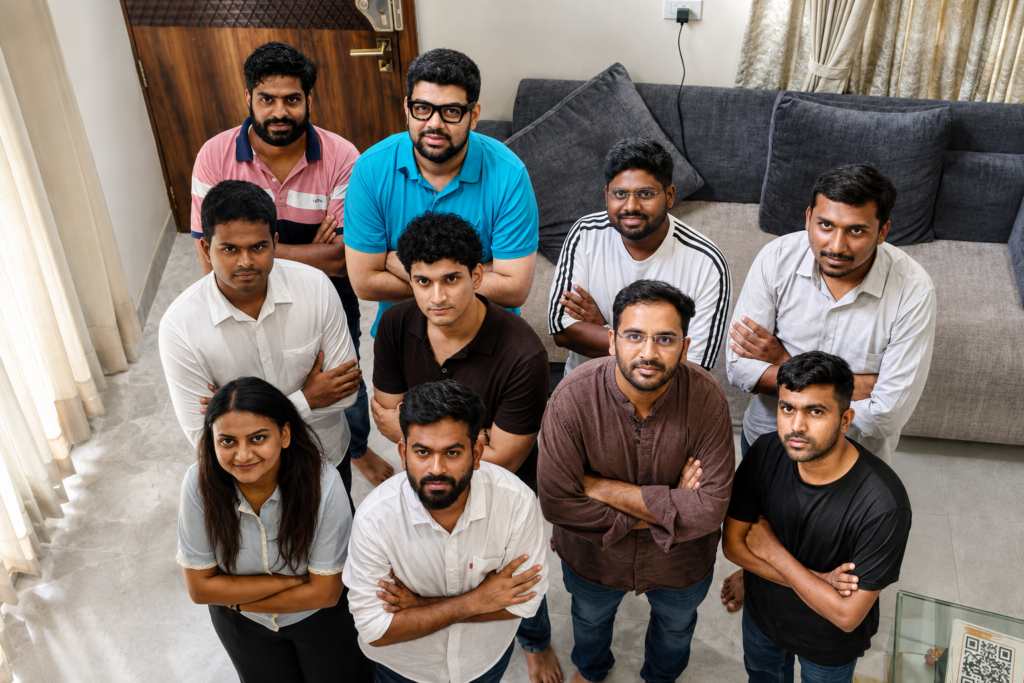
The Cockroach Janta Party has taken its first concrete step from street protest to organised movement. On Wednesday, the group confirmed the formation of its National Working Committee, appointing founder Abhijeet Dipke as National Convenor, with Ashutosh Ranka and Saurabh Das serving as Co Convenors. For an organisation that began three months ago as a satirical social media page, the announcement marks a deliberate shift toward permanence.
The timing is notable. CJP’s rise was built almost entirely on momentum, a viral name, a five week protest at Delhi’s Jantar Mantar, and the resignation of a Union minister that followed it. Momentum fades. Structures do not, at least not as quickly. By naming a national committee, CJP is signalling that it intends to outlast the news cycle that created it.
From Online Joke to National Movement
CJP’s origin story is now well known in Indian political circles. In May, Chief Justice Surya Kant compared unemployed youth to cockroaches during a court hearing. Within days, a satirical page mocking the remark had gathered hundreds of thousands of followers. Within weeks, it had become a genuine protest movement, drawing students and young professionals onto the streets of Delhi over alleged irregularities in the NEET UG medical entrance examination.
By the time the protest ended in late July, CJP had done what few new political movements manage in their first year: it had forced a resignation. The then Union education minister stepped down after weeks of sustained pressure, handing the group a rare early victory and a level of national visibility that outlasted the protest itself.
That visibility is precisely what the new committee is meant to manage. A movement built on virality can disappear as quickly as it arrives. A movement with a working committee, defined roles and a stated policy agenda has at least a chance of staying relevant once the cameras move on.
The Three Names Leading the Committee
Dipke, 30, is the clearest face of CJP and now its National Convenor. A political communications strategist by training, he studied journalism in Pune before completing a master’s degree in public relations from Boston University. His earlier work with the Aam Aadmi Party’s digital campaign team is widely seen as the reason CJP’s messaging has been so effective, sharp, meme driven and built for a young, online audience.
“Our agitation received nationwide support,” Dipke said, reflecting on the scale of the Jantar Mantar protest that put CJP on the national map.
Ashutosh Ranka, one of the two new Co Convenors, brings a different skill set to the table. With a background in engineering and public policy, Ranka was among the CJP representatives who met senior government ministers to press the group’s demands during the protests, giving him direct experience in the kind of institutional negotiation a growing movement will increasingly need.
Saurabh Das, the other Co Convenor, has served as CJP’s chief spokesperson since June and is arguably its most recognisable voice in the media. A journalism graduate from Amity University, Das has spent the past several months explaining CJP’s positions to a national press corps that has, at times, struggled to categorise a movement that refuses to call itself a political party.
Why a Working Committee Changes the Calculation
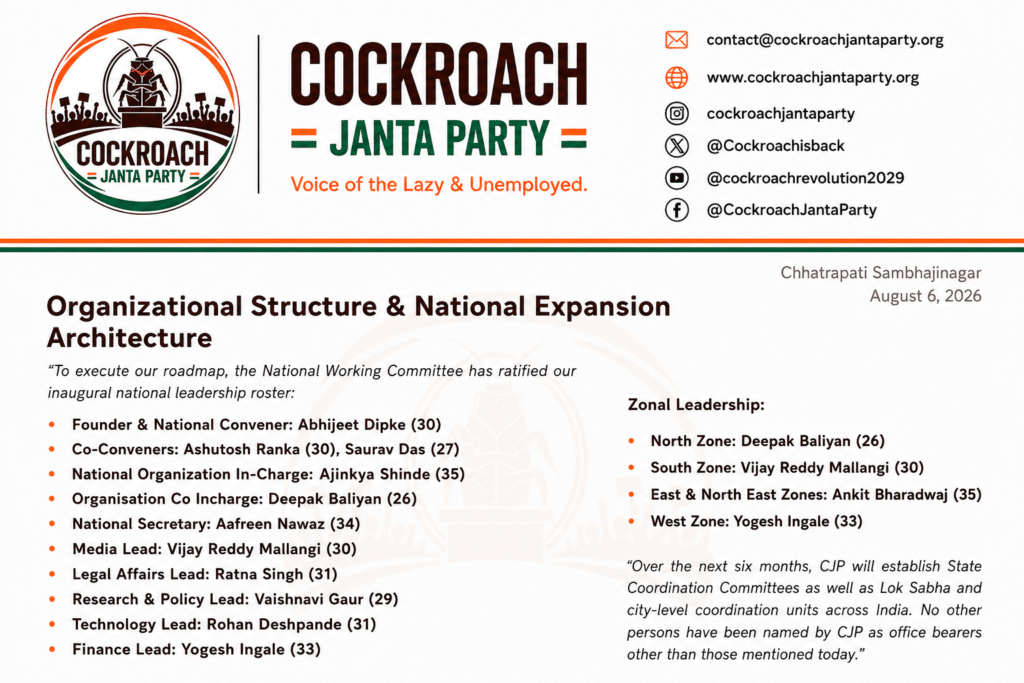
Protest movements rarely survive their first structural test. Enthusiasm is easy to generate online. Sustaining an organisation, deciding who speaks for it, who manages its finances, who handles legal matters when volunteers are detained, is a different challenge altogether. CJP’s new committee reportedly includes office bearers covering exactly these areas: organisational affairs, media, legal support, policy, digital operations and finance.
This is the unglamorous machinery of any serious organisation, and its absence has historically been where India’s protest movements have stalled. By building it now, while public attention is still high, CJP is giving itself a better chance of translating a viral moment into lasting influence, even if it insists it has no interest in becoming a conventional political party.
That insistence is worth taking seriously rather than dismissing as posturing. Dipke has repeatedly said CJP will function as a pressure group rather than contest elections, arguing that public trust in conventional politics has eroded to the point where a movement outside the electoral system may carry more credibility than one inside it. Whether that position holds as CJP’s ambitions grow will be one of the more interesting questions in Indian public life over the next year.
What CJP Plans to Do Next
The organisation has already outlined its next campaign. Starting in September, CJP will roll out a nationwide outreach effort called Kya Bolti Public, beginning with a focus on education reform. Dipke has argued that education has become one of the largest financial burdens on Indian households and, in his words, an increasingly commercial enterprise rather than a public good.
CJP has also said it will extend support to students in Jharkhand who are protesting alleged irregularities in recruitment examinations, its first major expansion beyond the NEET UG issue that built its reputation. Separately, the group says it is pushing for the withdrawal of police cases filed against protesters during the Jantar Mantar agitation, along with legal and medical assistance for those injured.
The Real Test Is Still Ahead
Forming a national committee is a low cost, high symbolism move. The real test will come when CJP has to make unpopular decisions, manage internal disagreement, or respond to a setback rather than a victory. Every protest movement looks disciplined in its first structural announcement. Few remain that way once the initial cause fades from headlines.
For now, CJP has done what it needed to do: convert a moment into an organisation, at least on paper. Dipke, Ranka and Das now carry the responsibility of proving that the structure is more than symbolic, and that a movement born from a joke about cockroaches can hold together long enough to matter.


