

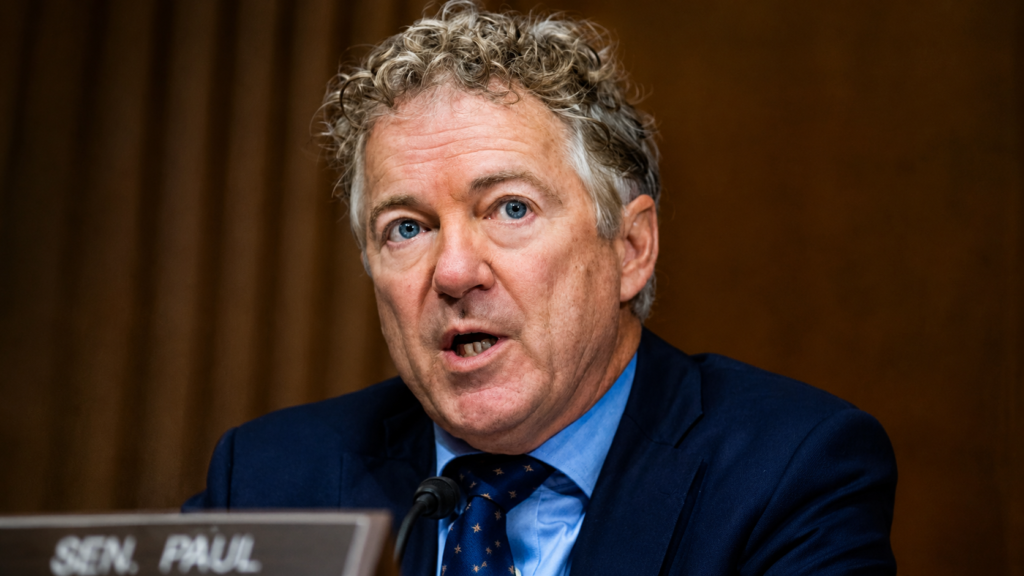
The United States Senate has passed a sweeping Russia sanctions bill that could expose India to tariffs of up to 100 percent on its exports to the American market. Senator Rand Paul of Kentucky, the sole Republican to vote against the bill, warned that punishing India with such steep tariffs would not weaken Russia but would instead push New Delhi closer to Moscow and Beijing.
The warning came during debate over the Lindsey O. Graham Sanctioning Russia and Iran Act of 2026, approved by an 86 to 11 vote on Friday, August 7. The bill now moves to the House of Representatives, expected to take it up after lawmakers return from recess on August 31.
What The Sanctions Bill Actually Does
The legislation is named after the late Senator Lindsey Graham of South Carolina, who spent more than a year building bipartisan support for it before his sudden death on July 11. His Democratic co-sponsor, Senator Richard Blumenthal of Connecticut, helped steer the bill through months of negotiation.
At its core, the bill authorises President Donald Trump to impose tariffs of up to 100 percent on goods from countries identified as major buyers of Russian oil and gas, or as facilitators of Russia’s efforts to evade sanctions. Rather than naming countries directly, the statute instructs the administration to identify affected nations using trade data, covering the top five importers of Russian crude and gas, and the five countries most active in helping Russia evade energy sanctions. Reporting indicates China, India, Slovakia, Hungary and Azerbaijan currently fall within that scope, while major European buyers of Russian energy face no equivalent penalty.
Beyond the tariff authority, the bill renews sanctions on Russian officials, including President Vladimir Putin, along with oligarchs and financial institutions tied to Moscow’s war effort, and extends the Iran Sanctions Act through 2031. The final rate would not be automatically set at 100 percent, with the Office of the US Trade Representative determining the actual duty applied.
Rand Paul Stands Alone In Opposition
Paul was the lone Republican vote against the final bill, joined by ten Democrats who objected to the sweeping tariff powers it hands the executive branch. Before the final vote, Paul teamed up with Democratic Senator Ron Wyden of Oregon to propose an amendment stripping the tariff provisions from the bill entirely. That amendment failed by a vote of 32 to 64, clearing the way for the broader bill to advance.
Paul’s opposition has been consistent for months. He earlier described the approach as self-defeating economic warfare, arguing the bill would not force China or India to change behaviour, but would instead impose an economic embargo on the United States itself, hurting American families rather than Moscow. He also warned that removing Russian oil from global markets could push crude prices sharply higher, with pump prices potentially climbing beyond five dollars a gallon.
During the floor debate, Paul urged colleagues not to let sympathy for Ukraine override sound judgement on trade policy. Do not let sympathy for Ukraine blind you to the reality of tariffs, he told the Senate.
Why Paul Says The Tariff Could Backfire
Paul’s central argument is strategic rather than purely economic. He contends that India’s rise as a global power genuinely serves American interests, particularly as Washington seeks partners capable of balancing China’s growing influence across Asia, and that a punitive tariff risks undoing years of patient diplomacy.
He cautioned that Russia has already endured roughly 1.4 million casualties, thousands of sanctions and more than four years of isolation without being brought to the negotiating table, suggesting tariffing third countries like India is unlikely to change Moscow’s calculus. Moscow, he argued, may in fact welcome a scenario where the United States damages its own standing with major powers like India, whose long-term rise could otherwise serve American interests in its wider competition with China. America will push India towards Russia and China if it hits India with a 100 percent tariff, Paul said.
How India Fits Into The Bigger Picture
India has steadily increased its purchases of discounted Russian crude since the war in Ukraine began in 2022, driven largely by energy security concerns after Western nations sanctioned Moscow. Russia has since become India’s largest single source of crude oil, at times accounting for more than a third of its total oil purchases in a month. Bilateral trade between the two nations reached roughly 68.7 billion dollars in the 2024 to 2025 financial year, nearly six times pre pandemic levels.
This is not the first time Washington has moved to penalise India over its energy ties with Russia. Earlier tariff actions had already added a combined 50 percent in additional duties on Indian goods over the same issue. New Delhi responded firmly, calling the measures unfair, unjustified and unreasonable, and noting that the United States itself continued to import Russian uranium even as it penalised India for energy purchases.
The new legislation does not name India directly, but given its position as one of the two largest buyers of Russian crude globally, alongside China, it is widely expected to fall within the bill’s scope once enforcement begins. A 100 percent tariff would be one of the most aggressive trade measures ever applied to India by the United States, with the potential to disrupt a bilateral trade agreement that officials on both sides had suggested was nearing completion.
Reactions From Other Lawmakers
The bill’s passage was not without broader debate, even among those who ultimately supported it. Senator Blumenthal framed the vote as a message of solidarity with Ukraine, telling the Senate that Ukrainians should know they are not alone and that Putin would not succeed in conquering the country.
Not all Democrats were fully aligned on the tariff provisions. Representatives Gregory Meeks and Don Beyer criticised the measure for handing the president sweeping tariff authority that could be used aggressively in future trade disputes, arguing it would let the administration avoid genuinely holding Russia accountable while leaving consumers to bear the costs. Senator Raphael Warnock of Georgia raised similar unease. Ukraine, meanwhile, welcomed the vote as a timely and significant step that would meaningfully increase economic pressure on Russia.
New Delhi has not yet issued a formal response, but the prospect of a 100 percent tariff is expected to weigh heavily on ongoing trade talks between the two countries. Whether Paul’s warning gains traction as the bill moves to the House remains to be seen, but his dissent has introduced a notable note of caution into what was otherwise an overwhelmingly bipartisan vote.
The United States Senate has passed a sweeping Russia sanctions bill that could expose India to tariffs of up to 100 percent on its exports to the American market. Senator Rand Paul of Kentucky, the sole Republican to vote against the bill, warned that punishing India with such steep tariffs would not weaken Russia but would instead push New Delhi closer to Moscow and Beijing.
The warning came during debate over the Lindsey O. Graham Sanctioning Russia and Iran Act of 2026, approved by an 86 to 11 vote on Friday, August 7. The bill now moves to the House of Representatives, expected to take it up after lawmakers return from recess on August 31.


