

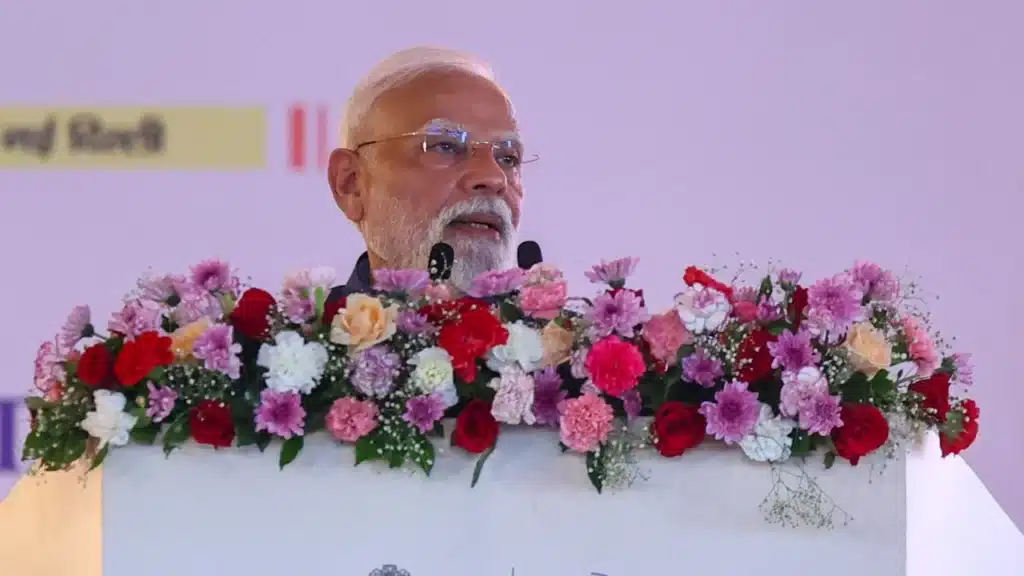
Prime Minister Narendra Modi inaugurated highway projects totaling ₹11,000 crore in Delhi on Saturday, and the projects highlighted the government’s continuing movement towards modern infrastructure and self-reliance. The Dwarka Expressway’s Delhi section and the Urban Extension Road-II (UER-II) will help transform urban mobility in National Capital Region (NCR).
Key Features of the Projects
Built at a cost of over ₹9,000 crore, the Dwarka Expressway (Northern Peripheral Road) is a 29-km stretch with India’s first elevated urban expressway, smart traffic systems, underpasses, and seamless connectivity to Gurugram and IGI Airport. The UER-II, part of Delhi’s third Ring Road, and costing an estimated ₹2,000 crore connects NH-44, NH-48, and NH-24 and diverts heavy vehicles away from central Delhi, while also drastically cutting down travel time for both freight and passenger traffic.
Impact on Economy & Real Estate
According to experts, these new projects will be transformative for NCR’s real estate industry, especially for Dwarka, Gurugram and the various industrial clusters that surround them. Travel times will be reduced and connectivity enhanced, increasing property prices in these locations. Moreover, logistics and industrial corridors will have effective freight movement, thus reducing businesses’ operational costs.
Economists note that that large-scale infrastructure investment such as this creates jobs, attracts investment and enhances India’s global competitiveness. “Any economy that is growing needs a good transport mechanism. These projects won’t just help decongest Delhi but also add further momentum to the economic ecosystem of the entire NCR,” says an industry expert.
PM Modi’s Statements
Speaking at the inauguration, Prime Minister Modi emphasized the government’s focus on “Vocal for Local”, linking world-class infrastructure with India’s self-reliance vision. “Delhi-NCR will now witness faster travel, cleaner air, and greater opportunities. This is not just about building roads; this is about building a stronger India,” Modi said.
He further highlighted how expressways like Dwarka and UER-II will improve people’s lives by reducing travel time, easing traffic congestion, and ensuring better access to key facilities.
Union Minister for Road Transport and Highways Nitin Gadkari hailed the projects as “a milestone in India’s expressway revolution,”adding that they will save fuel, reduce pollution, and improve logistics efficiency.
Outlook
As these mega projects commence operations, Delhi-NCR will embrace the next wave of development driven by infrastructure initiative. The twin benefits of mobility and real estate development illustrate the government’s plan of tying economic development with modern infrastructure.


