

India’s legislative landscape is entering a defining phase as a special sitting of the Parliament of India advances a coordinated set of reforms centred on women’s political representation and electoral restructuring. The debate, spanning the Women’s Reservation Bill and a linked delimitation framework, reflects one of the most consequential institutional shifts in recent years.
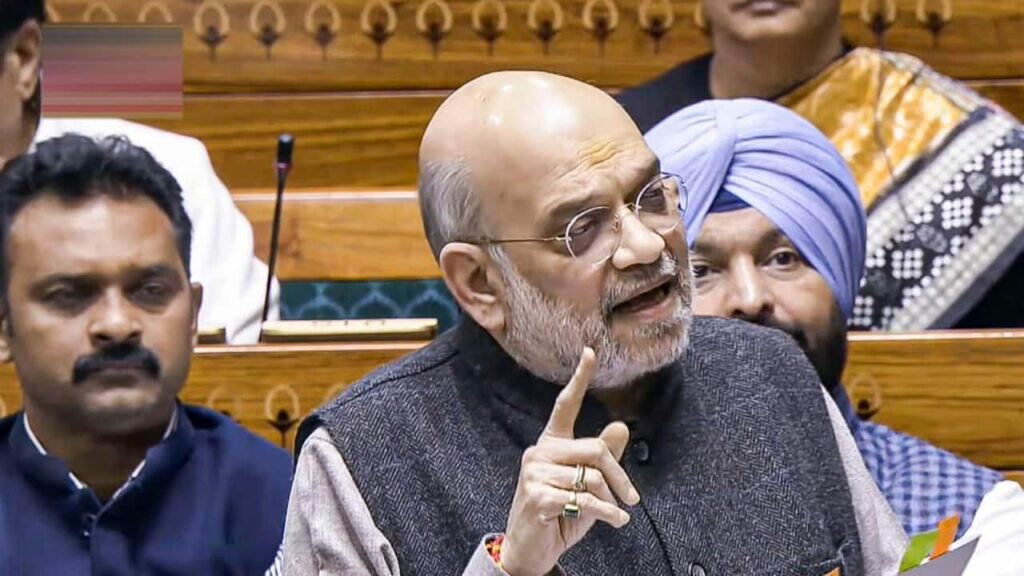
The reforms go beyond symbolic inclusion, aiming to embed representation within the structure of governance. At the centre of the government’s position, Union Home Minister Amit Shah argued that participation in law-making must reflect demographic realities, framing the initiative as a structural correction within India’s democratic system.
Reform framework
The Women’s Reservation Bill proposes reserving 33% of seats in the Lok Sabha and state legislative assemblies for women, marking a significant departure from existing patterns of representation. The move is part of a broader legislative package that includes delimitation and supporting legal provisions, indicating a coordinated effort to redesign electoral structures.
Efforts to pass such legislation have spanned decades, often stalled by political disagreements. The current push integrates reservation within a larger constitutional framework, signalling a shift from incremental reform to systemic restructuring. The objective is to ensure that women’s representation is not contingent on party-level decisions but is guaranteed through institutional mechanisms.
During the debate, Amit Shah emphasised the long-term significance of the reform, stating “this is a historic step towards ensuring adequate representation for women in India’s democracy,” positioning it as a foundational change rather than a policy adjustment.
Vote and mandate
The Lok Sabha proceedings reflected both support and division, with the bill subjected to a recorded vote after extended deliberations. According to figures from the session, 251 members voted in favour while 185 opposed, demonstrating a clear majority but also underscoring the persistence of political disagreement.
The voting outcome highlights a broader pattern in Parliament: consensus on the principle of women’s representation, coupled with contention over its implementation. Opposition members did not uniformly reject the reform but raised concerns about the conditions attached to its rollout, particularly its linkage with delimitation.
Despite these reservations, the passage of the bill marks a significant legislative step, providing the government with a mandate to advance a reform that has remained unresolved for years.
Delimitation link
A central feature of the reform is its linkage to delimitation, a process that redraws constituency boundaries based on updated population data. The reservation provisions will come into effect only after the completion of the next Census and the subsequent delimitation exercise, introducing a timeline that may extend implementation to the 2029 general elections.
The delimitation framework also carries broader structural implications. There are indications that the total number of Lok Sabha seats could increase significantly from the current 543, potentially expanding representation across states while altering the balance of political power.
Regional concerns have emerged sharply, particularly from southern states, where lower population growth has led to fears of reduced relative representation. Addressing these concerns, Amit Shah provided a numerical illustration, stating “if we implement women’s reservation based on 543 seats, then 13 seats will get reserved for women, and 26 will remain open in Tamil Nadu… but we are not doing so, we are increasing seats by 50% for every state,” as he sought to counter apprehensions about shrinking political space.
He further argued that “this reform will strengthen the foundation of participatory governance,” presenting delimitation and reservation as interconnected elements of a broader democratic restructuring.
Political contest
The parliamentary debate has revealed a layered political response. Opposition parties have broadly supported the principle of women’s reservation, acknowledging the need to address gender disparities in legislative representation. However, several concerns have been raised regarding the structure and sequencing of the reform.
A key criticism centres on the delayed implementation timeline, with the linkage to Census and delimitation potentially postponing the operational impact of the bill. There have also been demands for sub-quotas within the reservation framework to ensure representation for Other Backward Classes and other marginalized groups.
Additionally, some opposition voices have questioned whether the delimitation process could alter regional political balances, raising concerns about fairness and federal equity. Protests within Parliament, including symbolic demonstrations by members, reflected the intensity of these debates.
Despite these differences, the absence of unified opposition to the core idea of reservation indicates a shared recognition of its importance, even as disagreements persist over execution.
Representation shift
Women currently account for approximately 14% of the Lok Sabha, highlighting a significant gap in representation within India’s legislative system. The proposed reservation seeks to more than double this share, marking a substantial transformation in the composition of law-making bodies.
Supporters argue that increased representation could influence policy priorities, particularly in areas such as healthcare, education, and social welfare. Evidence from other democracies suggests that higher participation by women often correlates with more inclusive policymaking.
Reinforcing this perspective, Amit Shah stated “women empowerment cannot be achieved without giving them proper representation in law-making bodies,” linking the reform directly to governance outcomes.
The special sitting of Parliament thus marks a pivotal moment in India’s democratic evolution. By combining women’s reservation with delimitation, the government has introduced a reform framework that could reshape both the structure and substance of political representation. Its long-term impact will depend not only on legislative passage but on how these changes are implemented within the broader political system.


