

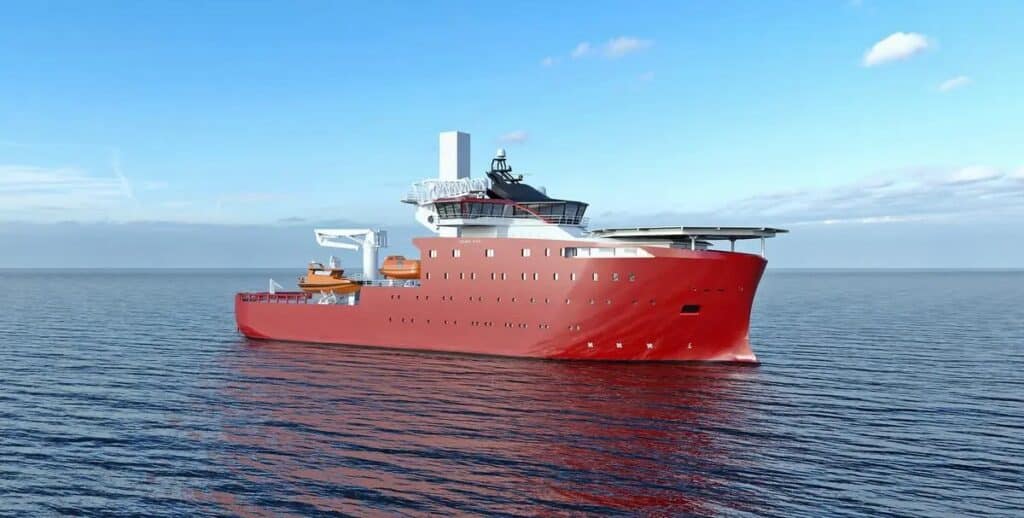
India has taken a major step towards strengthening its maritime economy after the Union Cabinet approved a ₹1,570 crore Ship Repair Facility at Vadinar in Gujarat. The project is expected to reduce dependence on overseas shipyards, save foreign exchange, create jobs, and expand India’s capacity to service large vessels domestically.
Cleared by the Cabinet Committee on Economic Affairs, the decision is being viewed as a strategic move to transform India from a cargo-handling nation into a global maritime services power. Situated on Gujarat’s western coastline with access to key Arabian Sea shipping lanes, Vadinar offers both geographic and industrial advantages that could help India emerge as a serious player in the global ship repair market.
At a time when supply chains remain vulnerable and shipping efficiency has become central to trade competitiveness, the project marks an important shift in India’s long-term logistics and infrastructure strategy.
Why Vadinar Holds Strategic Value
Vadinar has been selected for reasons that go far beyond geography. Located in Gujarat’s Gulf region, the coastal site has natural deep-draft advantages that allow large ocean-going vessels to berth more easily than at several other Indian locations. This makes it particularly suitable for heavy repair operations involving tankers, cargo ships, offshore vessels, and other large commercial fleets.
Its location on India’s western seaboard is equally significant. A large share of India’s crude imports, container traffic, and bulk cargo movement passes through western maritime routes linked to the Arabian Sea. By developing a repair facility in Vadinar, India will be able to offer faster maintenance and emergency servicing to vessels operating in one of the busiest commercial zones in the region.
The site also benefits from Gujarat’s strong industrial ecosystem, including nearby ports, refinery infrastructure, engineering units, road connectivity, and skilled labour availability. These advantages reduce operational risks and improve long-term commercial viability.
Prime Minister Narendra Modi welcomed the decision and described it as an important milestone for the country’s maritime future. “The Cabinet approval for a world-class Ship Repair Facility at Vadinar marks an important step in strengthening India’s maritime capabilities,” he said.
What The ₹1,570 Crore Project Will Build
The facility will be developed as a brownfield maritime infrastructure project, meaning it will be built by upgrading an existing port-linked zone rather than creating an entirely new coastal complex. This model generally allows faster execution, lower land acquisition hurdles, and quicker integration with existing utilities and logistics networks.
According to official details, the project will include a 650-metre repair jetty and two floating dry docks designed to handle multiple classes of vessels. It will also feature workshops, fabrication zones, marine engineering systems, warehousing facilities, utility services, and support infrastructure needed for high-volume technical operations.
Floating dry docks are a critical part of modern ship repair because they enable vessels to be lifted above water for hull inspection, underwater maintenance, structural repair, repainting, and retrofitting. Their inclusion indicates that the Vadinar complex is being designed as a serious commercial repair hub rather than a limited maintenance yard.
The project will be implemented through a joint venture between Cochin Shipyard Limited and Deendayal Port Authority, combining one of India’s most experienced shipbuilding companies with an established port authority. Industry observers say this partnership adds both technical expertise and execution strength to the project.
Union Minister Ashwini Vaishnaw said the Cabinet had approved several major infrastructure decisions aimed at strengthening national capacity, with Vadinar among the key projects cleared.
How It Solves India’s Ship Repair Deficit
Despite its long coastline and growing trade economy, India has historically lacked adequate large-vessel repair capacity. Many commercial operators currently send ships to Singapore, Dubai, Sri Lanka, or East Asian yards for scheduled dry-docking and specialised maintenance. This raises costs, extends downtime, and leads to a substantial outflow of foreign exchange.
The Vadinar facility is expected to address this structural gap by allowing India to repair vessels of around 300 metres in length, significantly improving domestic capability for larger commercial ships. This could be particularly valuable for tanker fleets, cargo carriers, and offshore support operators that require time-sensitive servicing.
For shipping companies, faster access to repair yards can improve fleet utilisation and reduce delays. For Indian ports, the presence of reliable repair services can increase attractiveness to shipowners looking for integrated logistics support.
Experts have long argued that a country seeking to become a global trade power cannot rely heavily on foreign shipyards for essential maritime services. By expanding domestic repair capacity, India is moving closer to building a complete shipping ecosystem rather than only handling cargo movement.
Jobs, Industry Growth And Gujarat’s Economic Push
Government estimates suggest the Vadinar project could create around 290 direct jobs and approximately 1,100 indirect employment opportunities. These are expected across engineering, welding, fabrication, crane operations, logistics, administration, transport, marine services, and industrial support roles.
The wider economic impact may be even greater through the growth of micro, small and medium enterprises. Ship repair facilities depend on a network of suppliers providing steel components, machinery parts, industrial coatings, marine tools, electrical systems, hydraulics, and specialised contract services. As a result, the project is likely to stimulate business activity across Gujarat’s industrial belt.
For Gujarat, already one of India’s leading states in exports, ports, manufacturing, and petrochemicals, the facility strengthens its position as the country’s most influential maritime growth corridor. It also has the potential to drive demand for housing, skill centres, transport services, and local commerce in surrounding areas.
Economic planners often describe coastal infrastructure as a multiplier sector because benefits extend well beyond the original project boundary. Vadinar is expected to be a strong example of that model if delivered efficiently.
India’s Maritime Ambition And The Road Ahead
The approval of the Vadinar Ship Repair Facility reflects India’s broader ambition to become a larger force in global supply chains and maritime commerce. Modern ports alone are no longer enough. Countries now compete through the quality of their logistics services, turnaround efficiency, engineering capability, and industrial ecosystems.
By investing in domestic ship repair capacity, India is attempting to capture more value from international shipping routes while reducing strategic dependence on overseas facilities. The project aligns with national programmes such as Maritime India Vision 2030, Amrit Kaal development planning, and wider efforts to modernise transport infrastructure.
However, analysts caution that approval is only the beginning. The long-term success of Vadinar will depend on timely construction, environmental compliance, skilled manpower, globally competitive pricing, and efficient customs systems for spare parts and equipment.
Prime Minister Modi has repeatedly emphasised the importance of maritime-led growth in India’s economic future. “Ports and maritime infrastructure will play a major role in India’s development journey,” he has said in earlier policy remarks.
If completed on schedule and operated to international standards, the Vadinar facility could become one of India’s most valuable strategic assets, saving foreign exchange, supporting domestic industry, creating jobs, and establishing the country as a credible global destination for ship repair services.


